
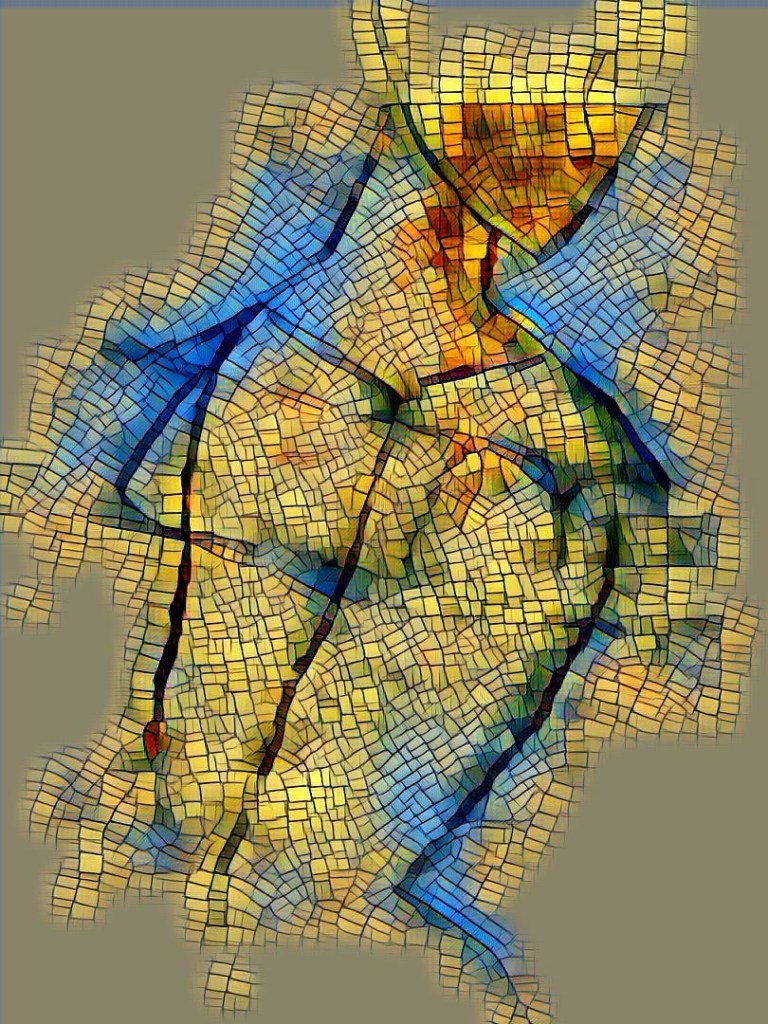
According to Adorno, “The artwork is related to the world by the principle that contrasts it with the world, and that is the same principle by which spirit organized the world” (Adorno, 1997/2004, p. 4)
Spirit, emerges immanently from within the material and the process of becoming art. In art, this form becomes illuminated not through violence done to the material, but a dialectical shaping, “Formgebung” (according to Adorno, who prefers the German language,) in which the material’s resistance and receptivity (the dialectical forces) both condition what is possible. “The synthesis achieved by means of the artwork is not simply forced on its elements; rather, the elements come into their own in the synthesis” (ibid., p. 4). Spirit assists the material not by subduing it, but by helping it unfold into what it already implies.
Thus, artworks are spiritual not in spite of their materiality but because their form arises from the mediation of the materials and the social elements. Underlying this determinate form is the trace of spirit working through matter. In this way, Adorno’s dialectic echoes the Tao.
According to David Hinton the Tao has its origins in the Paleolithic Goddess culture. Hinton writes about the cosmological origins of Ch’i, known as tsung (宗)—an empty center out of which everything emerges.
“Into this enigma all life dissolves, and from it, new forms continually arise—transformed by the mystery itself.”
“…the more ancient oracle-bone form, showing heaven as the line above, with three streams of light emanating earthward from the three types of heavenly bodies: sun, moon, and stars. These three sources of light were considered bright distillations of, or embryonic origins of, ch’i, the breath-force that pulses through the Cosmos as both matter and energy simultaneously. Hence, 宗 (tsung) is the cosmological source of ch’i as a dwelling-place, a dwelling-place that is the very source of the Cosmos.” (Hinton, p.329)
It is here, where energy and matter take form. So the creation of the cosmos is much like the creation of art. Form is a function of energy and matter.
References:
Adorno, T. W. (2004). Aesthetic Theory (R. Hullot-Kentor, Trans.). London: Continuum. (Original work published 1997)
Hinton, David, (2015). The Way of Ch’an: Essential texts of the original tradition. Shambala Publications, Boulder, Co.
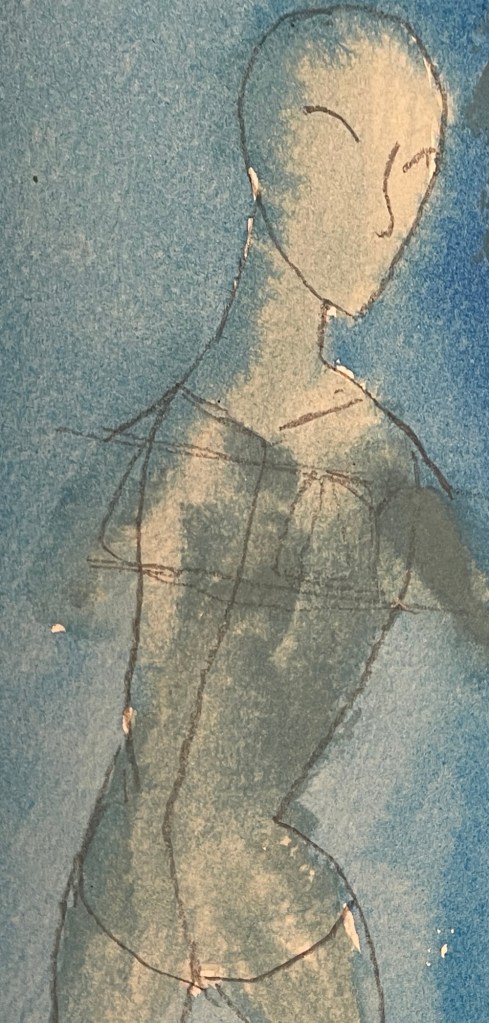
 Art by Kate W