Although Adorno focused more on literature and music WITH REGARDS TO REALISM, than painting or sculpture, his critical philosophy provides a clear framework for understanding his attitude toward realism in the visual arts. His concerns center on realism’s tendency to reify reality, diminish art’s autonomy, and make aesthetic experience too easily consumable.
Realism and Reification
In Adorno’s view, realist art often presents reality as self-evident and unproblematic, thereby supporting the status quo. He argues that such representations risk turning exploitation and suffering into something that can be observed and passively accepted, rather than provoking critical reflection (Adorno, 1997).
This tendency makes realism vulnerable to becoming affirmative—a mirror that naturalizes existing social relations. For Adorno, an artwork that simply depicts reality without negative critique is complicit with domination.
“Artworks that reconcile themselves to reality are themselves a piece of that reality, and thereby fall prey to the very heteronomy against which they protest.” (Aesthetic Theory, Adorno, 1997, p. 6)
Modernism and the Fragmentation of Representation
In contrast, Adorno praises modernist and avant-garde art because it resists this reconciliation. Abstraction, expressionism, and other non-realist modes interrupt the illusion of wholeness and reveal the fractures and antagonisms inherent in modern life.
For example, he admired artists such as Paul Klee and Wassily Kandinsky, whose work breaks from traditional representation and challenges the viewer to perceive differently (Adorno, 1997).
He writes:
“Authentic works are the unconscious historiography of their epoch: they record the history which the subject undergoes and which it does not possess.”(Adorno, 1997, p. 131)
By fragmenting or distorting recognizable forms, modernist art prevents viewers from settling into complacency, keeping aesthetic experience dynamic and unsettling.
Mimesis, Truth Content, and Critical Potential
Importantly, Adorno does not dismiss all figuration or mimetic impulses. He acknowledges that mimesis—imitation of reality—is a fundamental aspect of art. However, for realism to have truth content, it must reveal what reality conceals, rather than simply reproduce appearances (Adorno, 1997).
Thus, a figurative painting can be critically powerful if it exposes alienation or domination. The problem arises when realism lapses into illustration or reportage, turning art into something decorative or didactic.
Realism and the Culture Industry
Finally, Adorno believed realism was particularly susceptible to commodification by the culture industry. Realist images are often more easily accessible, pleasing, and marketable—what he called “culinary art”, art designed for effortless consumption (Adorno, 1991).
In The Culture Industry, he argued that mass culture flattens and standardizes experience, transforming even potentially radical forms into familiar commodities. Realism’s promise of transparent meaning made it especially prone to this dynamic.
“Culinary art, as consumption, is the antithesis of autonomous art.”(Adorno, 1991, p. 33)
Summary of Adorno’s Critique of Realism:
• Reinforces the status quo by presenting reality without critique.
• Reifies social conditions and makes them appear natural.
• Lends itself to commodification.
Preference for Modernism:
• Abstraction and fragmentation preserve art’s autonomy.
• Modernist forms resist appropriation and disrupt passive spectatorship.
Nuance:
• Mimesis itself is not rejected.
• What matters is whether the artwork challenges or affirms existing reality and institutions that support the commodification of art.
References
Adorno, T. W. (1991). The culture industry: Selected essays on mass culture (J. M. Bernstein, Ed.). Routledge.
Adorno, T. W. (1997). Aesthetic theory (R. Hullot-Kentor, Trans.). University of Minnesota Press.
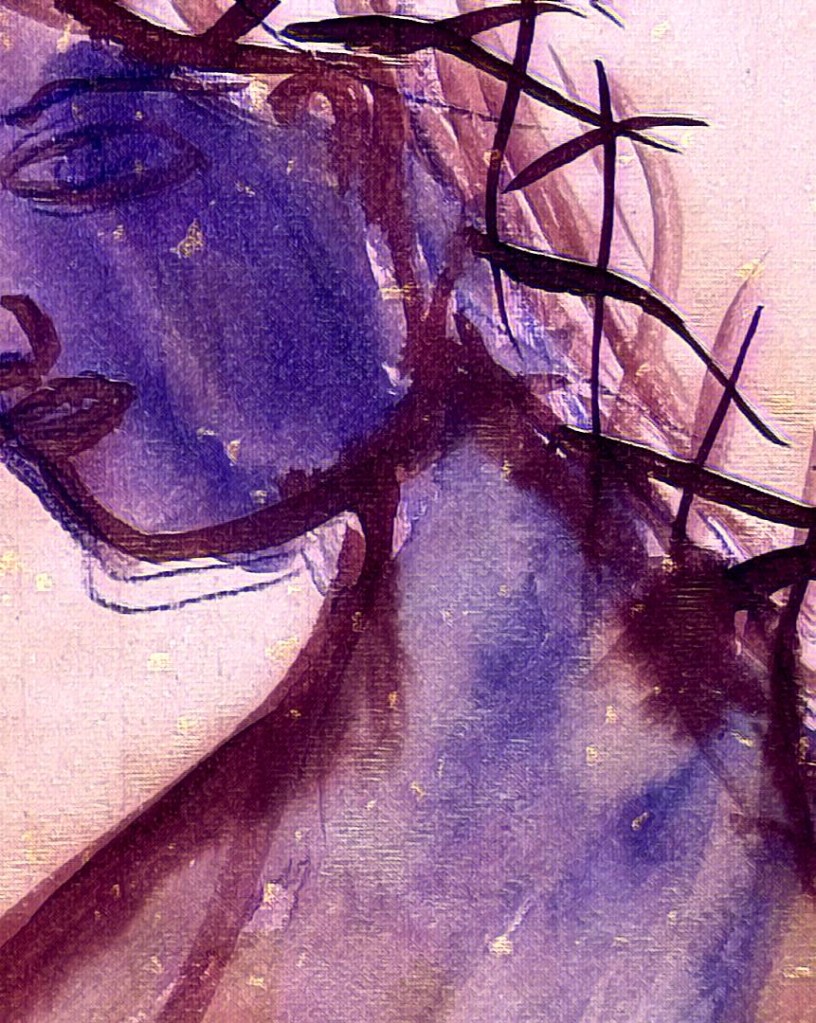
 Art by Kate W