
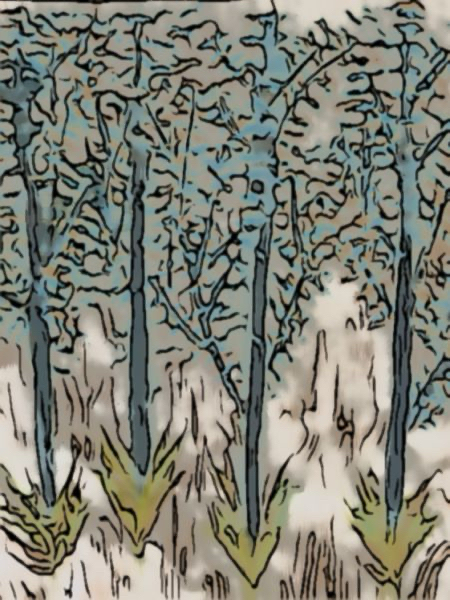
Adorno is borrowing the term, over determined indirectly (it circulates through Freud, Marx, later Althusser), but he means something differently when it is applied to art and aesthetics,
Overdetermined means that a work is shaped by many forces and processes, at once, and more, not one of which can be isolated as the cause or the meaning.
For art, this includes:
Historical pressures
Social contradictions
Material properties (paint, clay, gesture, accident)
Unconscious impulses (personal and collective)
Formal traditions and breaks from them
And not one of these elements of the art explains the work. Rather, Each element is embedded in the work, therefore the meaning is beyond understanding or accumulates yet doesn’t get resolved or synthesized.
So when we encounter an artwork:
• We sense density
• We feel that interpretation is always partial
• The work “pushes back” against explanation
And here lies the truth content of the work; its art lies in its resistance to one meaning rather it has multiplicity of meanings or interpretations.
Multiplicity for Adorno is more than “many things going on.” For Adorno, multiplicity means:
• No privileged center
• No final synthesis
• No dominant principle that subsumes the rest
Multiplicity is the opposite of identity-thinking, which works by:
• Reducing difference
• Creating categories
• Making things interchangeable
Art that preserves multiplicity refuses equivalence.
Each element remains partially opaque, partially autonomous.
Inherent in Adorno’s Aesthetics is that art resists domination by its Multiplicity. Domination—social, political, epistemological—depends on simplification.
To dominate something, you must:
• Name it
• Classify it
• Render it predictable
• Translate it into use-value
Multiplicity interrupts this process, Because:
• You cannot exhaust it conceptually
• You cannot fully translate it into function
• You cannot make it serve a single purpose
Thus, multiplicity is not decorative—it is political in form, even when the content is not explicitly political.
Whereas a system requires: Hierarchy, Rules, Closure, and Predictability, Overdetermined art defeats systematization because:
• Causes do not line up neatly
• Meanings proliferate rather than converge
• Contradictions remain unresolved
And Any attempt to systematize the work: Leaves something out, Flattens it, Violates its internal tensions.
This is why Adorno distrusts totalizing theory—even his own.
Overdetermination as negative knowledge because
As Adorno describes, You do not “learn” a lesson from the work. Rather, art is to encounter what cannot be absorbed. This is what makes art critical as It interrupts habitual perception and It exposes the limits of rational mastery.
Why this matters for nature
When nature is systematized:
• It becomes resource
• It becomes data
• It becomes landscape-as-property
Art’s multiplicity gestures toward a non-dominated nature:
• Not unified
• Not orderly
• Not available for extraction
This “nature” does not exist yet—but art keeps it imaginable by refusing simplification.
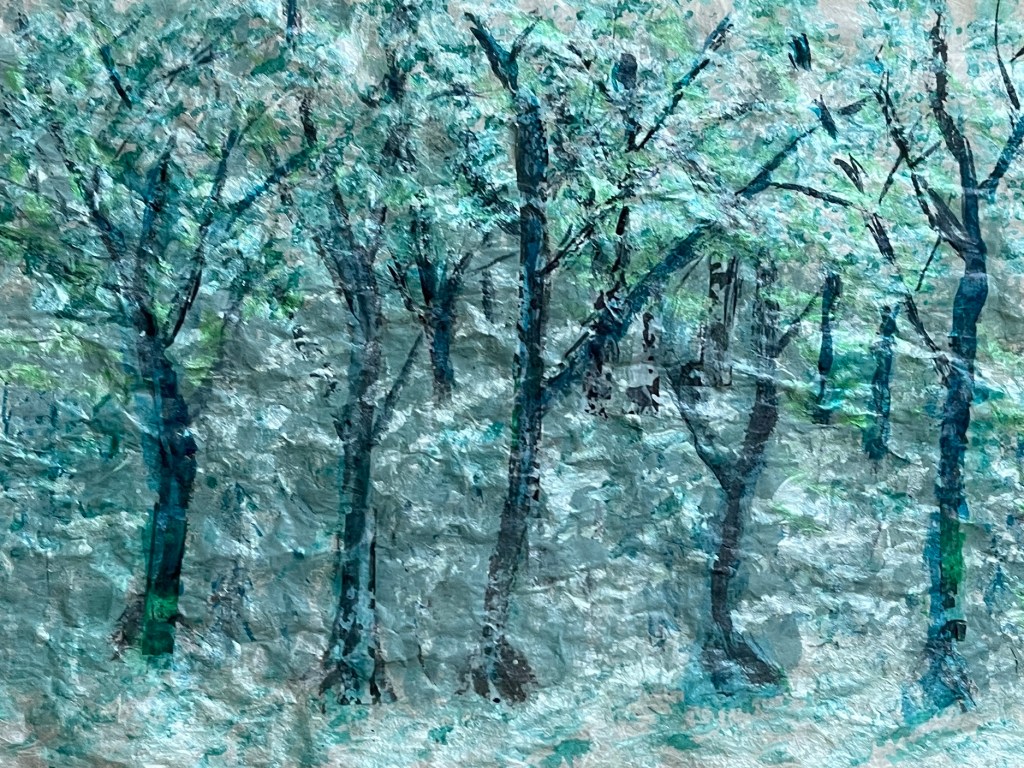
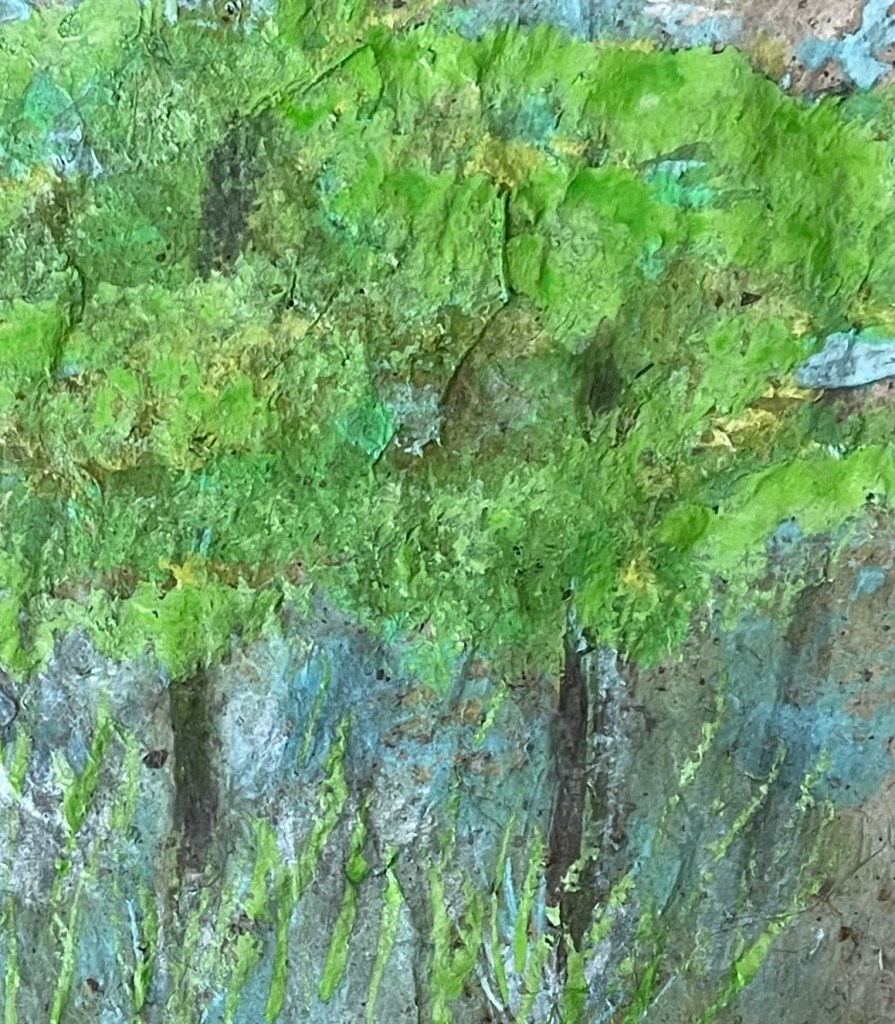
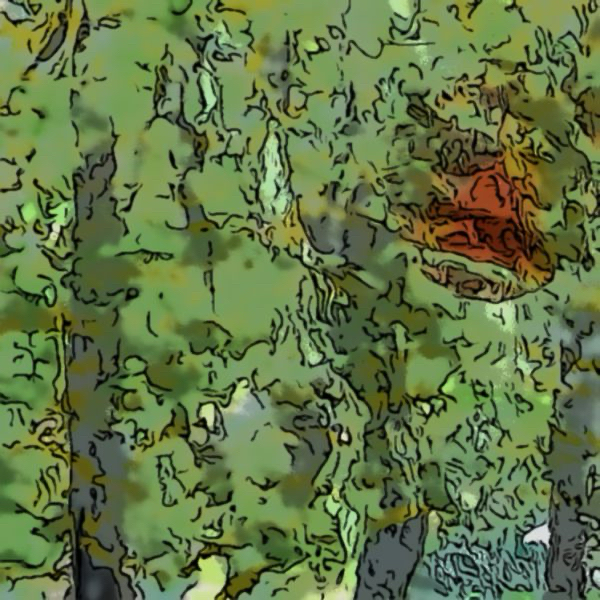
Directly relating this to my art work, the layered, textured, semi-abstract landscapes:
• Each stratum carries its own logic
• Gesture, memory, material, and accident coexist
• No single reading stabilizes the image
The work is overdetermined because:
• It arises from unconscious process and historical inheritance
• It resists being reduced to symbol or message
• It remains open, unresolved, and sensuous
That openness is not vagueness—it is resistance.
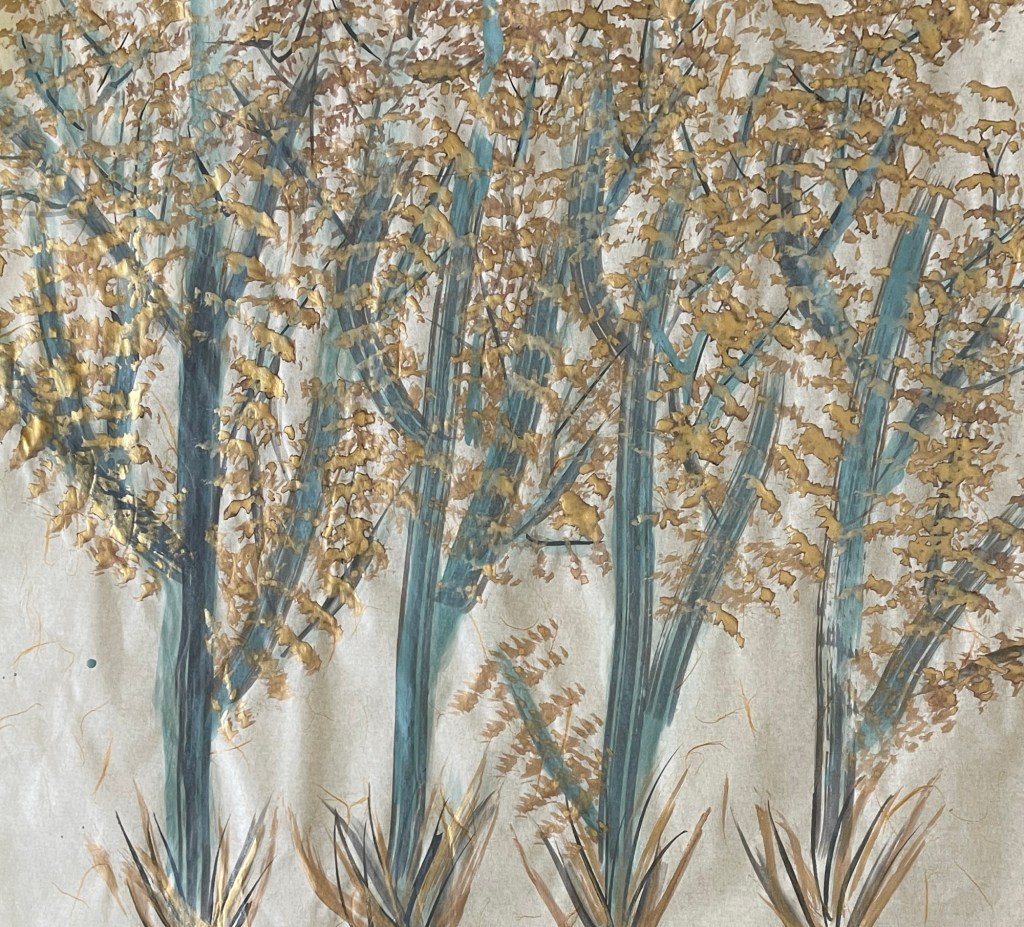
 Art by Kate W