Theodor W. Adorno’s reflections on art stand as one of the twentieth century’s most demanding efforts to articulate how art can remain critical and autonomous in a society dominated by commodification. Though Adorno focused much of his critique on music and literature, his concepts are highly relevant for evaluating contemporary painting. In considering a few of my recent swamp landscapes—marked by abstraction, partial figuration, and layered textures—I use Adorno’s ideas to illuminate the power of art to resist the pressures of reconciliation and consumption.
1. Culinary Art and the Denial of Experience
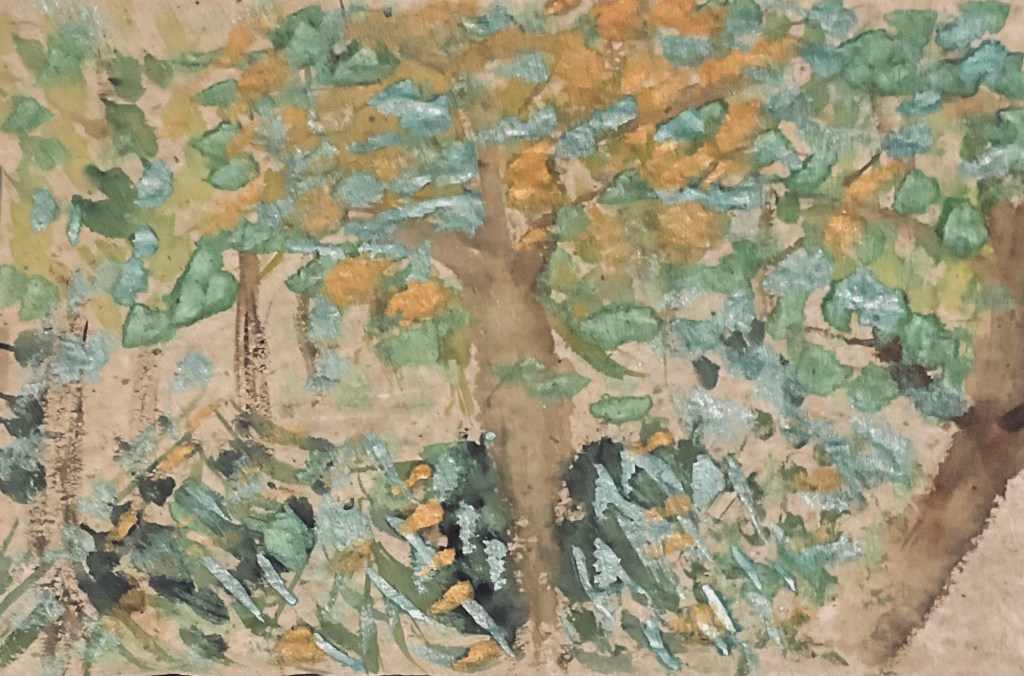
Adorno was acutely aware of how the art market neutralizes aesthetic experience by turning art into pleasant commodities for effortless consumption. He famously argues; “Culinary art, as consumption, is the antithesis of autonomous art”(Adorno, 1997, p. 33). Culinary art offers instant gratification, confirming the spectator’s expectations without friction or challenge. The art that resists this tendency cannot be apprehended in a single, soothing glance. Instead, they insist on slowness, requiring the viewer to linger among blurred stems, diffused light, and veils of pigment. In Adorno’s terms, this resistance to instant clarity is vital because it interrupts the passive consumption endemic to the culture industry (Adorno, 1991).
By withholding illustrative certainty, art works safeguard aesthetic experience from the flattening logic of commodities. They are spaces of encounter, inviting active perception.

2. Mimesis Beyond Reification
One of Adorno’s most generative ideas is that of mimesis without reification. He defined mimesis not simply as imitation but as an experiential correspondence between the subject and the object. As he put it: “Mimesis in art is the non-conceptual affinity of subjective creation and objective reality” (Adorno, 1997, p. 113).
These swamp images arise from careful observation of water, vegetation, and atmosphere. Yet they never become illustrative. Instead, the use of partial abstraction and fragmentary gesture preserves the vital tension between representation and dissolution. Rather than reifying the swamp into a fixed image, the works remain in process, echoing the flux of lived perception. In this sense, the mimesis is an unresolved encounter with nature—one that resists both total identification and total estrangement.
Adorno saw this as essential to art’s truth content: “Art’s truth content is not exhausted by any amount of attention to its content of meaning, but only comes to light in its form” (Adorno, 1997, p. 143). Here, form and meaning are inseparable. According to Adorno, paintings are not merely depicting the subject but they exemplify its indeterminacy and layered life.

3. The Negative Moment: Non-Identity and Contradiction
One of Adorno’s core philosophical commitments was to non-identity: the idea that concepts and images never fully exhaust the phenomena they represent. In art, this results in a negative moment, where the work negates any false reconciliation. He argued: “Art is modern by its own dynamic, and it confronts the unsolved antagonisms of reality” (Adorno, 1997, p. 3).
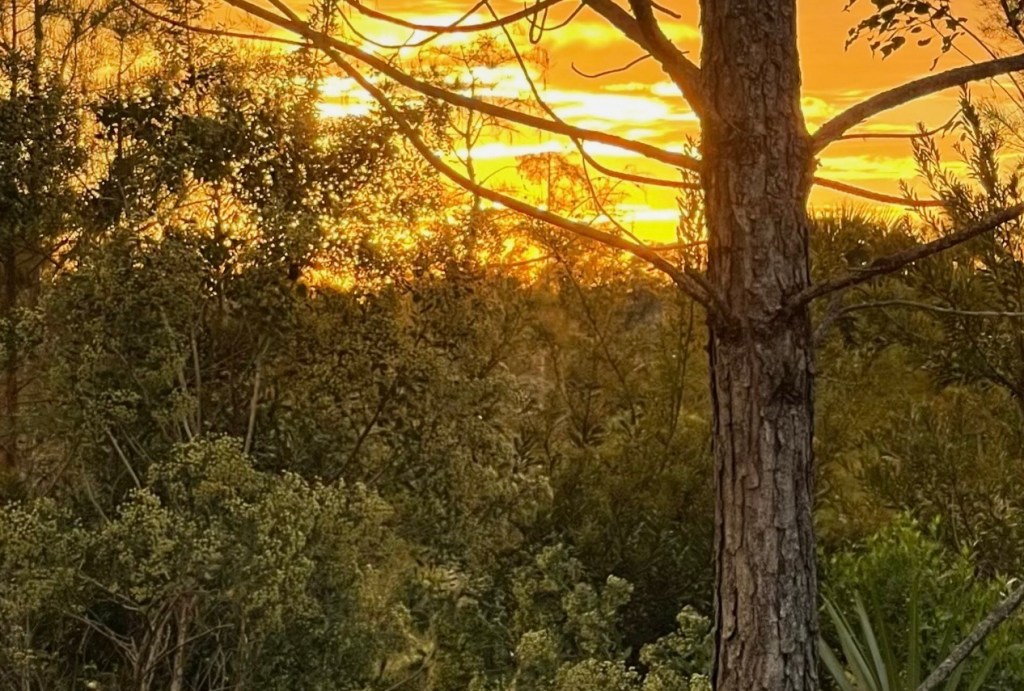
In my paintings, the refusal to stabilize the swamp into a coherent image stages such antagonism. Along with the multiple viewpoints, the viewer additionally encounters trees that are also gestures, water that is also pigment, and depth that is also a flat surface. This unresolved play of contradictions is not a defect but a critical virtue. Adorno insisted that works of art must retain “traces of negativity” (ibid p. 5), resisting the false comfort of total clarity. The work needs to embody this tension.
4. Autonomy Against the Culture Industry
Adorno believed that art could retain its autonomy and authenticity only by resisting the homogenizing force of the culture industry, which he described as: “the rationalized, mechanized production of goods tailored for consumption” (Adorno, 1991, p. 85).
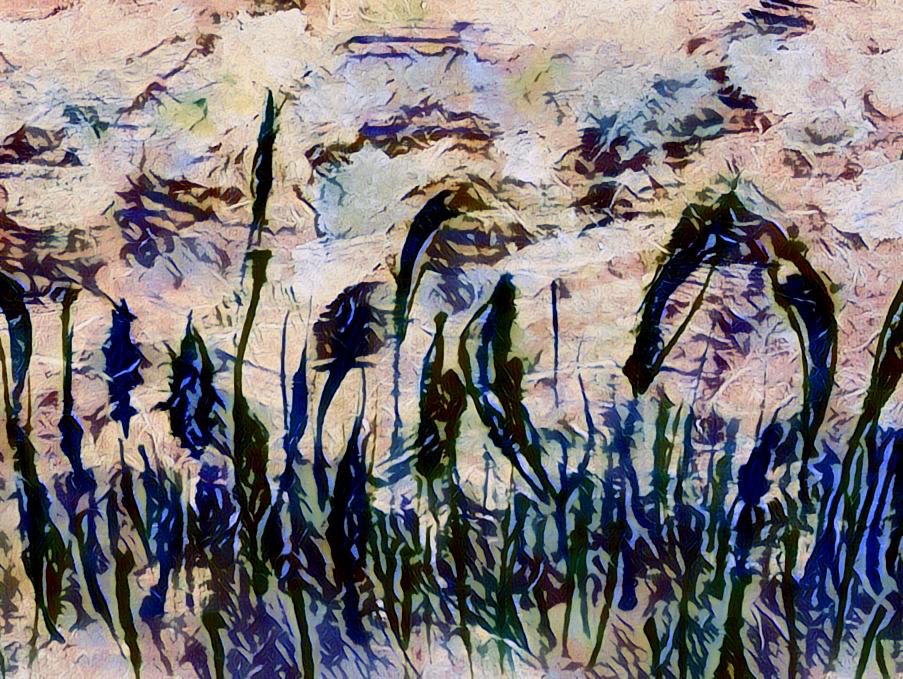
By embracing ambiguity, gestural abstraction, and materials that resist reproduction, the paintings withdraw from this economy of standardization. Their textural surfaces cannot be easily mass-produced or reduced to decorative images. They assert the singularity of the aesthetic experience—something Adorno saw as indispensable to art’s freedom: “Authentic artworks are the unconscious historiography of their epoch” (Adorno, 1997, p. 131).
My attempts are to record both the historical crisis of ecological degradation and the subjective effort to reimagine our relation to nature. They stand as historical documents, but not in the documentary sense—rather, they encode an experience of alienation and fragile belonging.
Conclusion: Negation as Ecological Gesture
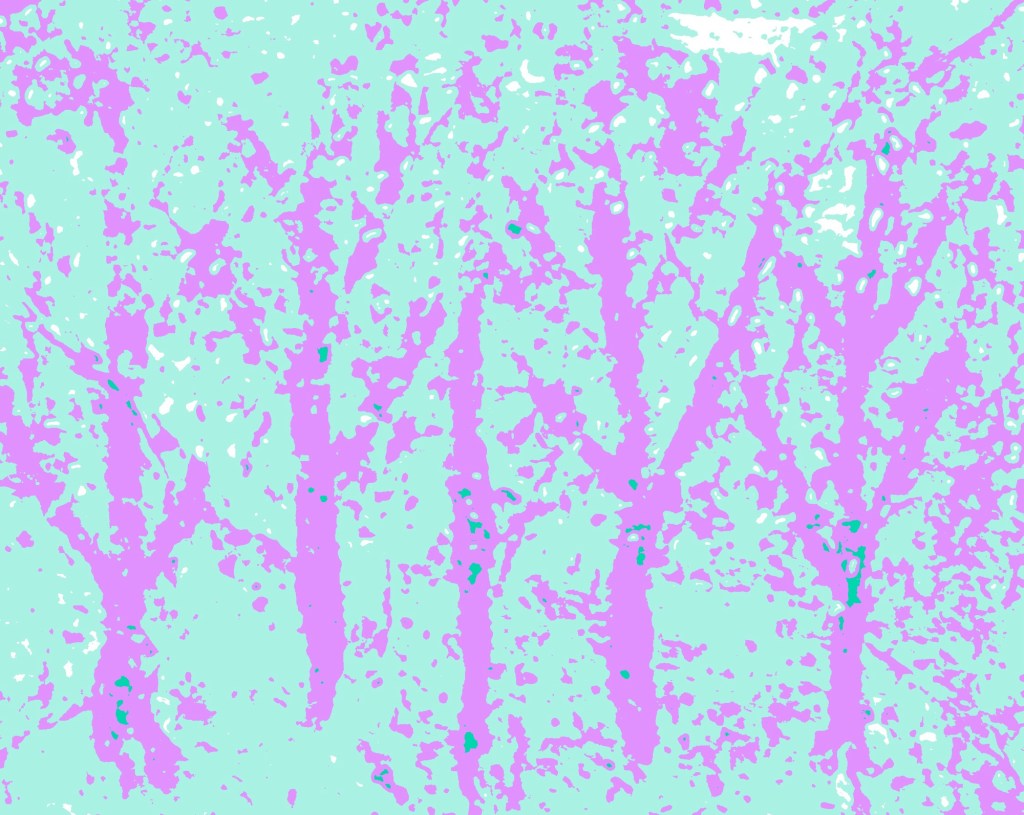
In the swamp paintings, Adorno’s ideas find a living illustration. Against the pressure to resolve, clarify, and commodify, I attempt to sustain an image-world of partial forms and gestural excess. In doing so, the work:
—Negates false reconciliation with nature’s image.
—Preserves mimesis without reification.
—Resists the culture industry’s flattening of perception.
—Affirms autonomy as a space of critical reflection.
Adorno’s philosophy was often wary of offering positive programs for art, but he saw in the negative form a glimpse of redemption: “By the strength of its negation, art will turn toward something that has not yet been.”(Adorno, 1997, p. 132). My paintings, in their refusal of clarity, hint at a future relation to the natural world: one grounded not in mastery but in a delicate, unfinished encounter.
References
Adorno, T. W. (1991). The culture industry: Selected essays on mass culture (J. M. Bernstein, Ed.). Routledge.
Adorno, T. W. (1997). Aesthetic theory (R. Hullot-Kentor, Trans.). University of Minnesota Press. (Original work published 1970)
 Art by Kate W