The Rebel Girl
Elizabeth Gurley Flynn emerged as one of the most significant labor leaders and feminist activists in early-twentieth-century America. Her life and work shed light on the early intersection of labor struggle, gender liberation, and civil liberties during a formative period of US’s industrialization of production processes under a free market capitalist system of economics.

Historical Role and Interpretive Significance
Flynn’s activism developed during a period when rapid industrialization created extreme inequalities between the captains of industry and labor. She joined the Industrial Workers of the World, (IWW) in 1906, embracing its principle of “One Big Union”—the belief that all workers, regardless of skill, gender, ethnicity or race, shared common interests against free market exploitation (Dubofsky, 1987). It was the only US large union organizing immigrant and American workers who worked in US industrial firms. The alternative, the AFL, was primarily a skilled, white male union that refused to bring these immigrant and women workers into their fold. So the IWW formed unions. Flynn was a major leader in the IWW .
Unlike more conservative labor unions, the IWW aimed not merely to improve wages but to fundamentally transform economic relations. Flynn embodied this vision. She believed workers were not passive victims but historical agents capable of collective awakening and structural change. Her speeches helped workers understand their exploitation as systemic rather than individual misfortune—a consciousness-raising function aligned with later feminist and socialist theory and movements (Flynn, 1955).
From a feminist perspective, Flynn was especially significant because she insisted that women workers were central—not peripheral—to the labor struggle. She rejected prevailing assumptions that women were politically weak or merely dependents, instead emphasizing their agency and full potential to make vital contributions.

She Led and Organized Strikes and Protests
1. The Lawrence Textile Strike (1912) — “Bread and Roses”
The Struggle in Lawrence, Massachusetts, became Flynn’s most famous organizing effort.
Context:
• Textile workers, many immigrant women, protested wage cuts and brutal conditions.
Flynn’s role:
• Organized mass demonstrations and strike committees.
• Helped coordinate food distribution, childcare, and community support.
• Publicized police brutality and worker repression nationally.
Interpretive significance:
Flynn helped transform the strike into both a labor struggle and a feminist awakening. Women workers emerged as disciplined political actors, contradicting patriarchal assumptions of female passivity (Tax, 2001).
The strike succeeded, achieving wage increases and improved conditions.
2. The Paterson Silk Strike (1913)
The Paterson, New Jersey, strike involved over 20,000 silk workers protesting mechanization and wage reductions.
Flynn’s role:
• Organized strike meetings and worker education.
• Sustained morale during prolonged hardship.
• Helped frame the strike as resistance to technological domination without worker benefit.
Interpretive significance:
This strike illustrated Flynn’s understanding of the need for industrial workers to organize at the firm level. She wrote and spoke about how this stage of authoritarian industrial capitalism alienated workers from control over their labor.
Although the strike ultimately failed, it strengthened worker consciousness nationwide.
3. Spokane Free Speech Fights (1909–1910) involved protests against laws banning street speaking by labor organizers.
Flynn’s role:
• Delivered speeches despite arrest threats.
• Helped organize mass civil disobedience.
Interpretive significance:
Flynn understood free speech as structurally essential to labor liberation—not merely an abstract civil liberty, but a necessary condition for worker self-organization.
4. Mesabi Range Iron Strike (1916) involved immigrant iron miners in Minnesota protesting dangerous conditions and low wages.
Flynn’s role:
• Organized immigrant workers across ethnic divisions.
• Helped people over come their “learned” bias against people of different nationalities, religions, and race. She believed workers had to overcome these biases to understand their shared class identity in their employment and economic relationship with the captains of industry.
Interpretive significance:
This demonstrated Flynn’s commitment and perspective—that workers united by their economic relationship rather than nationality, is a major source of their power.
Her Core Principles
1. Workers as Historical Agents
Flynn believed workers possessed the necessary collective power to transform their immediate working and living conditions. Her organizing aimed to awaken this consciousness. Many social scientists later termed it class consciousness.
2. Feminism as Structural Liberation
Flynn believed women’s oppression was rooted in:
• Economic dependence
• Property relations
• Patriarchal labor divisions
She saw working women as central actors—acting in their own interests, not secondary participants.
3. Free Speech as a Structural Necessity
Flynn saw civil liberties as essential infrastructure for our constitutional rights of free speech. She help set up a resistance to the erosion of free speech and stand for a democratic resistance (ACLU, n.d.). She was one of the founders of the American Civil Liberties Union.
Without free speech, workers could not organize or develop collective awareness.
4. Flynn took a critical view of the unilateral control of the economic and political system by the captains of industry.
Flynn believed the authoritarian economic relationship of the market structurally produced:
• exploitation
• inequality
• alienation
She saw how unions were a pathway to give more workers influence to improve their working conditions, and offer more participation in decision making that brings forth human dignity and economic democracy. She was committed to these goals.
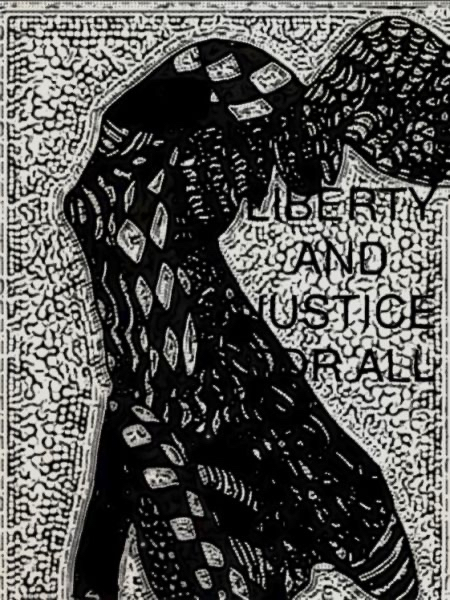
Jungian and Philosophical Interpretation
Flynn’s role can be understood psychologically as a carrier of archetypal energies:
• The Rebel
• The Truth-speaker
• The Feminine Voice emerging into historical consciousness
She helped bring unconscious structural injustice into conscious awareness.
This parallels Jung’s notion of individuation at the collective level—society confronting its shadow.
She gave voice to what was repressed.
Feminist and Historical Significance
Flynn helped redefine women not as passive victims but as active creators of historical transformation.
Her importance lies not only in the strikes she led, but in the consciousness she helped awaken.
She demonstrated that labor struggle, feminist awakening, and civil liberties are structurally interconnected.
References
American Civil Liberties Union. (n.d.). Elizabeth Gurley Flynn biography. American Civil Liberties Union.
Dubofsky, M. (1987). We shall be all: A history of the Industrial Workers of the World. University of Illinois Press.
Flynn, E. G. (1955). I speak my own piece: Autobiography of “The Rebel Girl.” Masses & Mainstream.
Tax, M. (2001). The rising of the women: Feminist solidarity and class conflict, 1880–1917. Monthly Review Press.
Zinn, H. (2003). A people’s history of the United States. HarperCollins.
 Art by Kate W