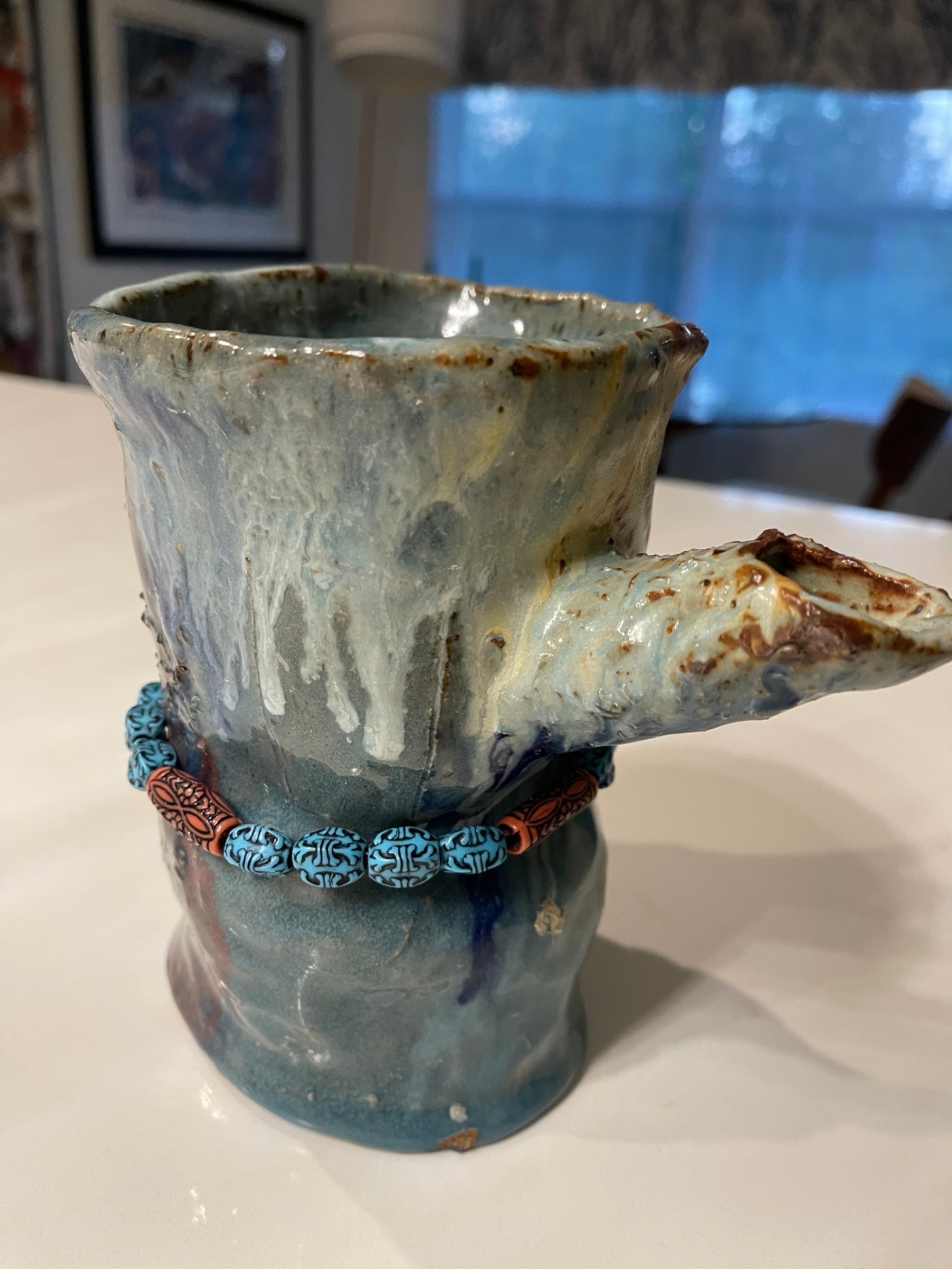
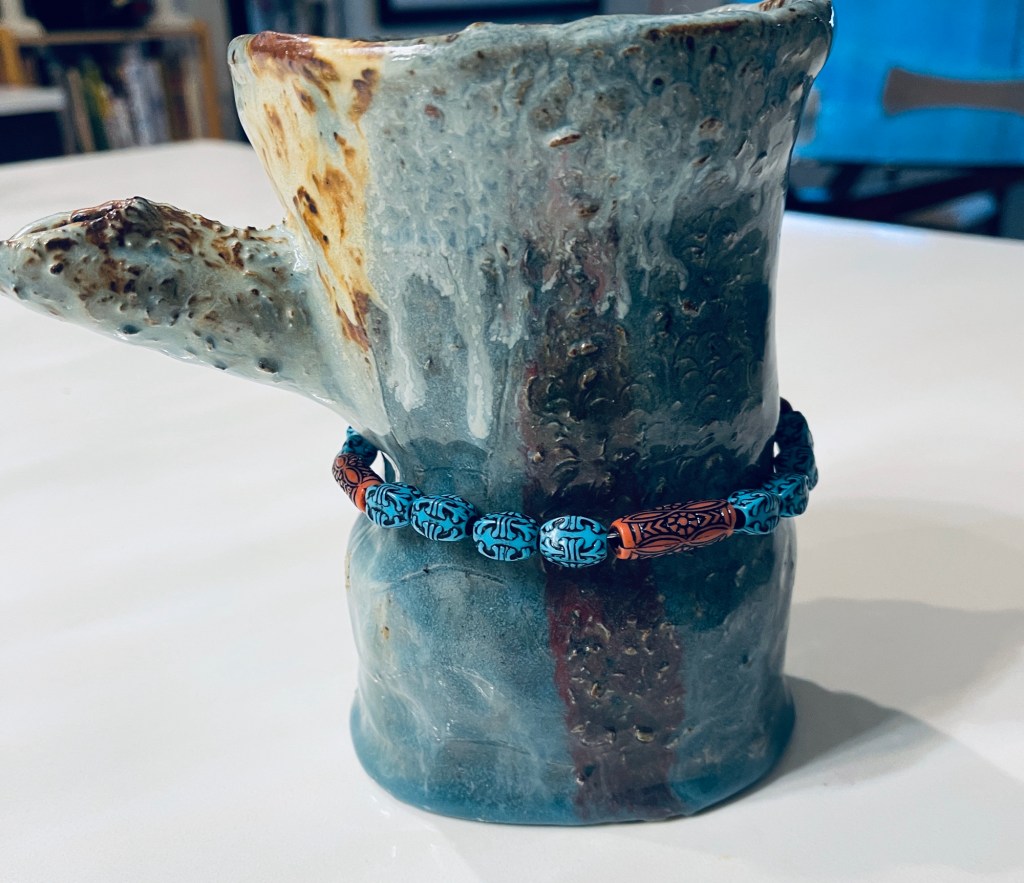
A Rough Vessel of Heaven and Emptiness
This vessel refuses the tyranny of symmetry—
a spout that tilts, a body that leans,
a form that whispers: I am not for your perfection.
Adorno would hear in it a quiet revolt—
resisting the smooth violence of the culture industry,
its fractures and heaviness speaking truth in negativity.
Ch’an would smile at its suchness:
emptiness held by clay,
a hollow that makes the whole,
impermanent beauty flowing like rain.
Not an object to possess,
but a question:
Where does creating end and becoming begin?
Critique: Tension and Liberation
Adorno would admire this as an object that resists commodification and negates the logic of standardization, presenting a unique fractured piece that defies the smooth sameness of industrial design.
Ch’an Buddhism would cherish its non-striving beauty, its embodiment of emptiness, imperfection, and spontaneity—an invitation to direct experience without conceptual fixation.
Thus, the vessel is both a dialectical protest (Adorno) and a meditation on emptiness (Ch’an):
It does not resolve into an identity, nor does it cling to perfection.
It gestures toward freedom—from both capitalist totality and egoic attachment.
Buddhist Perspective
Ch’an aesthetics favor emptiness (空), spontaneity (自然 ziran), and non-attachment. Objects often reveal impermanence and the play of natural forces.
Emptiness and Function
The vessel exists as a field of emptiness—its value is not in what it is, but in how it negotiates in interdependence (water, user, gesture).
The hollow interior exemplifies the Daoist-Ch’an teaching:
“Clay is shaped into a vessel, but it is the emptiness inside that makes it useful.”
Its irregularity invites a mind free from clinging to perfection.
Spontaneity and Suchness
The glaze’s flowing drips and color transitions manifest suchness (tathatā)—the uncontrived nature of things.
Instead of rigid symmetry, the form appears arising from process, not imposed by egoic control. This reflects wu wei (effortless action).
Impermanence
The surface recalls eroded stone or weathered bark, subtly reminding the observer of time’s ceaseless change—a Ch’an sensibility.
 Art by Kate W
Leave a comment