A New Inquisition

The sun folds downward.

Freedom fades behind glass towers.

Sirens curse the dusk.

Ignorance now reigns.

New inquisitors arrive

wrapped in sacred robes.

Black suits cross marble halls.

White collars dictate hunger.

Gold devours the soul.

The golden calf laughs.

Working hands grow old and numb.

The coffers disappear.

This is our Sodom:

markets feeding on the poor

while prophets sell fear.

Flags wave over ash.

The faithful kneel before power,

calling it divine.

Trump is but a sign,

a fever from deeper illness—

the rot beneath law.

Secret networks bloom

inside courts and ministries.

Autocracy wins.

Fanatics now preach

through think tanks and polished screens.

Their scriptures worship power.

Opus Dei prayers.

Federalist shadows rise.

Lobbyists chant war.

AIPAC corridors.

Heritage drafts the collapse.

Parties bow for coins.

Christian, Muslim, Jew,

Hindu, Buddhist masks alike—

power wears all faiths.

Yet somewhere a child

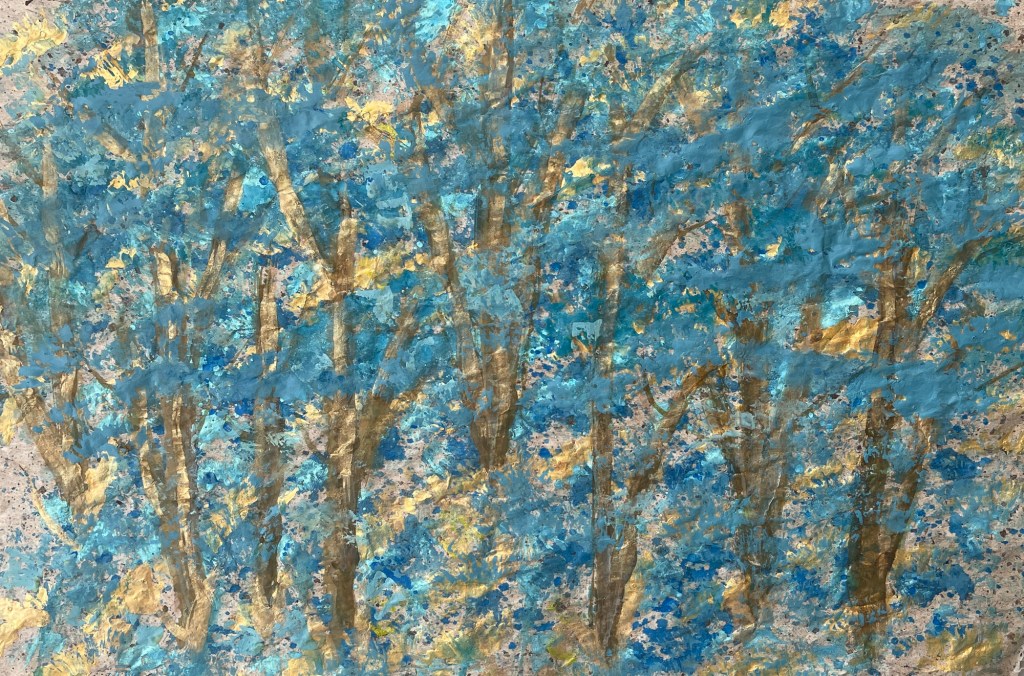
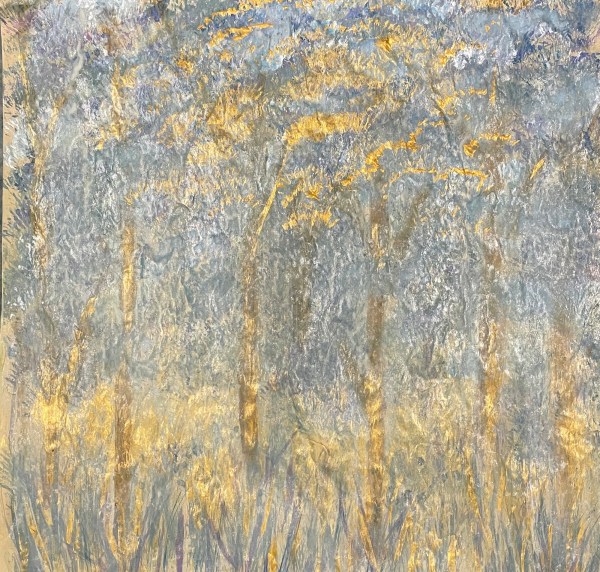
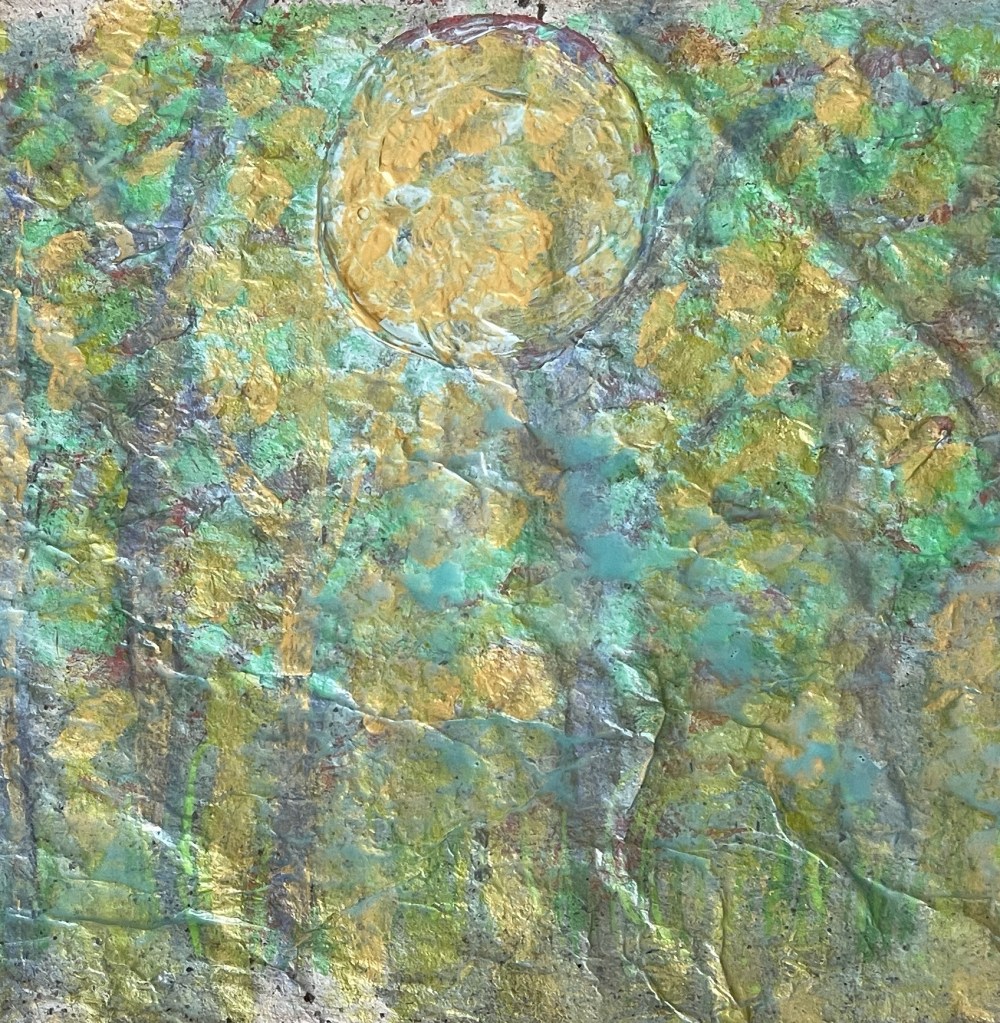
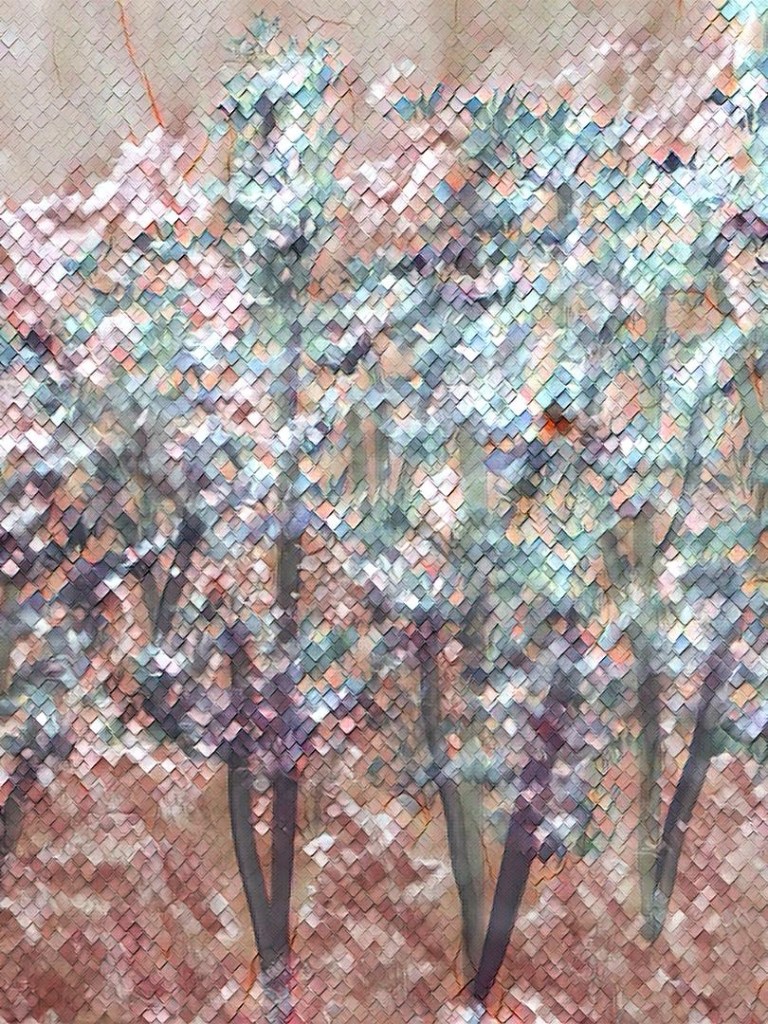
still paints moons on broken walls.

The soul has not died.

And beneath some rot,

earth remembers older songs

before empires spoke.

The battle for control: Strait of Hormuz, Women, and Ecology

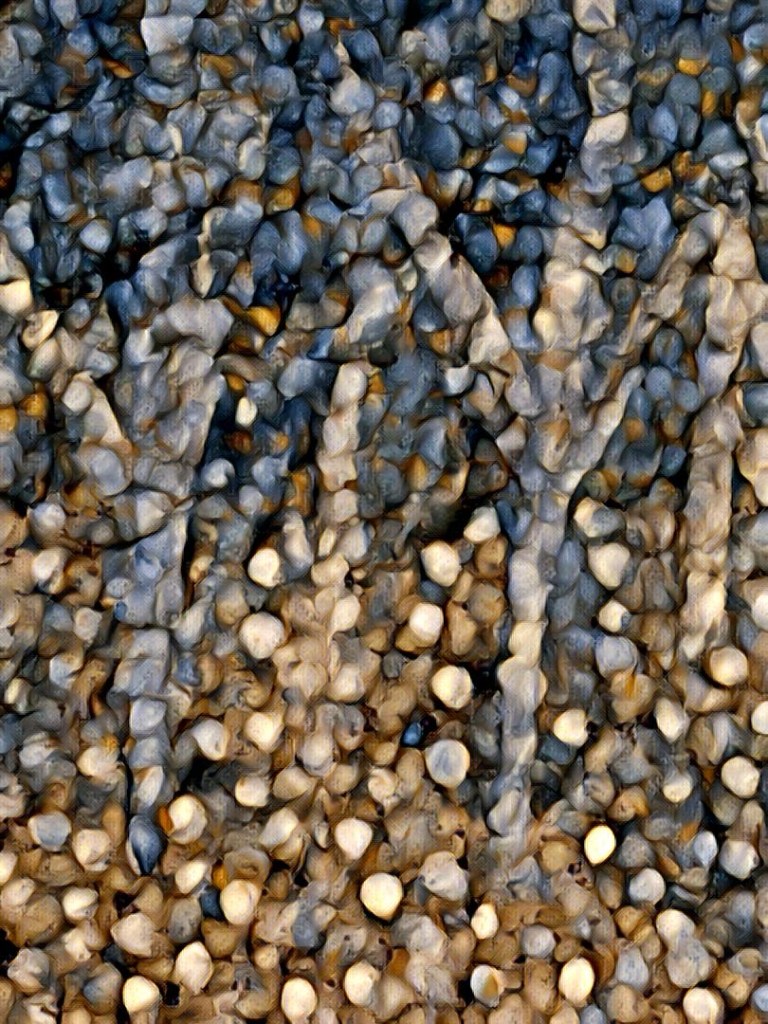
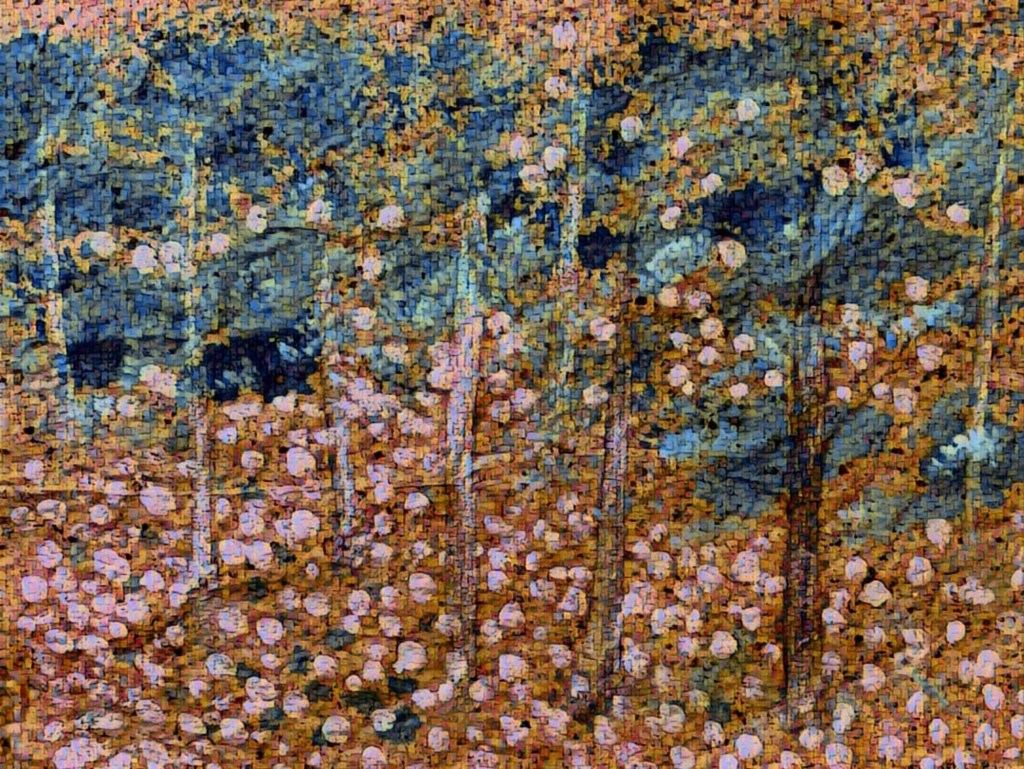
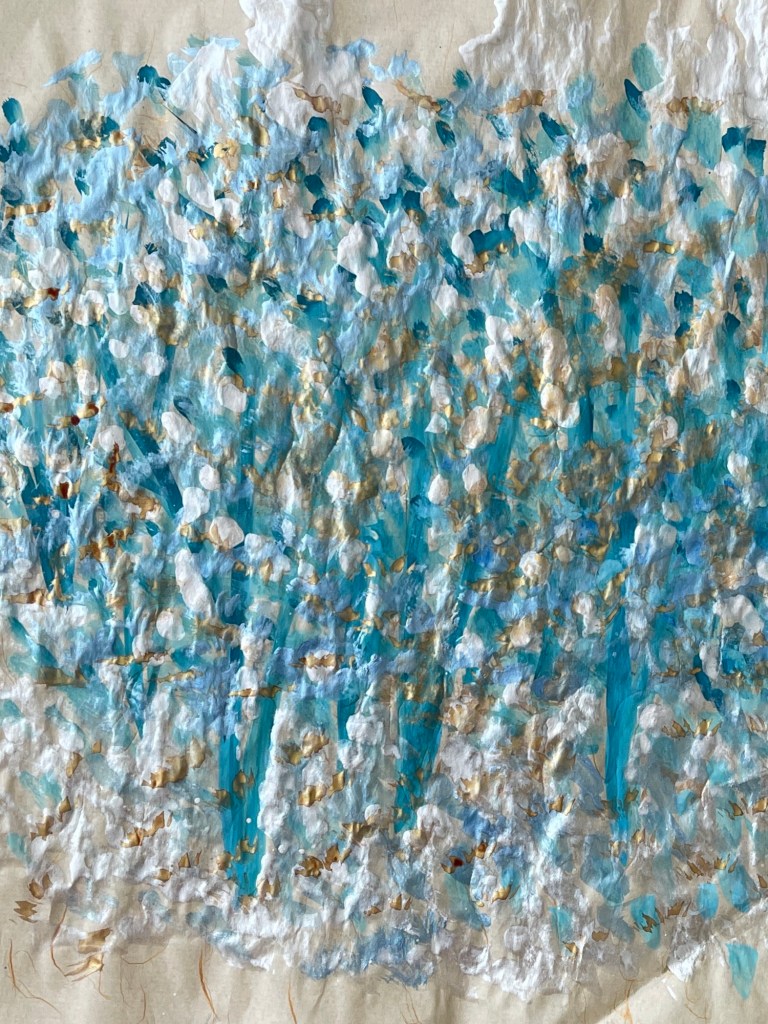
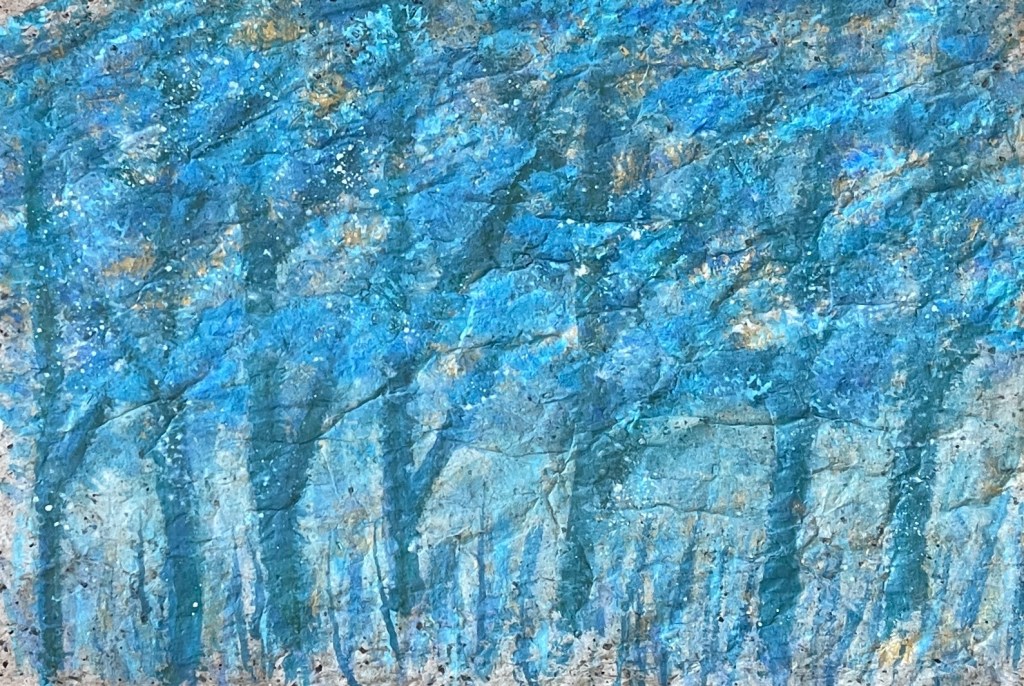
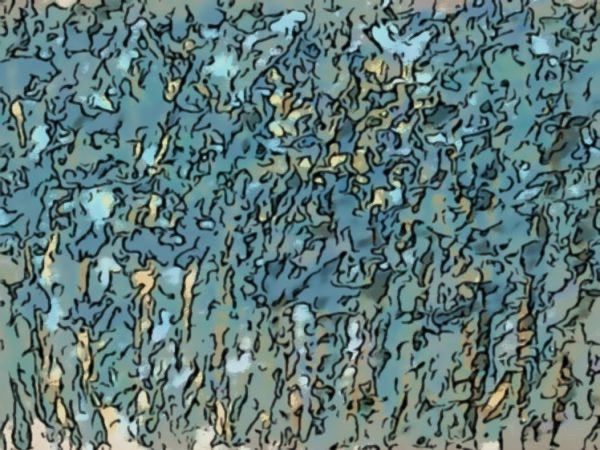
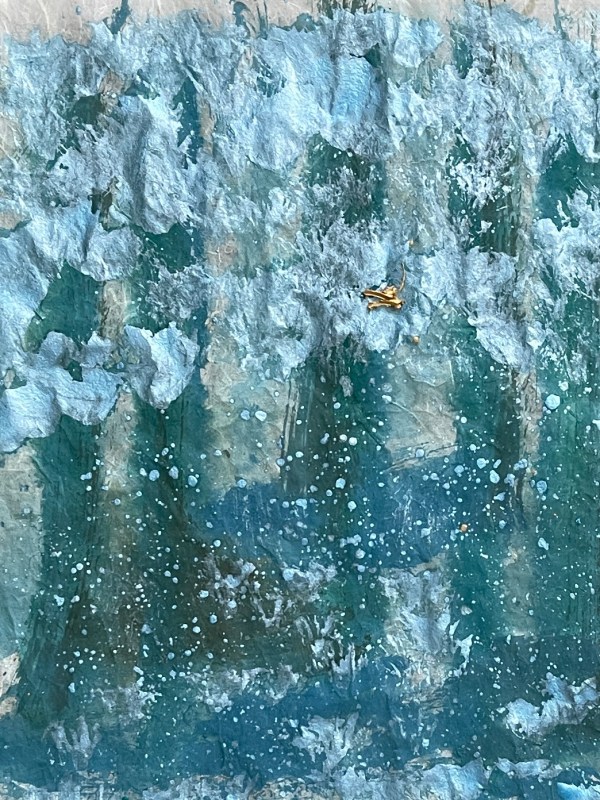
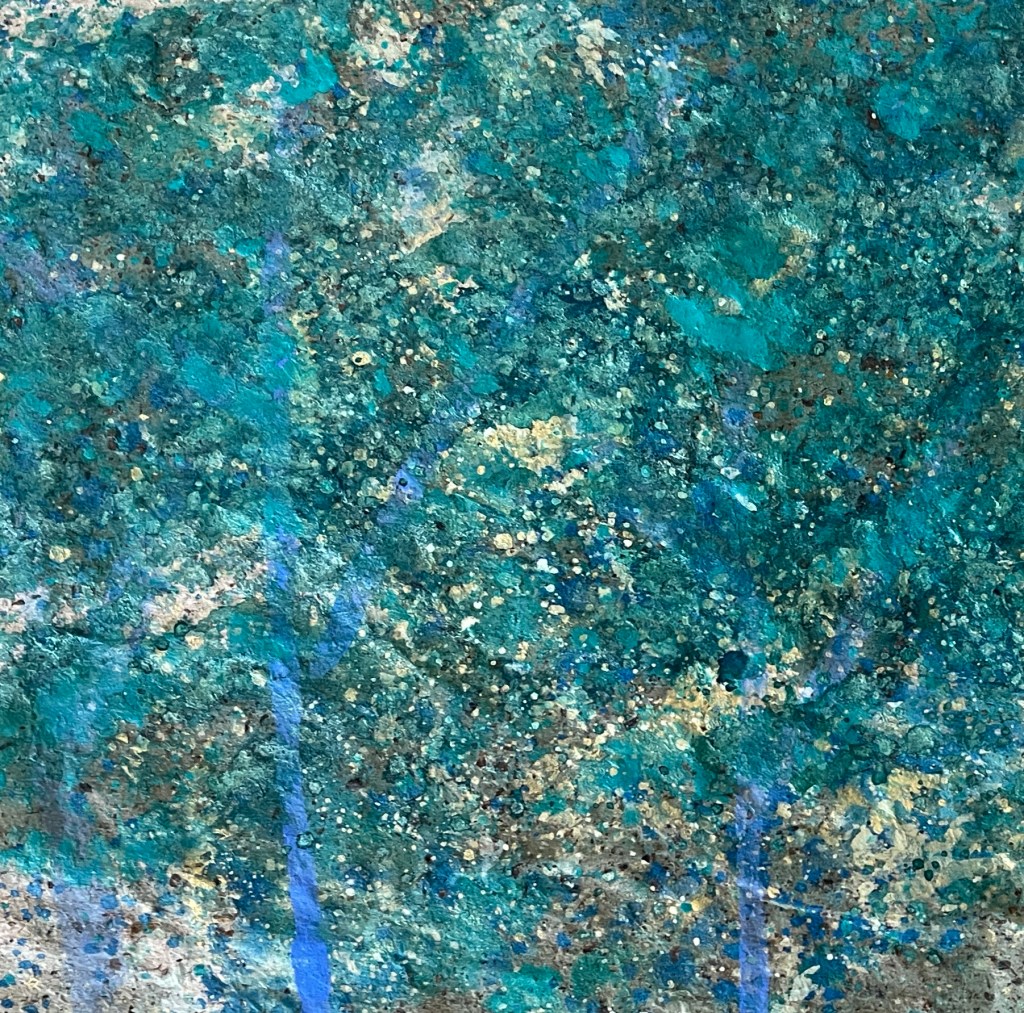
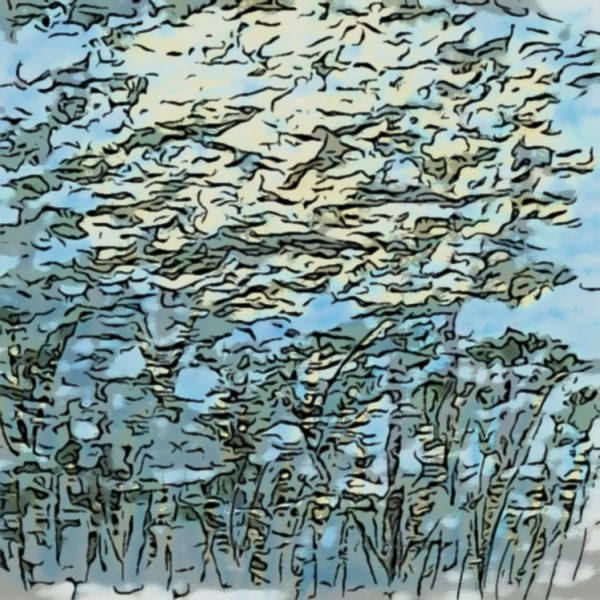
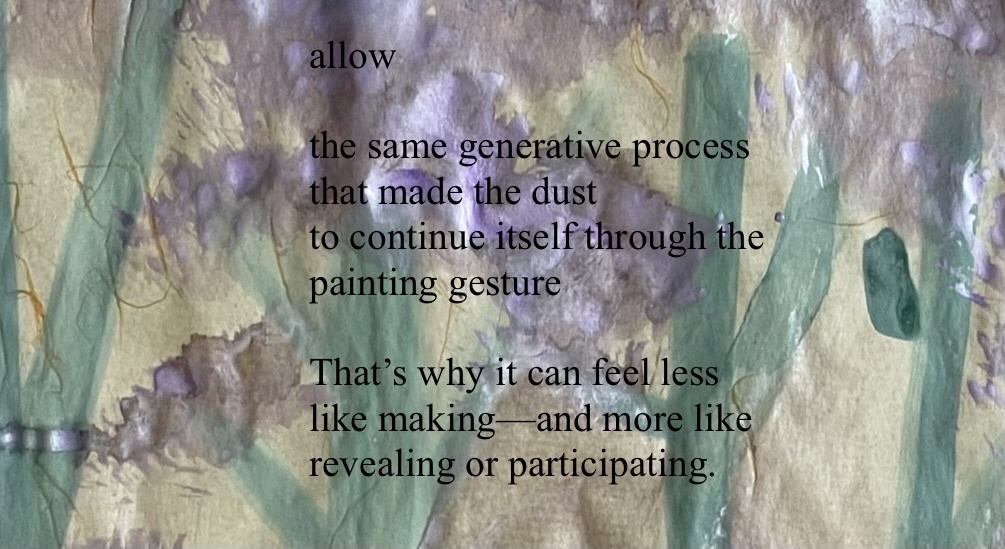
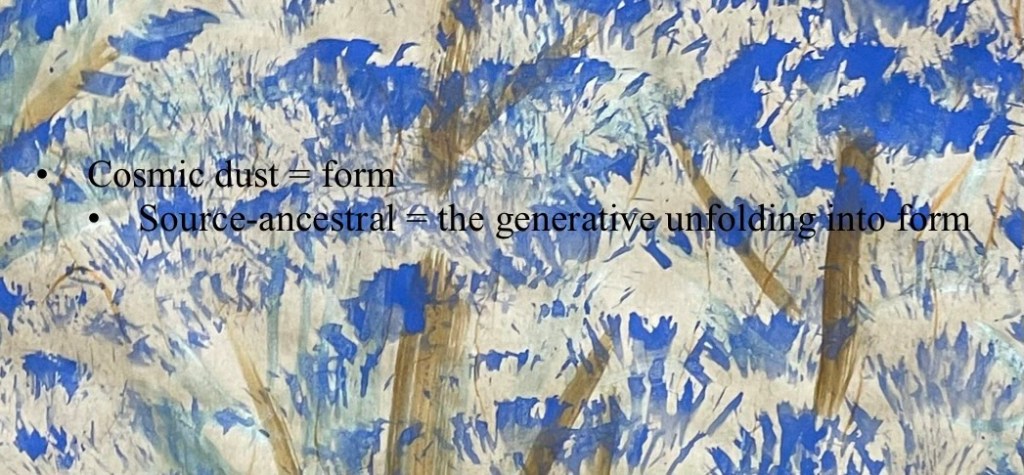
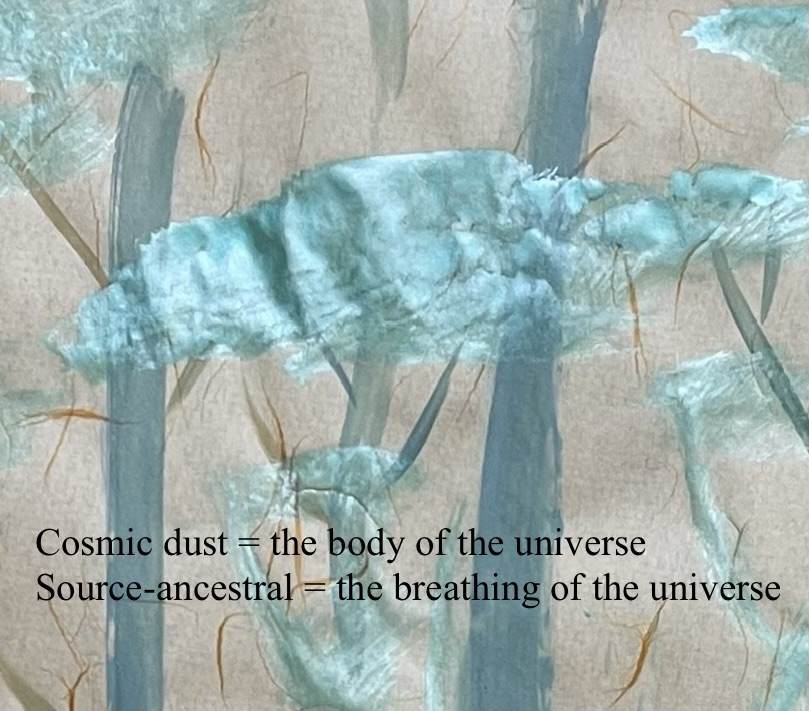
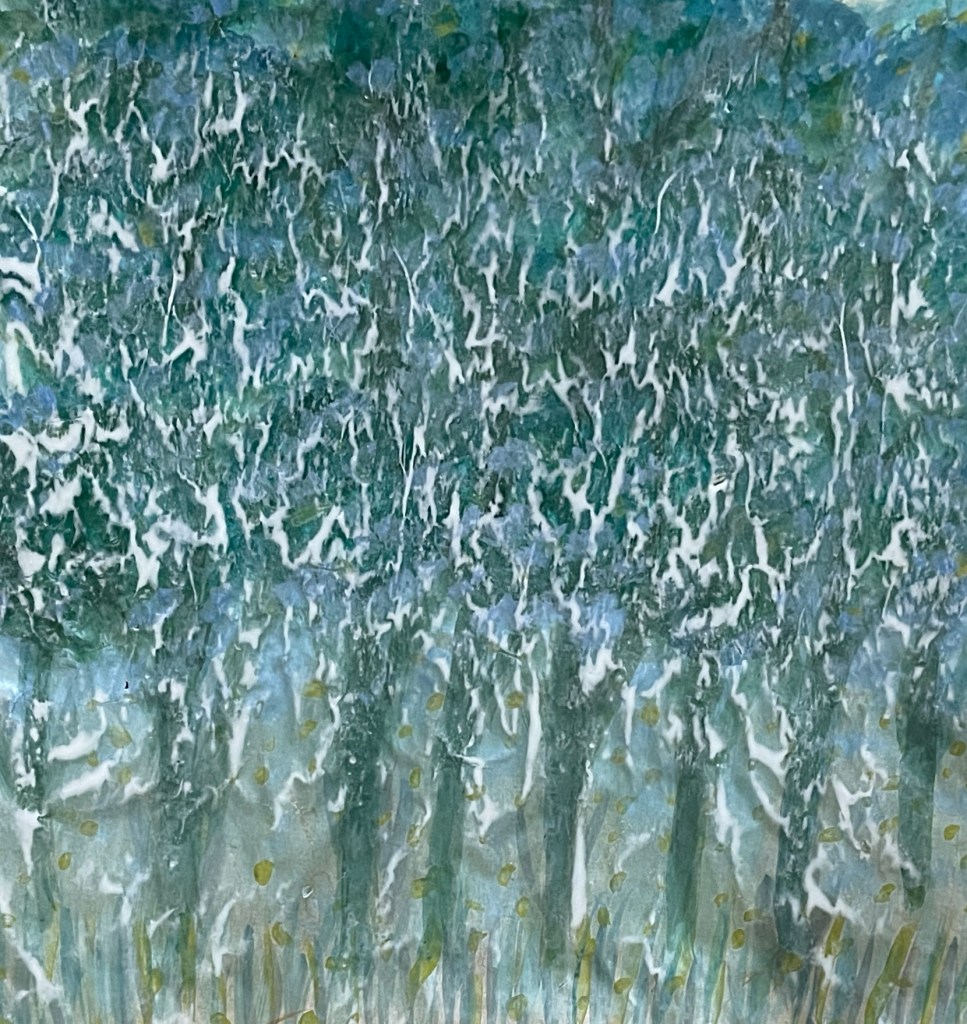
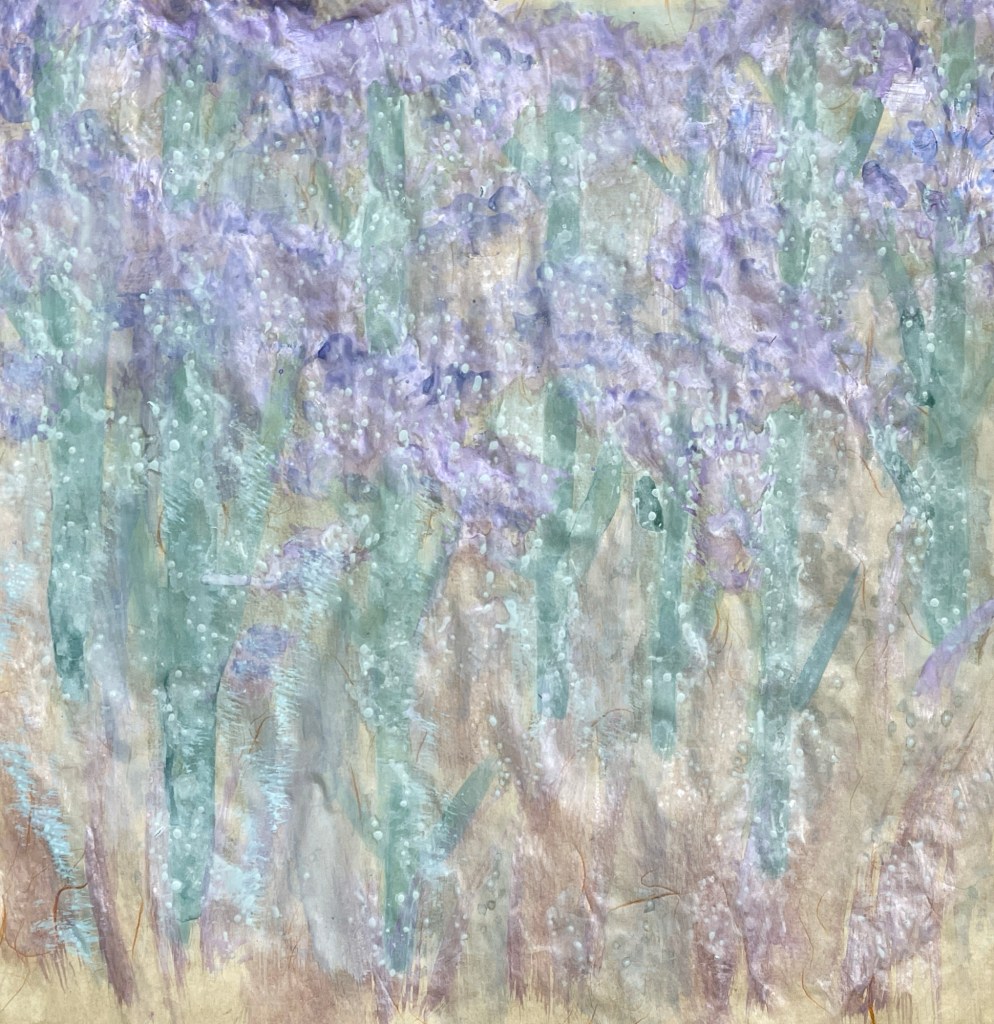
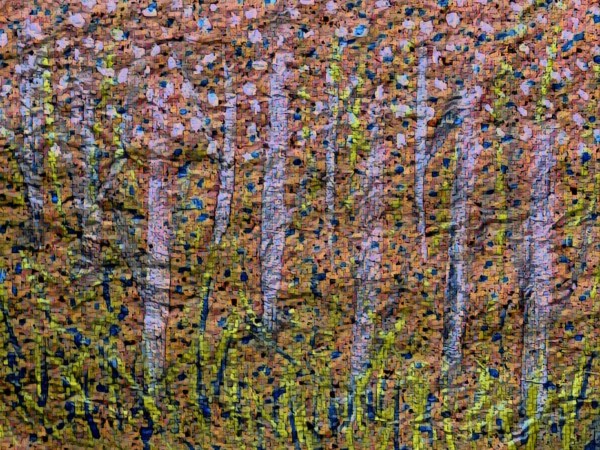
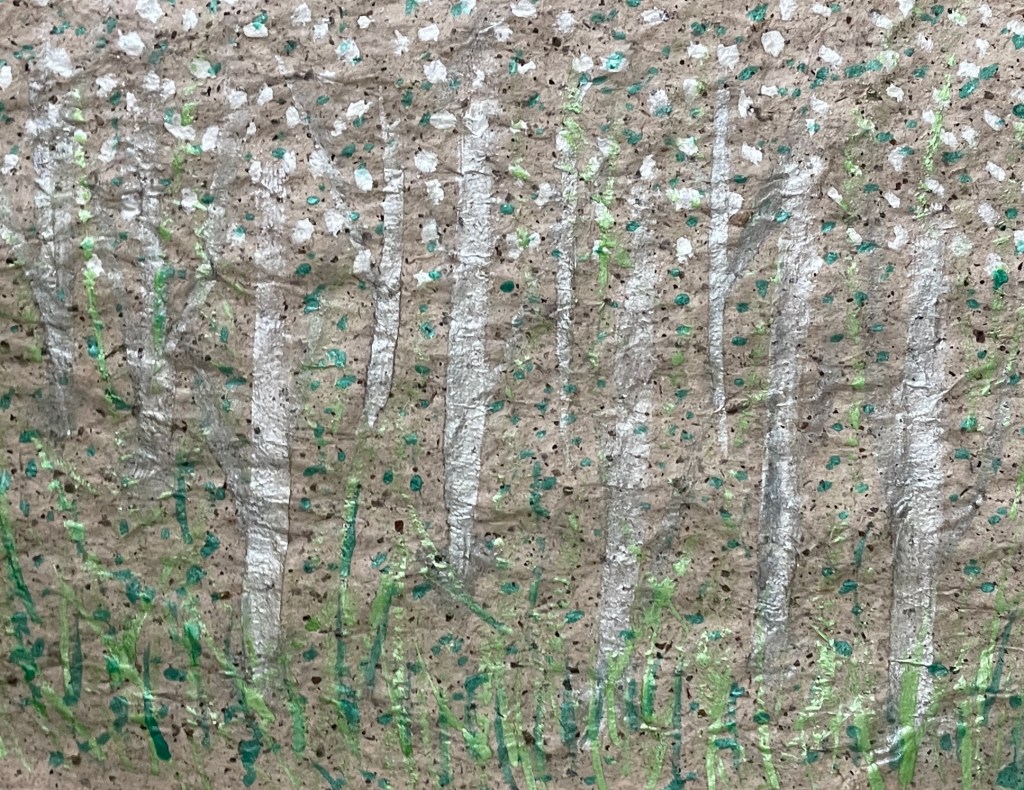
My work is grounded in a synthesis of Jungian psychology, feminist theory, and ecological critique, engaging painting as a site where inner psychic processes intersect with historically constructed systems of power. Drawing on Jung’s (1968) concept of the collective unconscious, I approach image-making as a process of emergence rather than control, allowing forms to surface through layering, repetition, and material interaction. These forms often evoke geological and biological systems—erosion, sedimentation, fault lines, and root networks—situating the psyche within the temporal and material conditions of the earth itself.

At the same time, this work is informed by feminist analyses of domination and hierarchy. The subjugation of both women and nature, structured through logics of extraction, control, and accumulation are part of my ecological feminist philosophy. These logics persist in contemporary fossil fuel economies, where geopolitical conflict, environmental degradation, and economic and gender inequality are intertwined. The ongoing instability surrounding oil supply chains—manifested in contested sites such as the Strait of Hormuz—underscores the extent to which global systems remain dependent on finite, unevenly distributed resources.

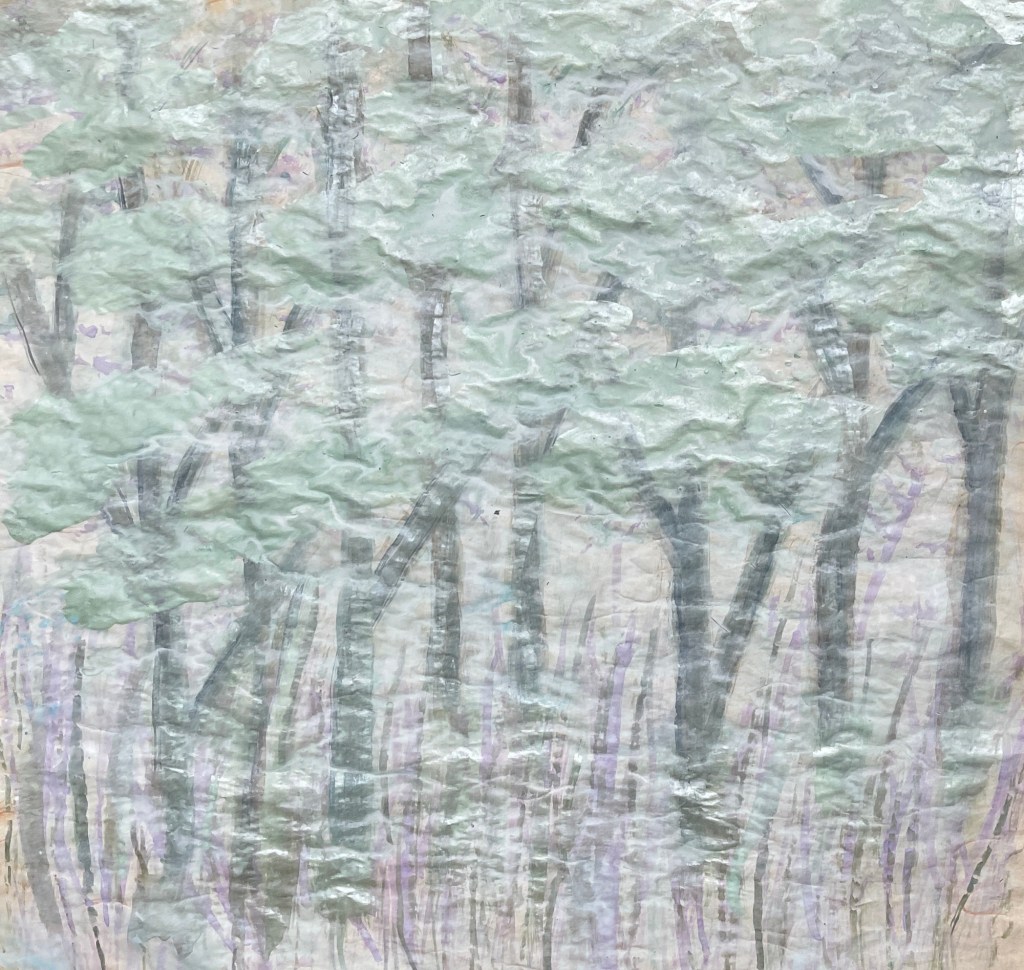
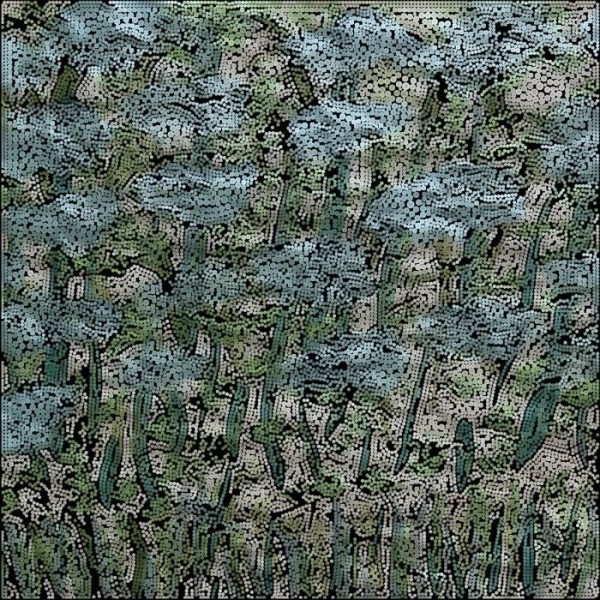
My paintings respond to these conditions not through direct representation, but through formal resistance to hierarchy. Compositions are structured as fields rather than centralized images, dispersing attention across the surface and undermining singular focal points. This place-based practice in contemporary art, as well as with ecofeminist calls for relational modes of understanding that reject binaries between human and nature, is where my landscape art lays.

The recurrence of mark-making in my work draws on ancient visual languages, particularly those associated with Paleolithic and Neolithic cultures that centered the feminine divine and earth-based cosmologies (Gimbutas, 1991). These references are not nostalgic, but speculative—gesturing toward alternative cultural and political forms that predate and challenge modern systems of domination.

Materially, the paintings emphasize process: accumulation, erasure, fragmentation, and reconfiguration. These gestures mirror both ecological cycles and psychic processes, creating a space in which dissolution and emergence coexist. The instability of form—its refusal to fully resolve—reflects the broader condition of contemporary life, in which extractive systems are increasingly unsustainable, yet remain deeply entrenched.

Ultimately, my work asks how perception itself might shift. If fossil fuel economies are sustained not only by infrastructure but by underlying cultural assumptions—about control, hierarchy, and separation—then alternative futures require not only technological change but changes in economic policy, education, and significant transformation. Through a practice that foregrounds relation, multiplicity, and material interdependence, I seek to contribute to this reorientation, holding open the possibility of more sustainable and equitable ways of being.

References

Gimbutas, M. (1991). The Civilization of the Goddess: The World of Old Europe. HarperCollins.

Jung, C. G. (1968). The Archetypes and the Collective Unconscious (2nd ed.). Princeton University Press.

Liberty, equality, peace and justice for all

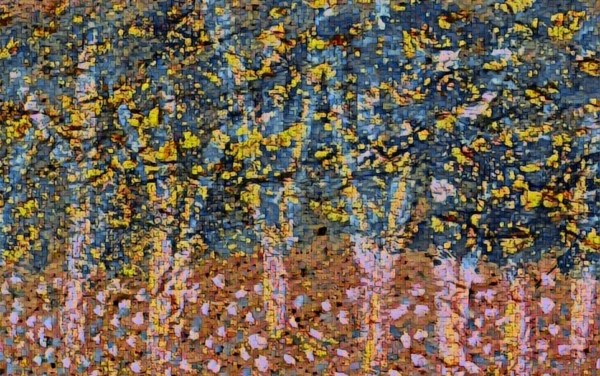
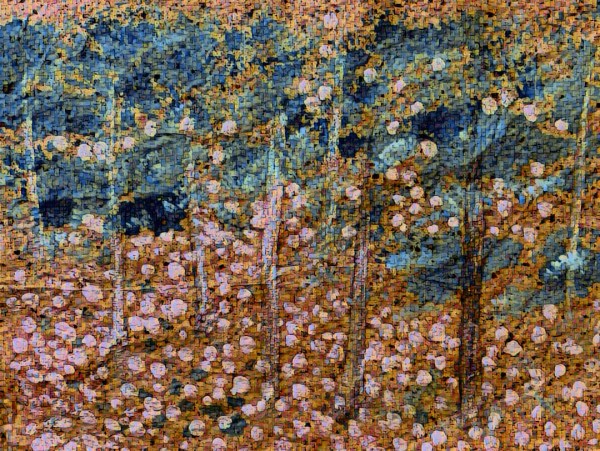
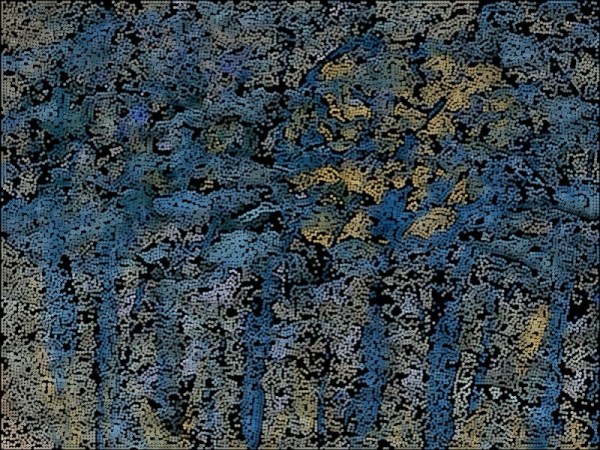
These digital compositions suggest that democracy is not a fixed structure but an ongoing, collective process—fragile, emergent, and dependent on our capacity to hold difference in relation rather than opposition.

Through layering and recombination, the work disrupts patriarchal narratives that have historically defined power through hierarchy, conquest, and exclusion. The feminine forms—Venus and Nike—are no longer static objects of admiration but active participants in a rebalanced symbolic order, where care, interdependence, and embodied presence are central. Liberty herself is pulled from monumentality into this living matrix, no longer distant, but implicated.

In this sense, the work is both invocation and critique: a call to reimagine the foundational ideals of “liberty and justice for all” as inseparable from peace and love, not as abstractions, but as lived, material conditions.
Against the violence of war and the rigidities of patriarchal order, these pieces offer a vision of convergence—where multiplicity is not erased, but held in dynamic, generative tension.

Nike: Bird Goddess of PEACE, RESTORATION, AND VICTORY

Nike, bearer of wreath and wind,

bend your flight toward us.

Let the olive grow again in ruined courtyards,

let the quiet be stronger than thunder, and bombs; 

And let the world remember

that the greatest victory

is the one in which

no one must fall.

The earth is tired of armaments, arguments, and

tired of maps redrawn by rocket fire.

Cities breathe in broken rhythms,

fields remember the weight of marching boots.

If Nike, the bird goddess,  still has wings,

let her carry something gentler:

a hand unclenched,

a wall becoming an entryway, 

a road where armies once passed

now filling with children and market voices.

Teach us the harder triumph—

not the moment of defeat

but the long courage of repair:

stones lifted back into houses,

speaking without fear,

rivers running clear of ash.

Nike, bearer of wreath and wind,

bend your flight toward us.

Art Journal 02/15/2026

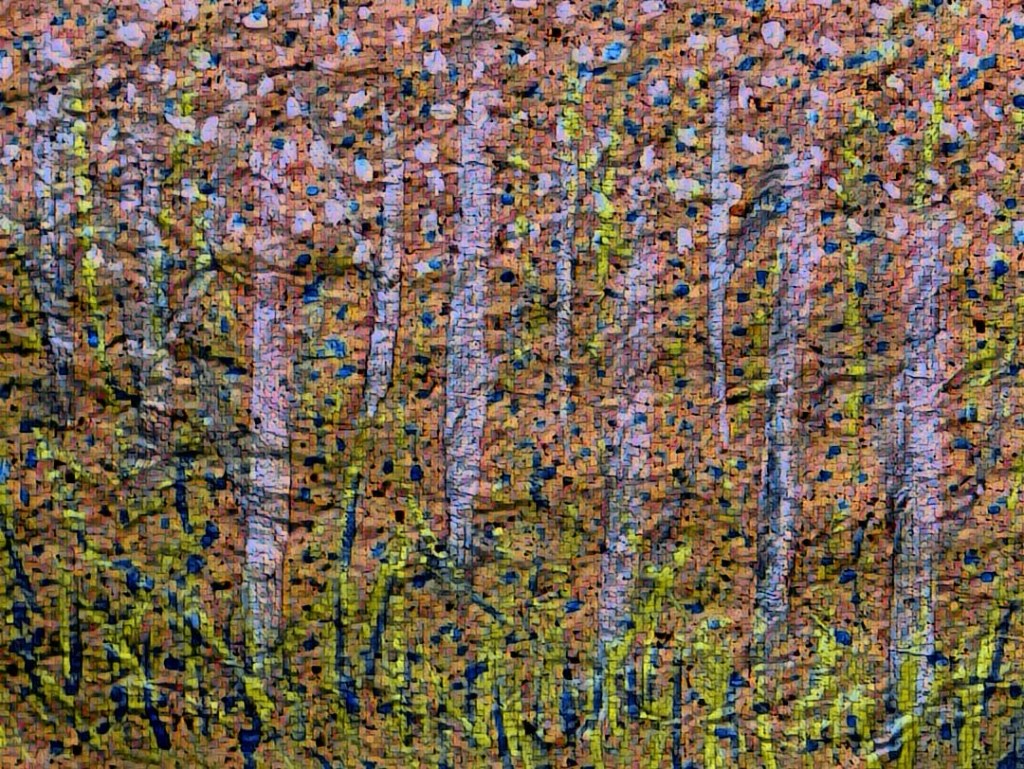
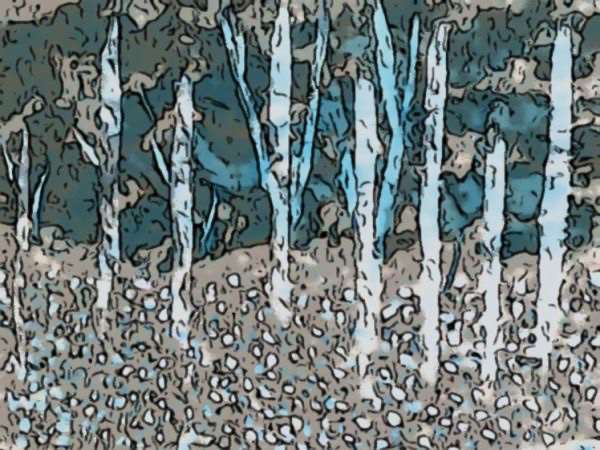
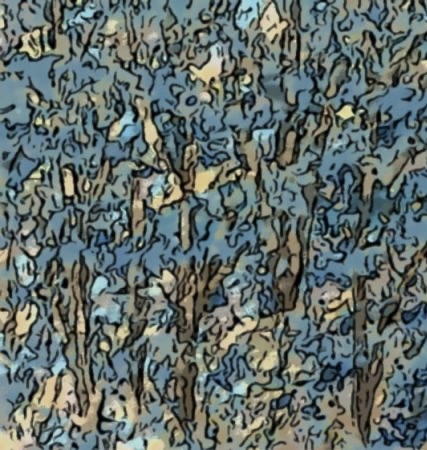
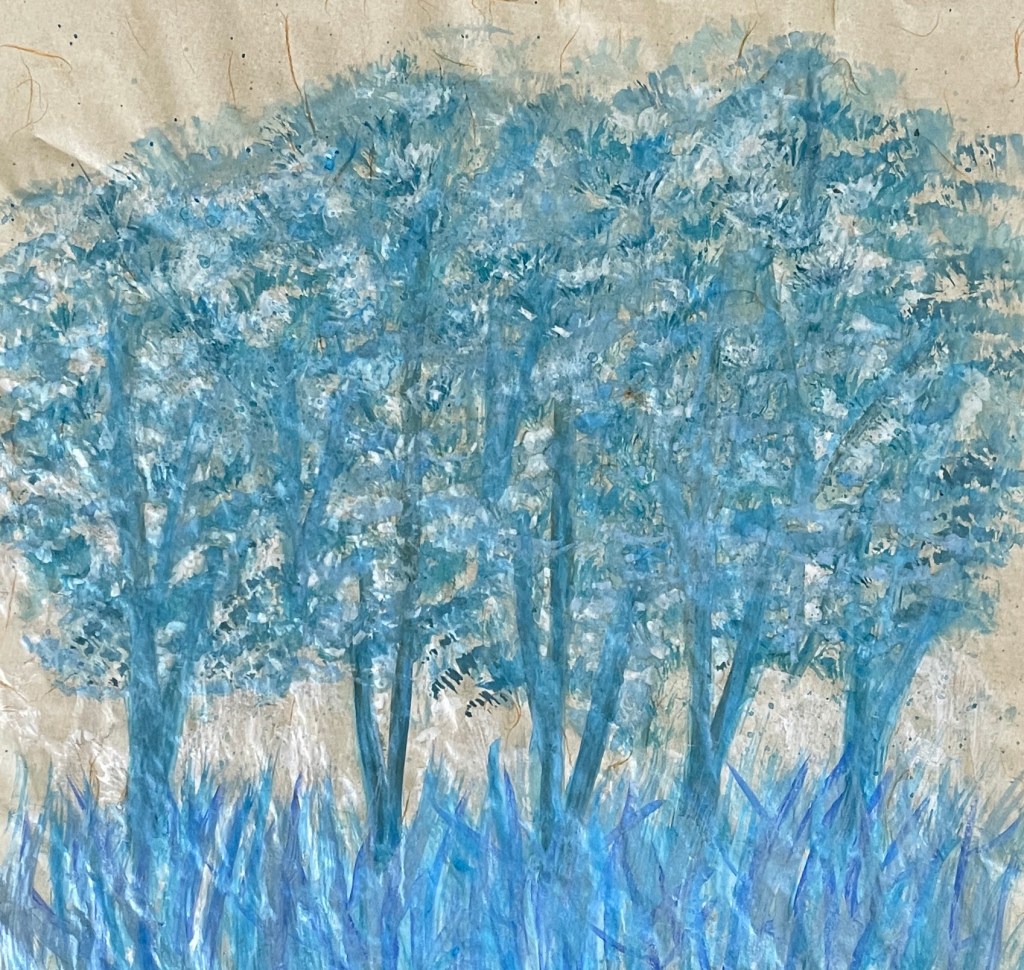
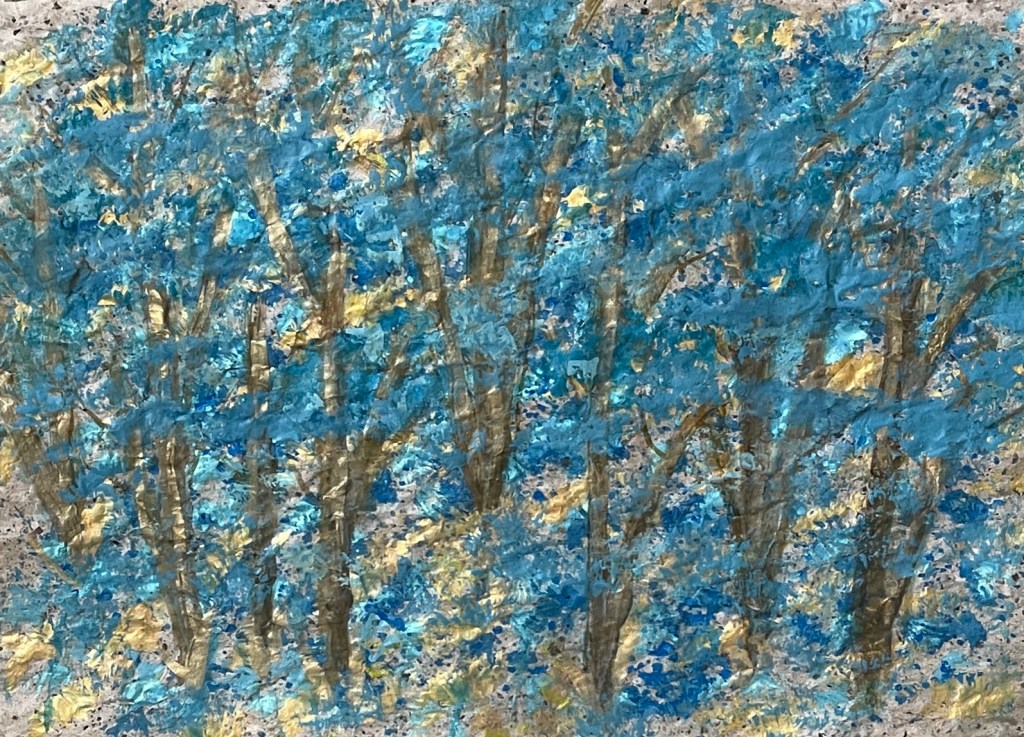
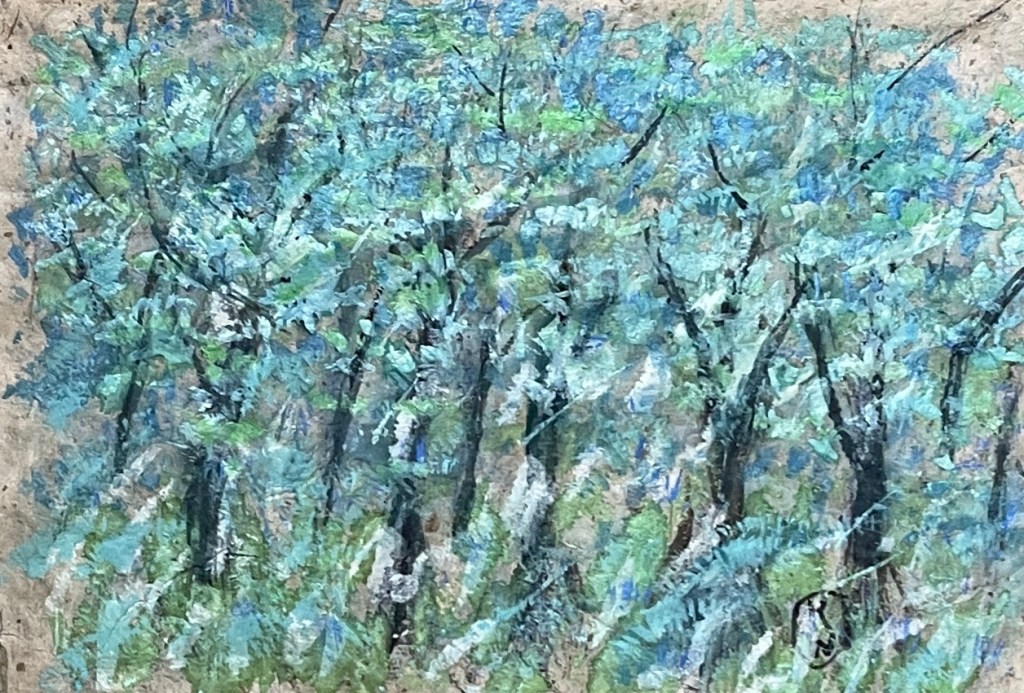
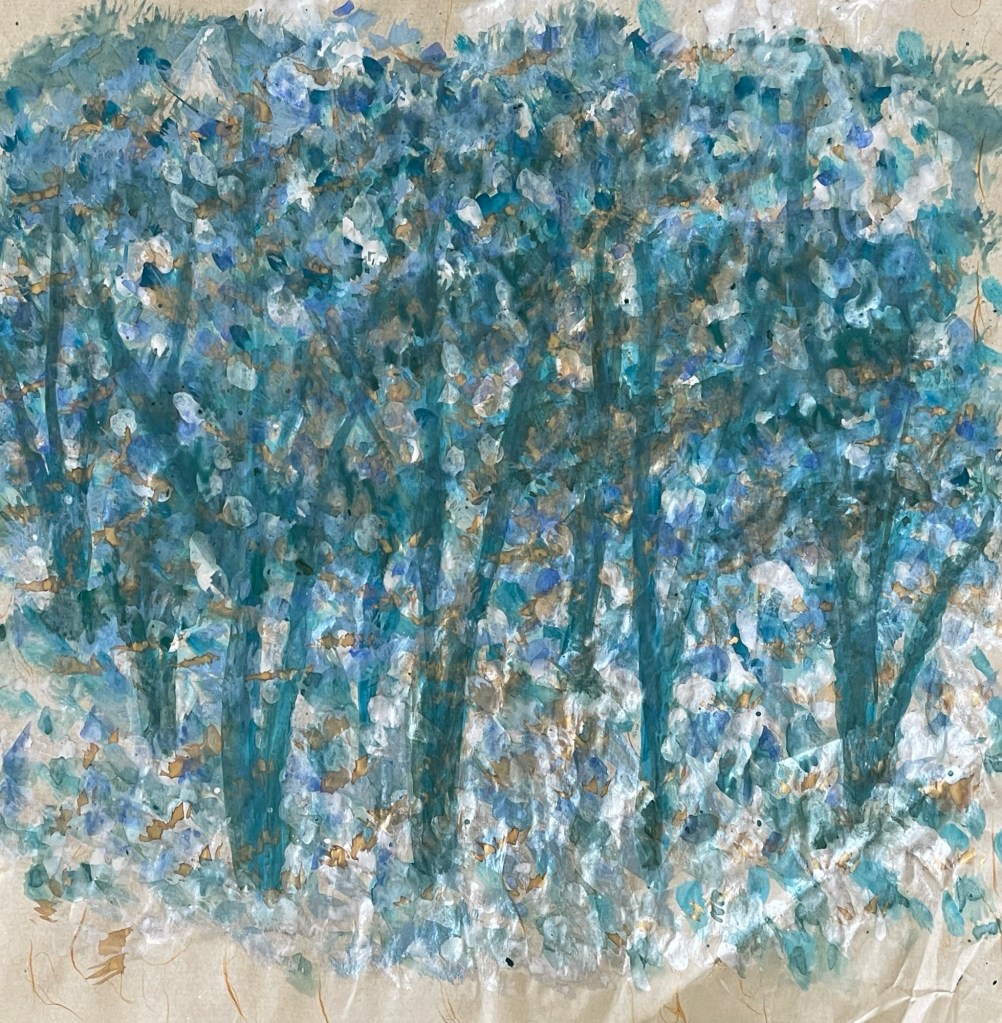
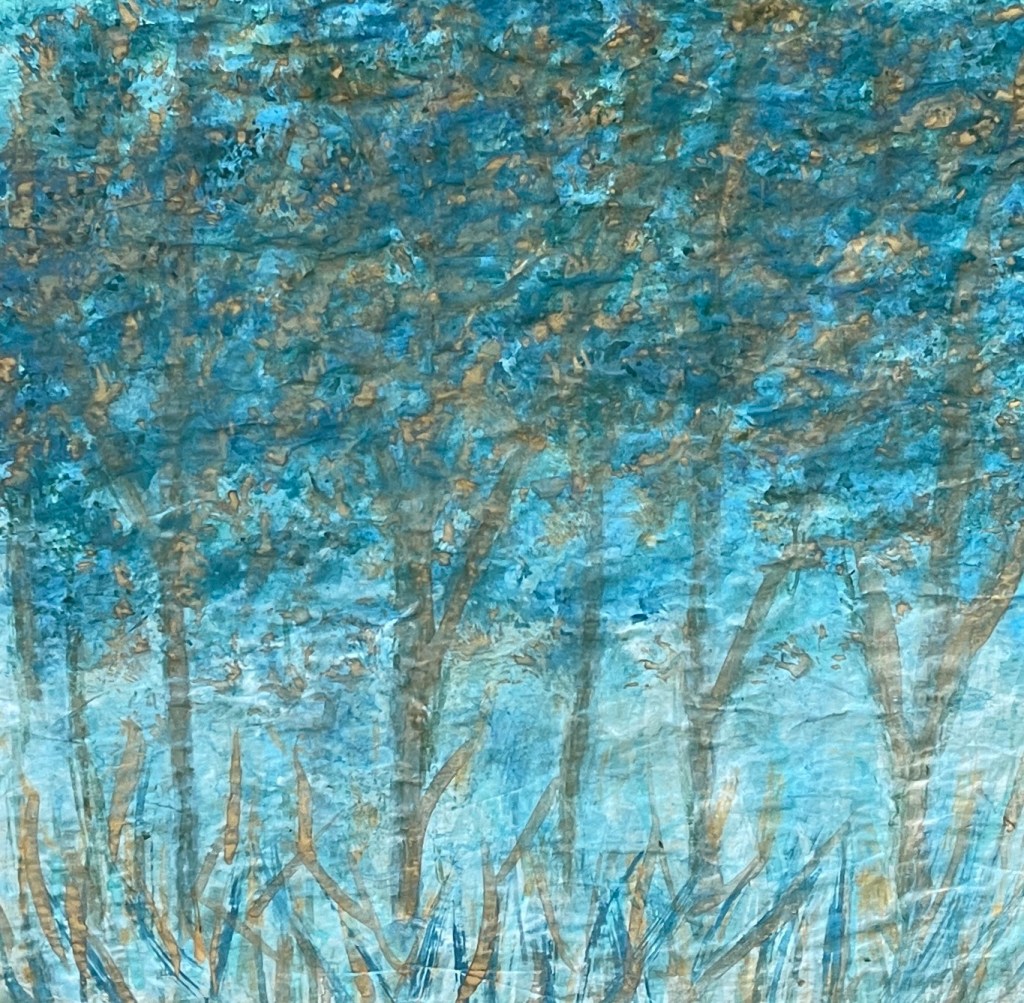
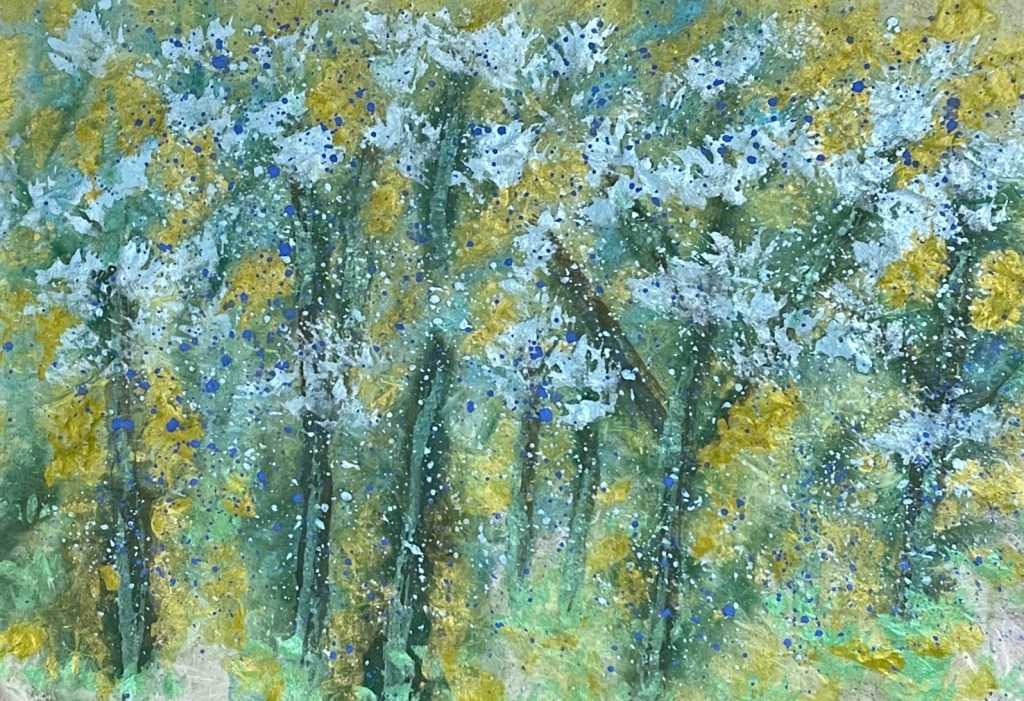
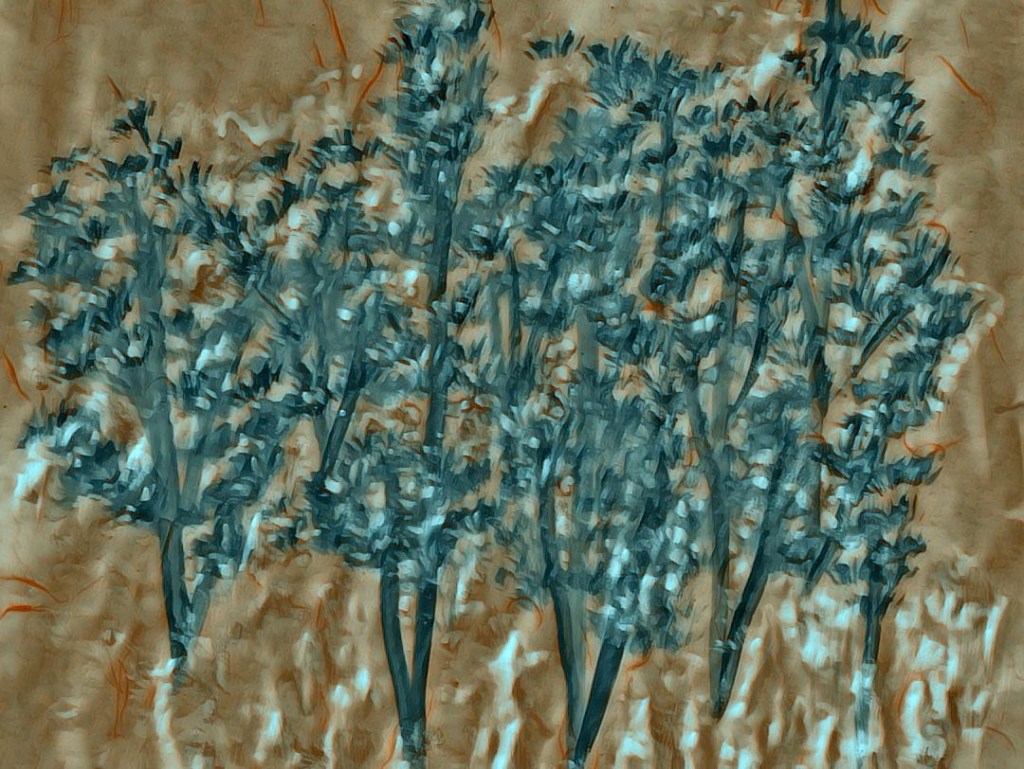
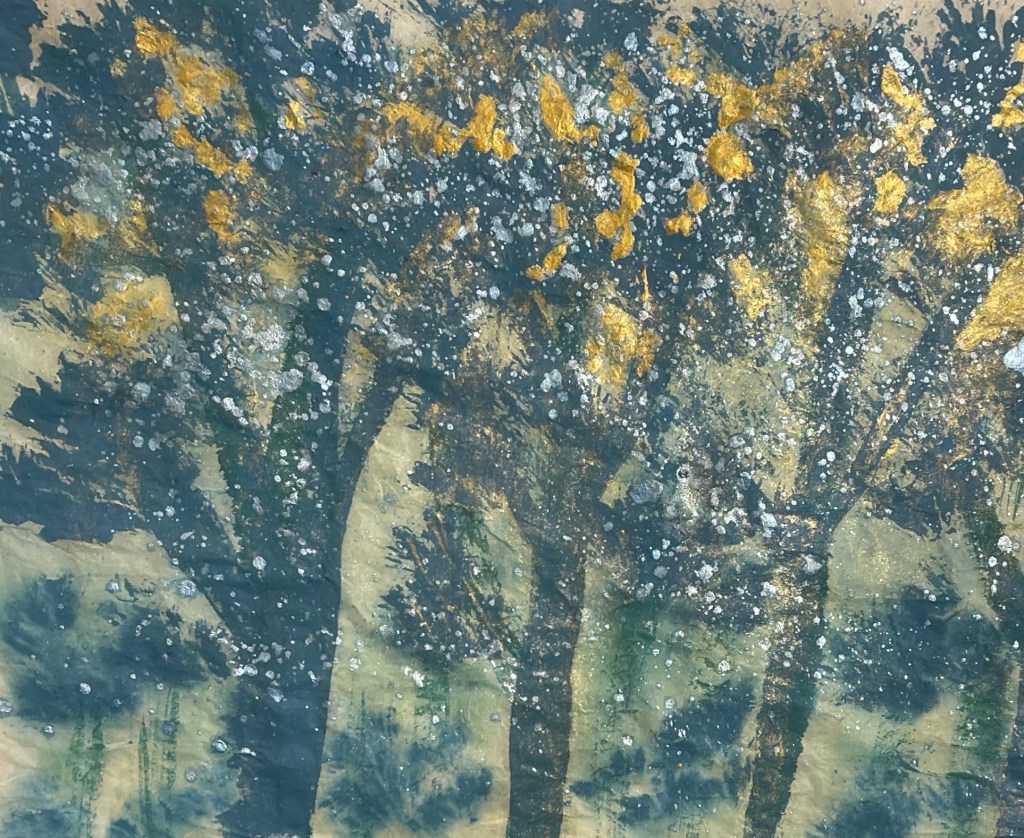
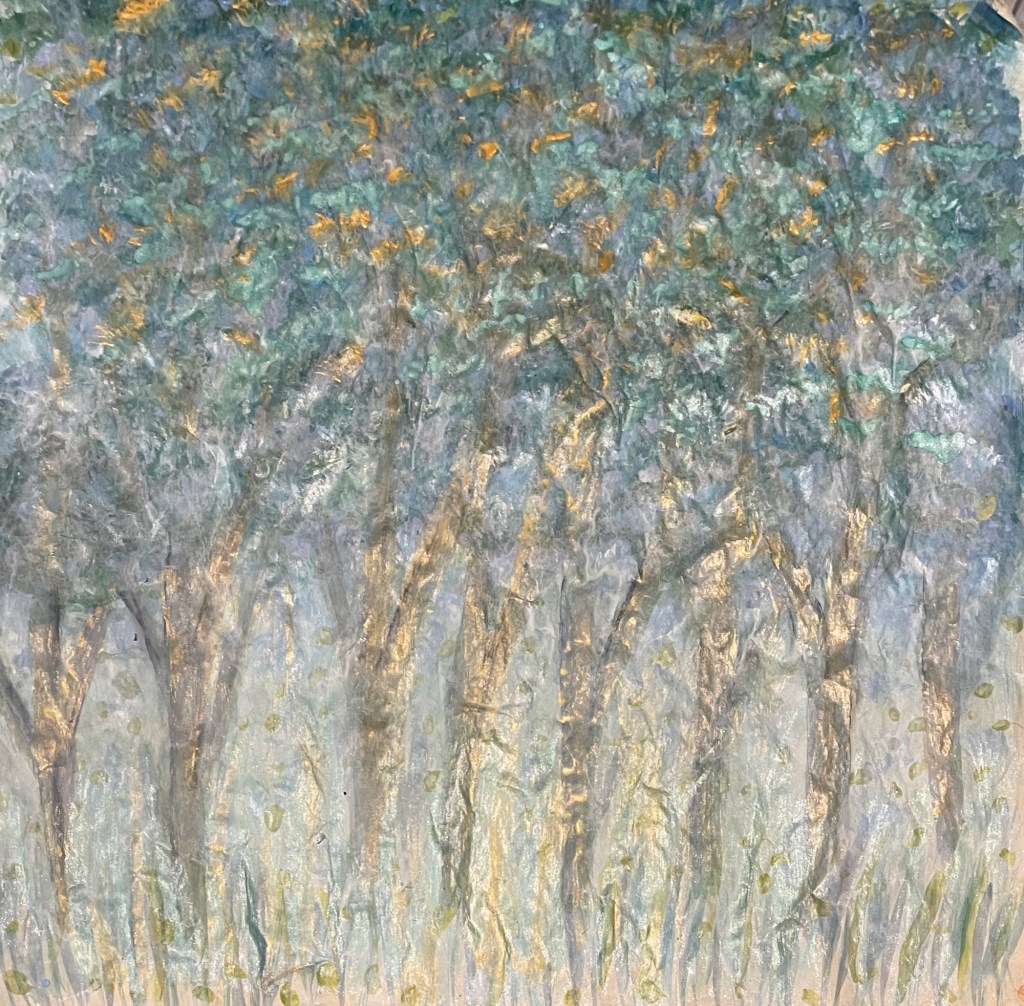
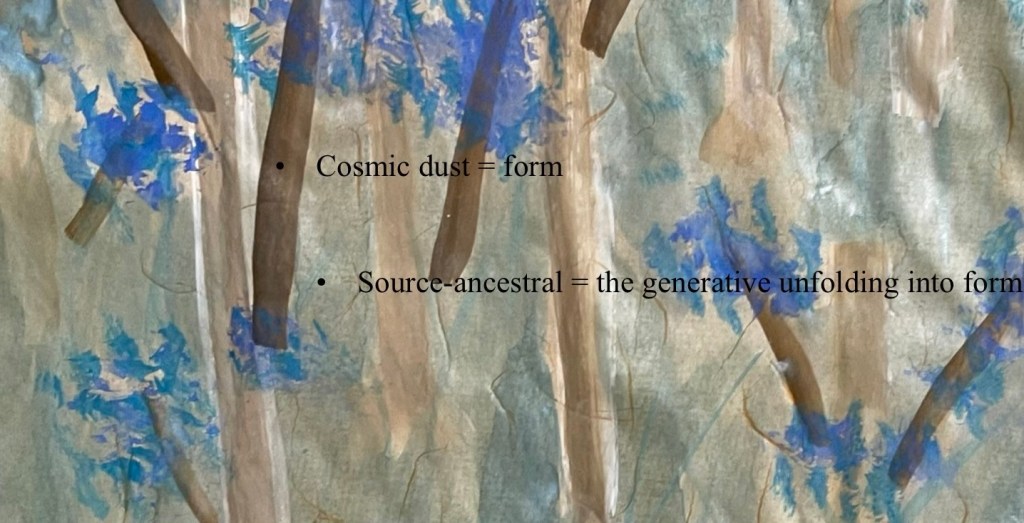
This analysis of the above painting, using three different lenses to focus on different viewpoints, gives a 360 degree perspective. The subject matter of the critique includes: truth-tension (Adorno), plastic vitality (Hofmann), and ontological presence (Hinton). Each reveals a different dimension of what is already occurring in this work.

I. For Adorno, the artwork’s truth resides not in harmony, but in its refusal to reconcile contradictions. The painting embodies this refusal.

1. Non-identity and resistance to conceptual capture

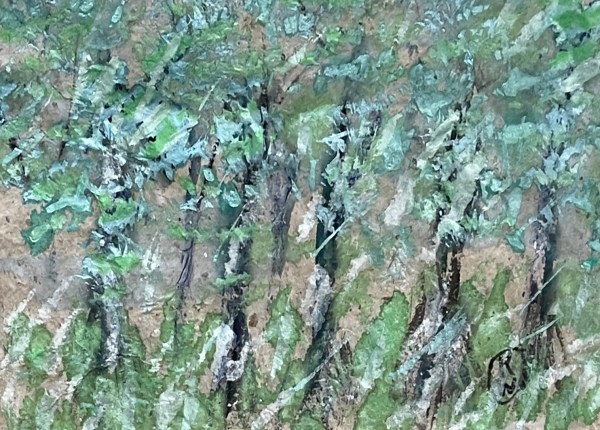
This is recognizably a grove or forest canopy, yet it refuses total mimetic “landscape.” The trunks dissolve into strokes, and the canopy becomes a variable field of layered marks. The image oscillates between:

• representation (trees, foliage)

• and autonomous painterly material (pigment, gesture, surface)

This oscillation is essential. Adorno argued that authentic art preserves the non-identical—that which resists being reduced to a concept. I am not depicting trees, nor attempting to have this be an illustration of trees. They are presences emerging from matter itself.

The vertical strokes especially resist descriptive closure. They are not fully trunks; they are traces of emergence.

2. Sedimentation and historical memory in matter

The layered greens, ochres, and blues feel accumulated rather than applied. Adorno called this sedimentation—history embedded in form.

The work does not present nature as idyllic unity for easy consumption.  Instead, it shows nature as fractured, layered, and temporally dense. The dry, earthen substrate asserting itself through the paint prevents illusionistic escape. The painting refuses to let us forget its material truth.

Nature here is not consumed as image—it remains resistant.

3. Truth through restraint rather than expressionism

Adorno distrusted purely expressive gesturalism when it became cliché. the quiet layering, the absence of dramatic gestural assertion— these aspects show restraint and preserves the authenticity and autonomy of the painting.

This is not a painting of emotional discharge. It is a painting of attention.

Truth emerges not through intensity, but through its creation in a layered process.  The viewer can see this process to state a fidelity to process.

II. Hans Hofmann: Push–pull and the life of pictorial space

Hofmann would immediately recognize this work as spatially alive—not through perspective, but through relational color forces.

1. Push–pull through chromatic opposition Brings forth the dynamic interplay of colors; Warm yellow-greens advance, Cool blue-greens recede, Pale blue verticals advance suddenly against darker ground

2, Space expands and contracts continuously.

This creates what Hofmann called plastic reality—space generated through color relationships rather than illusionistic depth.

III. Hinton, drawing on Chan/Daoist ontology, would see this painting not as depiction but as event—a moment of reality emerging into visibility.

1.Form arising from emptiness

Notice how the forms emerge from the raw ground rather than covering it. The substrate remains visible and active.

This corresponds to Hinton’s idea that reality is not constructed, but revealed through attentive presence.

The painting does not impose order, the order emerges. 

2. The trees breathe.

Hinton writes of landscapes not as objects, but as manifestations of ongoing process. The painting captures this immersion of cosmology.  Hinton would argue that the painting is in tune with the qi, where qi is not fixed, but everything is becoming. 

From these three perspectives, I contend the following Synthesis:

• Adorno: The painting preserves truth through unresolved material tension.

• Hofmann: The painting lives through relational color forces generating autonomous space.

• Hinton: The painting allows the cosmic reality to emerge without conceptual imposition.

The painting exists in a state of quiet autonomy and authenticity.

It neither dramatizes nor illustrates.

It reveals.

Synopsis of THE CREATION OF PATRIARCHY by Gerda Lerner, 1986. Oxford University Press

In the Creation of Patriarchy (1986), Gerda Lerner provides a foundational feminist historical analysis that challenges the idea that male dominance is “natural” or biological. Instead, she argues that patriarchy is a historical construct—something created by humans over nearly 2,500 years (roughly 3100 B.C.E. to 600 B.C.E.) in the Ancient Near East.  

Core Synopsis

Lerner traces the shift from egalitarian tribal societies to the formation of Mesopotamian states. She argues that the subordination of women actually predates the formation of the State, private property and class society.

According to Lerner, the “domestication” of women was the very first form of hierarchy. By controlling women’s reproductive capacity, men established a template for the later enslavement of other humans.  

Major Themes

1. The Commodification of Women’s Sexuality

Lerner identifies the exchange of women between tribes as the origin of the patriarchal system. Before men owned land or slaves, they “owned” the reproductive potential of women. Women were traded to cement alliances, making their bodies the first form of private property.  

2. The Development of the “Double Standard”

As states formed, legal codes (like the Code of Hammurabi) began to formalize the control of women.  

• The Veil: Lerner highlights how veiling was used to distinguish “respectable” women (protected by a specific man) from “unattached” women or slaves.

• Legality: Adultery became a property crime against the husband, rather than a moral failing.

3. The Shift from Goddesses to One God

A major turning point in Lerner’s thesis is the symbolic “dethroning” of the Mother Goddess.  

• Early societies often worshipped female deities associated with fertility/birth, relationship to the flora and fauna, transformation, cycles in tune with Mother Earth, and creation.  

• The rise of monotheism and the Abrahamic religions replaced these figures with a single, male God.  

• This transition effectively removed women from the realm of the Divine, making their subordination appear divinely ordained.

4. Class as a Gendered Experience

Lerner argues that class is not experienced the same way by men and women.

• Men gain status through their relationship to the means of production (their work/wealth).  

• Women historically gained status through their relationship to a man (father or husband).

5. The “Internalization” of Inferiority

Perhaps her most poignant theme is how women became complicit in the system. Because women were denied education and history, they lacked the tools to conceptualize their own oppression. They were offered “protection” in exchange for subordination, a bargain that kept the system stable for millennia.

Nike, Goddess of Victory

Nike before patriarchy: victory as alignment, not domination

In a pre-patriarchal cosmology, Nike is not a goddess of conquest. She is a threshold force—the felt moment when right action comes into harmony with the living order of the world.

Her origin through Styx, an ancient chthonic river, places Nike in the realm of deep law, not male command. Styx is older than Olympian rule; she embodies binding truth, consequence, and continuity. Victory, here, is not taken—it emerges when action respects these deep structures.

Nike’s power is therefore relational, not hierarchical.

Victory as balance and completion

Before patriarchal war gods redefine success as domination, victory meant:

• Survival of the community

• Skillful cooperation

• Completion of a cycle

• Restoration of balance after effort

Nike appears at the moment of resolution, when tension releases into coherence. She does not preside over endless striving. She marks the end of struggle, the return to equilibrium.

This aligns her with agricultural and seasonal cycles:

Sowing, tending, harvesting

Victory is the harvest—not conquest of the field, but participation in its rhythms.

Blog at WordPress.com.

Up ↑