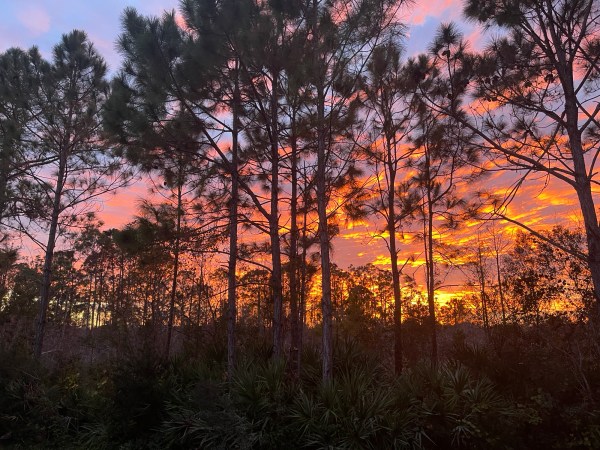
This site is to post my art work, let loose and give my opinions about my world
Author: Artbykatew
I’m an artist, environmentalist, a retired educator, and docent. I live in Daytona Beach, Fl. I feel passionate about working people and unions and our freedoms guaranteed by our American Constitution.
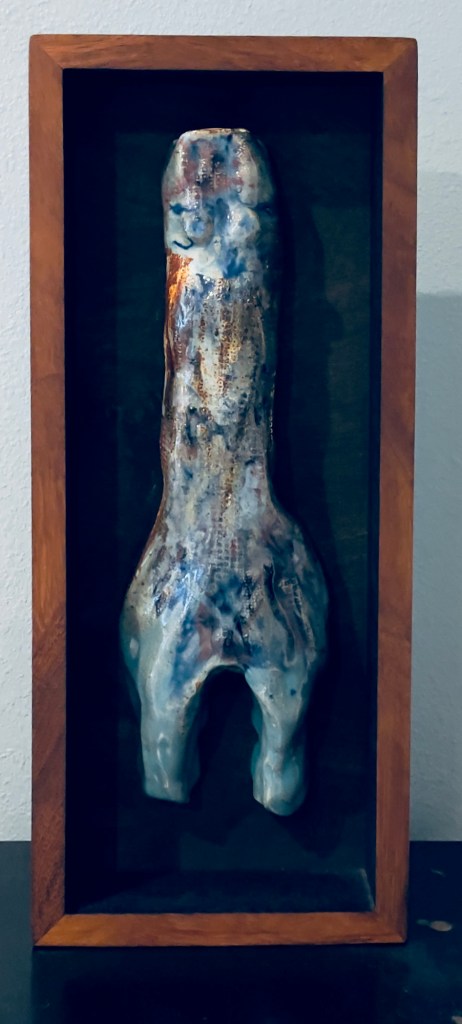
Contemporary Lady of Se, based on an archaeological artifact dating to c.5000 BCE, Hungary (Marina Gimbutas’ The Language of the Goddess, p. 34)
These ancient forms are not fetishized mindless idol worship or kitsch but rather a thoughtful memory of something that was repressed—feminine and earth-centered values. There have been many attempts to destroy any evidence of this female-centered/Mother Earth-centered/nature-centered world found in the pre-patriarchal eras, (40,000-1200 BCE)
My attempt is to bring forward these works, in order to show us the brokenness of history—what was lost when patriarchal domination replaced the female and Mother Earth centered world.
Contemporary Fish Goddess
For me, these goddess figures function as aesthetic negations: they call into question the patriarchal religions and economic systems with too many bought politicians that have reduced the sacred and feminine to commodity and instrument in order to dominate. These contemporary sculptures are based on an archaic semblance, not for consolation but interruption—an insistence that what has been buried still exerts a claim on us.
I am not simply affirming the past, but critically pointing out what has been lost and devalued. I exhibit them as a critique of current institutional attempts at modern domination of females and Mother Earth, found in our legal, religious, economic and political structures.
Bird Goddess Vessel
These art objects become ciphers—objects that hold the contradictions between
• Mimesis (the drive to connect with nature in a non-controlling way) and
• Rational mastery (the modern drive to dominate and control).
These works do not show a reconciliation—they don’t smooth out this tension into something comfortable.
Their truth comes from this unresolved tension which includes 1) a protest against patriarchy and a petrified market that alienates and 2) a memorial, remembering what has been destroyed.
While meditating on the wetlands, my work very quickly morphed into something older and larger—a dialogue among earth processes, psychic processes, and the cosmic unfolding itself.
My practice is rooted in the modernist tradition—Expressionism, Surrealist automatism, where the unconscious is a generative force—reaching back into the ancient Goddess cultures that honors the female and Mother-Earth as the origin of life, transformation, and meaning. This recognition of the goddess is where my work breathes.
These paintings live at the intersection of Adorno’s aesthetics, Ch’an cosmology as interpreted by David Hinton, and the feminine divine.
Adorno: Revoking the Separation of Feeling and Understanding
Adorno argues that modern art attempts to undo what he calls the “fatal separation” between feeling and understanding—a division philosophy imposed for centuries. Modernism resists this split by making meaning and emotion inseparable in the very form of the artwork.
These paintings embody that principle:
—The layers of pigment aren’t decorative for quick consumption, they are the thinking.
—The gestural marks create forms from the tensions embedded in material.
—The swamp’s shifting ground becomes a metaphor for the dissolution of rigid categories and non-identity.
In This series, immersion rather than detached contemplation, will give clarity.
These paintings and works are not solely based on observations of the swamp; rather they are offered as an immersive experience, to pull us into the cosmos.
That’s the crux of Adorno’s aesthetic truth: meaning arises only when you allow yourself to be absorbed by the artwork’s internal contradictions and energies.
David Hinton: Ch’an Cosmology and the Breath of the World
In contrast to Adorno’s philosophy of aesthetics, which emphasizes the tensions of the society and the art, David Hinton speaks of the cosmos as a continuous unfolding—a single breath expanding and contracting across time.
Through his understanding of Ch’an Buddhism, the universe is not a collection of objects but a field of transformations. Everything arises from emptiness, manifests briefly, and dissolves back.
In these paintings:
—heat rises as qi,
—water opens into sky,
—pigments drift like cosmic breath,
—and figural hints appear like fleeting articulations of the Tao and the generative.
The swamp becomes a metaphor for the world; nothing fixed, everything in process, every boundary porous.
Feminine Divine and MotherEarth
The Goddess cultures of the Paleolithic and Neolithic period, from approximately 40,000 BCE to 1200 BCE, honored earth as a living presence. The clay sculptures engage that tradition directly, as do the paintings in more elemental ways.
Here the feminine divine is not represented but it is embodied:
—in the curves of heat rising like breath from the original womb of earth;
—in the never ending cycles of decay and renewal;
—in the swamp as sacred matrix of the cosmos;
—in the archetypal figures that emerge and dissolve like memory from the collective unconscious.
This work is part of my ongoing reclamation of pre-patriarchal values: collaboration, reciprocity, and reverence for the Earth that sustains us.
Jung: Coniunctio, or the Merging of Opposites
These paintings enact what Jung called coniunctio: the merging of opposites into a higher unity.
• The conscious and unconscious,
• the cosmic and the earthly,
• the abstract and the figurative,
• the personal and the collective,
The forms that appear—sometimes only a shadow or gesture—are patterns surfacing from the psychic depths, from the generative. This is the soul speaking through the material.
Ecology, Earth Justice, and the Swamp
The swamp is not a picturesque landscape; it is a tell, an excavation of a political and ecological site.
It resists domestication.
It escapes the categories of “productivity” and “profit.”
It frustrates the extractive logic of patriarchy, ownership, and market values.
In honoring its processes, I am honoring an ecological ethic: nature not as resource, but as relationship.
CONCLUSION
In this series, form, breath, earth, and psyche converge.
If there is a single thread running through these works, it is this:
the Earth is still breathing, and we can learn to breathe with her.
Adorno is naming the aesthetic trace of Ein Sof (Jewish mystical reference to G-d as infinity, non-identity) — but his Philosophy of Aesthetics is emptied of theology and grounded in history, economics, and art.
For Adorno this is not mysticism. It is a political metaphysics of non-identity.
Art transports not by elevating us out of the world, but by opening within the world a space that cannot be fully controlled, categorized, exploited, or owned.
This is why it is dangerous.
And why it is necessary.
The enigmaticalness of art is in its non-identity (Adorno, 1997, p. 132.)
Each viewer makes meaning. Each meaning is partial, contingent, situated. The viewer makes and gives meaning to art based on their particular experiences and knowledge. But none of those meanings is THE meaning.
There is always something: unspoken, unresolved, unfinalizable.
This is the infinite that cannot be enclosed in identity.
The openness of art is not relativism.
It is non-identity — meaning can never be fully captured.
This is not “anything goes.”
This is: meaning remains in motion, because the world remains unfinished.
The justice department’s pardon attorney, who was recently fired, has claimed on social media that Donald Trump’s recent wave of pardoning white-collar criminals has erased more than “$1bn in debts owed by wealthy Americans” to the public purse.
Also from the GUARDIAN 11/07/25
CORPORATE CAPTURE OF THE GLOBAL CLIMATE CONTROL PROCESS
More than 5,000 fossil fuel lobbyists were given access to the UN climate summits over the past four years, a period marked by a rise in catastrophic extreme weather, inadequate climate action and record oil and gas expansion, new research reveals.
Lobbyists representing the interests of the oil, gas and coal industries – which are mostly responsible for climate breakdown – have been allowed to participate in the annual climate negotiations where states are meant to come in good faith and commit to ambitious policies to reduce greenhouse gas emissions.
The roughly 5,350 lobbyists mingling with world leaders and climate negotiators in recent years worked for at least 859 fossil fuel organizations including trade groups, foundations and 180 oil, gas and coal companies involved in every part of the supply chain from exploration and production to distribution and equipment, research shared exclusively with the Guardian has found.
Just 90 of the fossil fuel corporations that sent lobbyists to climate talks between 2021 and 2024 accounted for more than half (57%) of all the oil and gas produced last year, according to the analysis by Kick Big Polluters Out (KBPO), a coalition of 450 organizations campaigning to stop the fossil fuel industry blocking and delaying global climate action.
This information clearly exposes corporate capture of the global climate process … the space that should be about science and the people has been transformed into a large carbon business hall,” said Adilson Vieira, spokesperson for the Amazonian Work Group. “While forest communities fight for survival, the same companies that cause climate collapse buy credentials and political influence to continue expanding their fossil empires.”
“Not only are Indigenous peoples on the frontlines of their extractive sites suffering human rights violations, but we also face the brunt of climate chaos on our lands with worsening floods, wildfires, and extreme heat waves. We need to take down the ‘for sale’ sign on Mother Earth and bar entry to Cop for oil and gas lobbyists,” said Brenna Yellowthunder, lead coordinator for the Indigenous Environmental Network, a member of KBPO.
In this work, form and material breathe together. The gesture unfolds through resistance, the brushstroke revealing the enigmas of creation. Spirit is not imposed but arises in tension, the universal made singular, the particular carrying the weight of history. Like Qi, energy flows through matter and consciousness alike, shaping without domination. Like the Shekinah, light, breath, and life-force dwell within, luminous and relational, guiding without command. Here, creation is co-arising: intellect, matter, and spirit intertwined. Each mark, each surface, a moment of becoming—alive, enigmatic, and irreducibly unique.
This essay explores the possible mechanisms through which leaders mobilize popular support for domination and violence. It shares the insights of Theodor Adorno and Hannah Arendt on fascism and the Nazi rise to power, while drawing on current analyses that reveal how similar patterns continue to emerge in modern political life.
Arendt: Mass Loyalty and Institutional Hollowing
Hannah Arendt emphasized that authoritarian leaders endure so long as they mobilize the loyalty of the masses, who allow them to dismantle institutions from within. In The Origins of Totalitarianism (1951/1973), she describes how the authoritarian movements subordinate law and institutions to the will of the leader. Institutions collapse when their authority is undermined: “Institutions are destroyed when the authority of the people who inhabit them is destroyed” (Arendt, 1963, p. 140). Norm-breaking by leaders is not punished but admired, since it demonstrates fidelity to the movement rather than to democratic procedure (Arendt, 1951/1973, p. 382).
Adorno: Authoritarian Dispositions and Cultural Conditioning
Theodor Adorno complements this picture by explaining why the masses support authoritarianism in the first place. In The Authoritarian Personality (Adorno, Frenkel-Brunswik, Levinson, & Sanford, 1950), he identified personality structures marked by submission to authority, hostility to out-groups, and rigid conventionalism. Such predispositions make citizens receptive to authoritarian appeals.
Further, in Dialectic of Enlightenment (Horkheimer & Adorno, 1944/2002), Adorno argued that the culture industry conditions individuals to conformity and passivity, fostering acceptance of domination. As summarized above, Adorno identifies the psychological and cultural mechanisms that render mass complicity possible.
Levitsky & Ziblatt: Backsliding from Within
Steven Levitsky and Daniel Ziblatt’s How Democracies Die (2018) brings these insights into a contemporary analysis. They show how democracies most often erode not through coups, but through elected leaders incrementally undermining institutions. Leaders exploit polarization and mass loyalty to break democratic norms. They do this by:
• rejecting the legitimacy of opponents,
• tolerating violence,
• curtailing civil liberties, and
• weakening independent institutions (Levitsky & Ziblatt, 2018, pp. 106–115).
Like Arendt, they stress that institutions only endure if people respect and uphold them. Like Adorno, they note that citizens can be conditioned—through polarization, media, and culture—to accept domination as legitimate.
Convergence: A Multi-Level Theory of Authoritarian Endurance
Bringing these perspectives together highlights the possibility of three dimensions of authoritarian endurance:
• Political-institutional (Arendt): Leaders stay in power by hollowing out institutions and mobilizing mass loyalty.
• Psychological-cultural (Adorno): Masses support authoritarianism because authoritarian dispositions and cultural industries condition them to accept domination.
• Contemporary political movements (Levitsky & Ziblatt): Democratic erosion unfolds gradually, from within, as leaders exploit polarization and weaken guardrails.
Together, these frameworks underscore that authoritarianism persists not simply through coercion, but through the active complicity of citizens, enabled by psychological conditioning, cultural manipulation, and political mobilization. Democratic backsliding is therefore a multidimensional process, linking the inner lives of citizens (Adorno), the fragility of institutions (Arendt), and the strategies of contemporary autocrats (Levitsky & Ziblatt).
References
• Adorno, T. W., Frenkel-Brunswik, E., Levinson, D. J., & Sanford, R. N. (1950). The authoritarian personality. Harper & Row.
• Arendt, H. (1963). On revolution. Viking Press.
• Arendt, H. (1973). The origins of totalitarianism (New ed.). Harcourt Brace Jovanovich. (Original work published 1951)
• Horkheimer, M., & Adorno, T. W. (2002). Dialectic of enlightenment: Philosophical fragments (E. Jephcott, Trans.). Stanford University Press. (Original work published 1944)
• Levitsky, S., & Ziblatt, D. (2018). How democracies die. Crown.
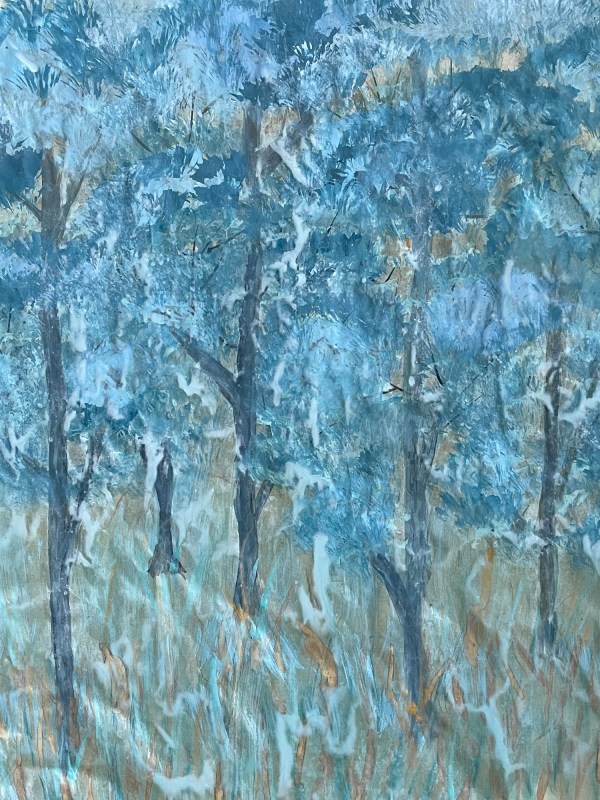
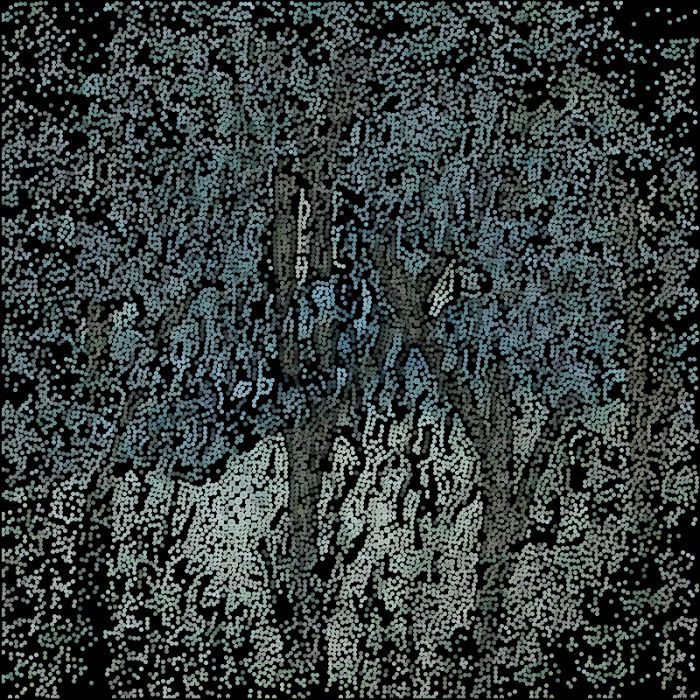
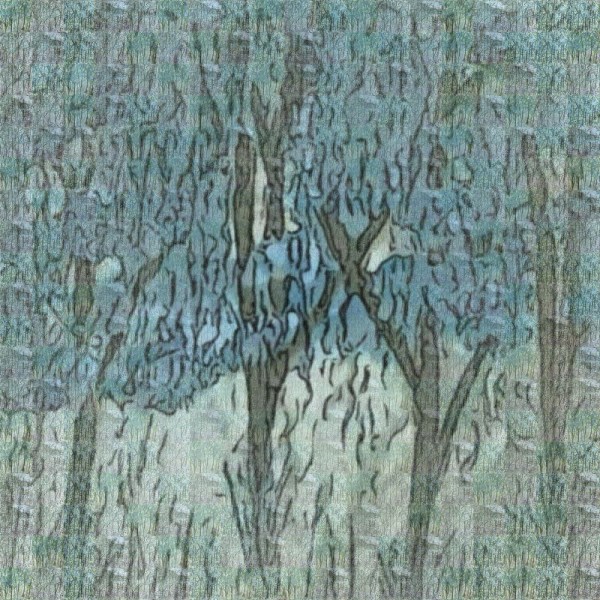
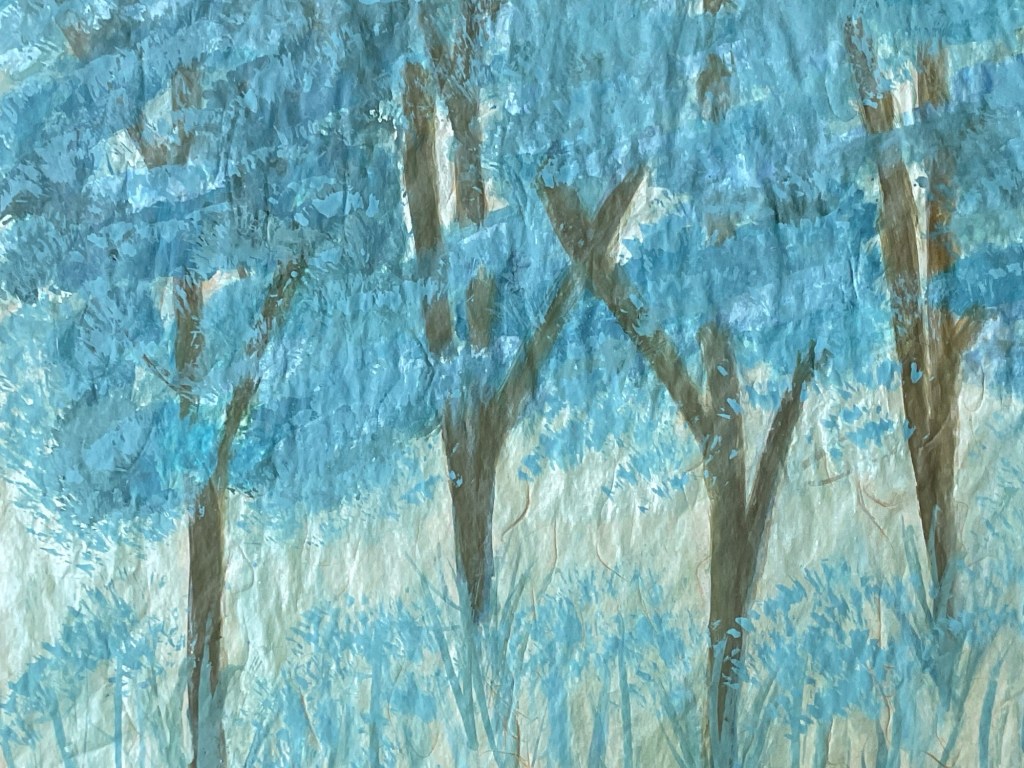
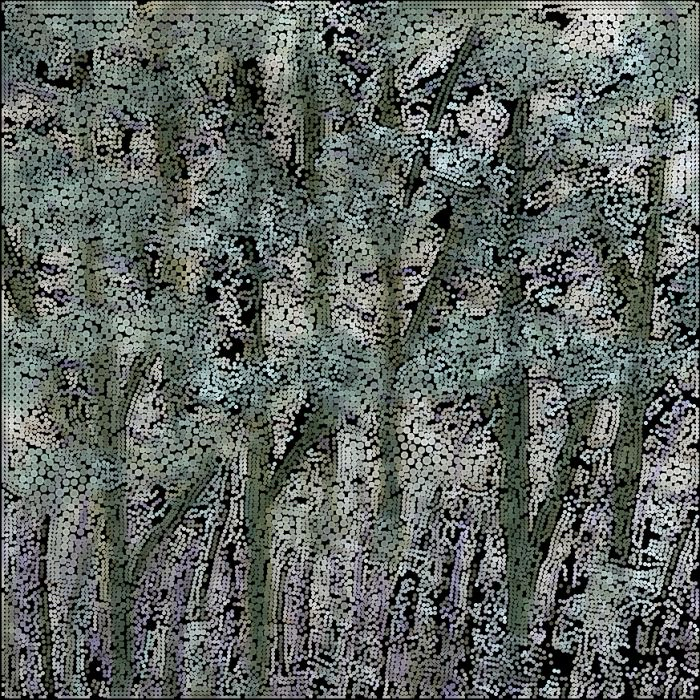
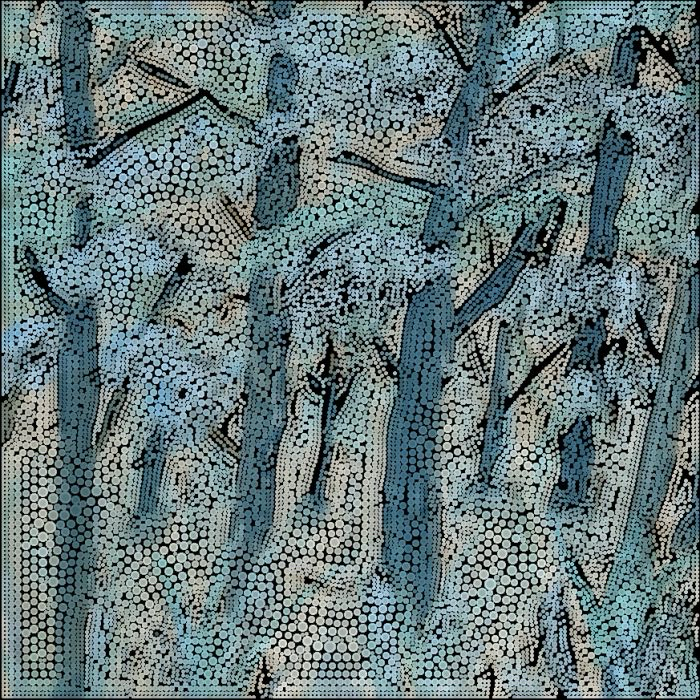
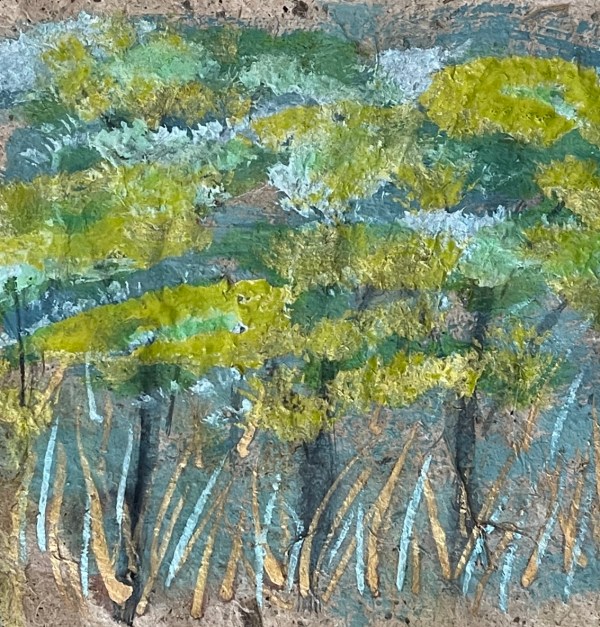
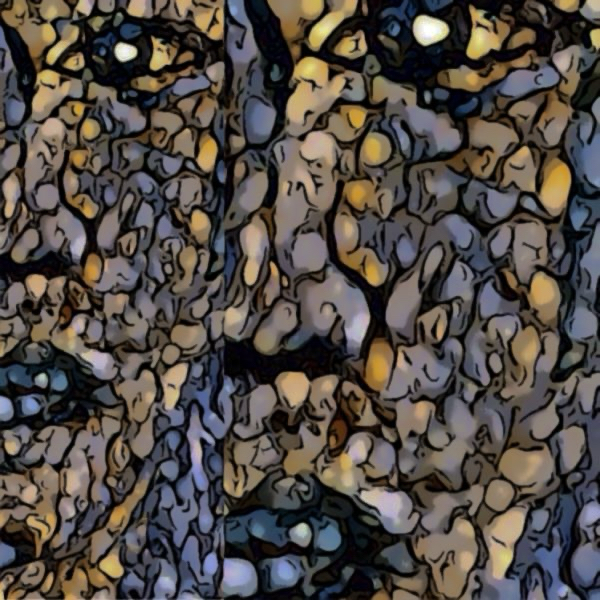
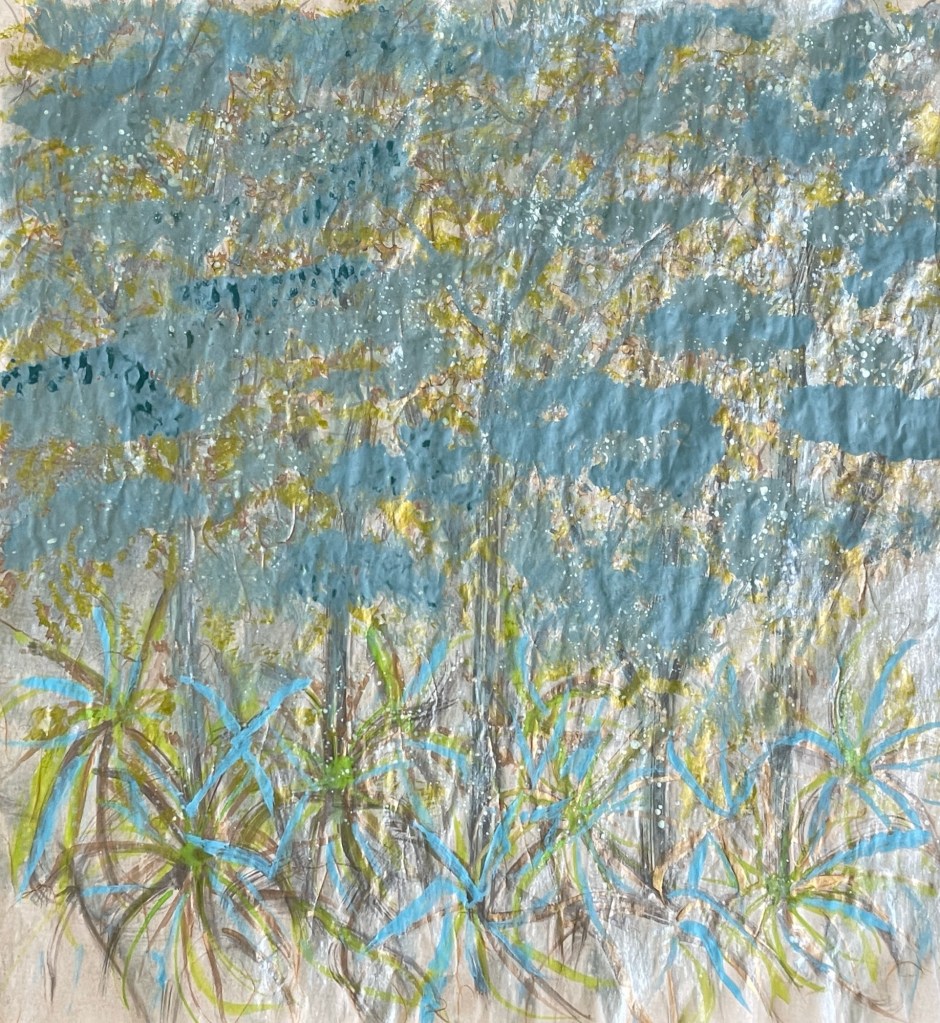
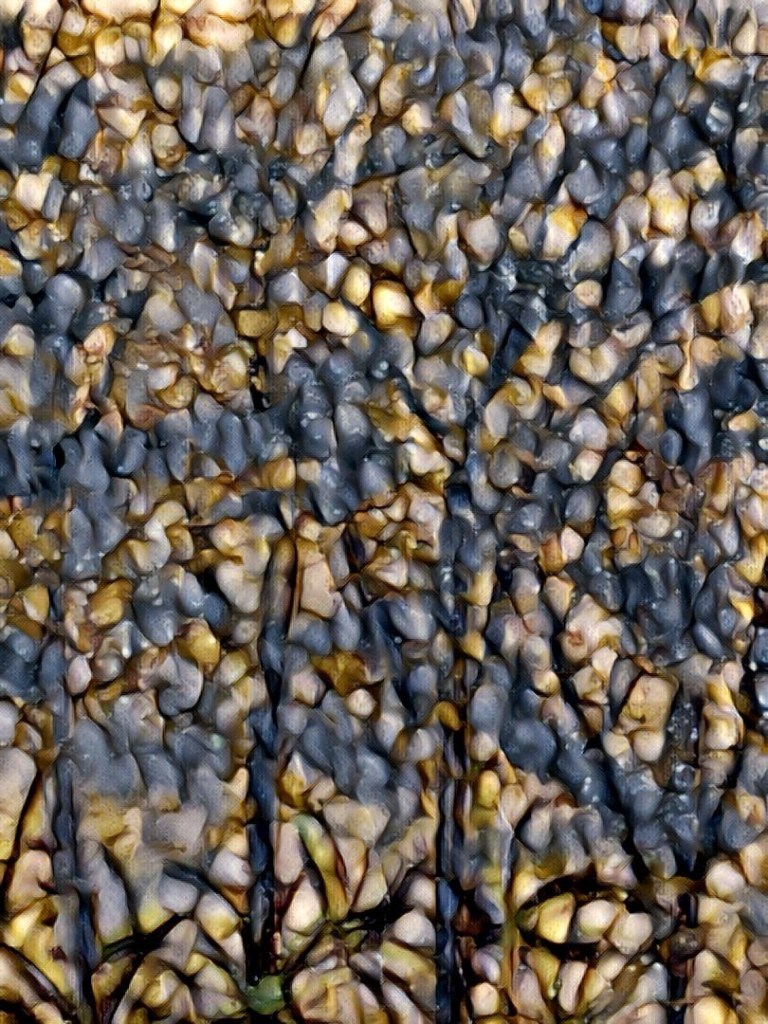
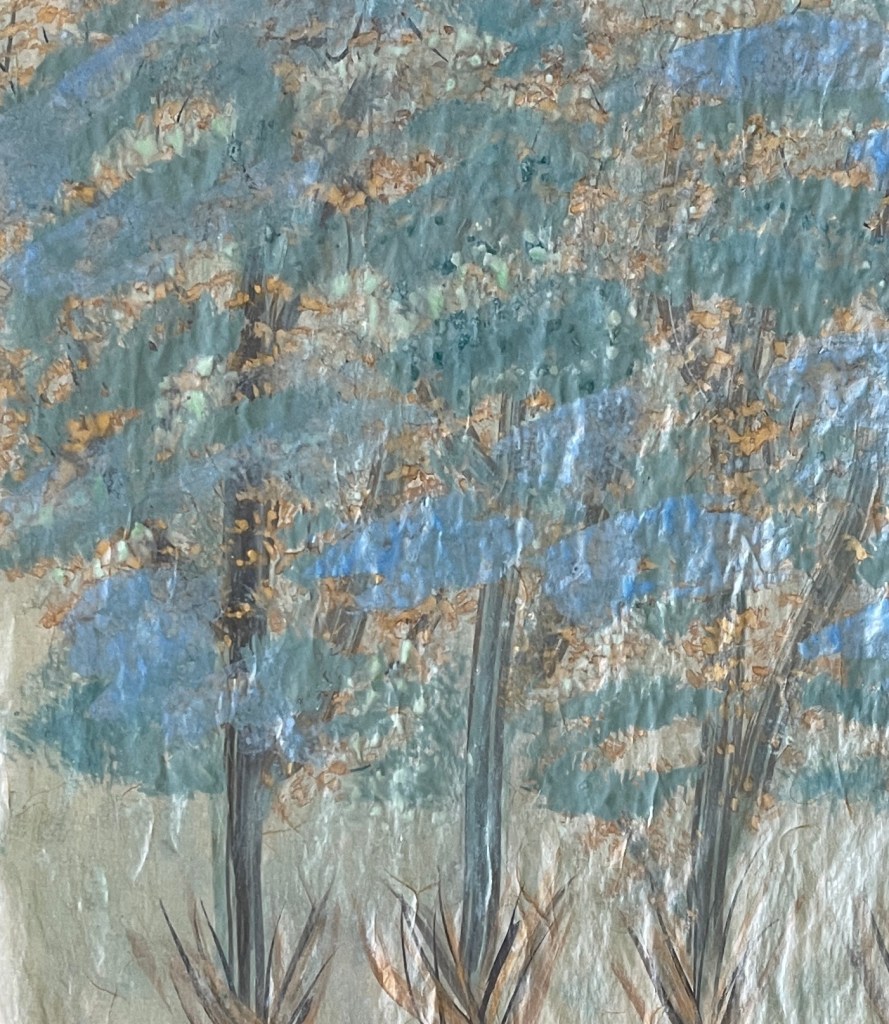
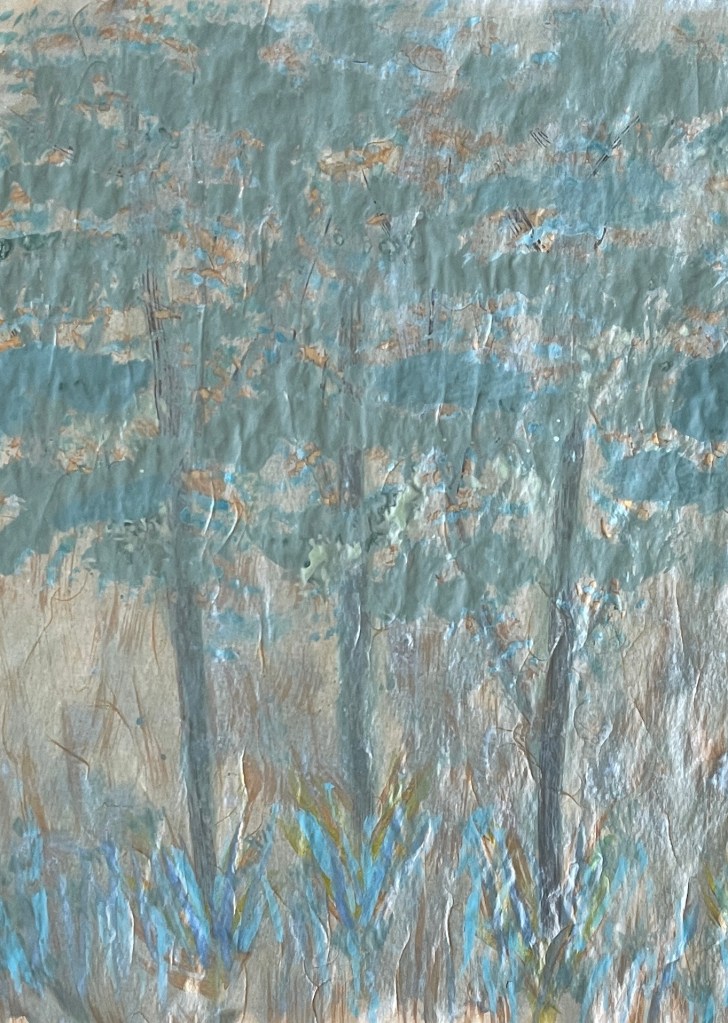
Fragmented Swamp Pulse emerged from a quiet rhythm —an interplay of shadowed branches weaving through pools of warm light and cool depths. The textured, pebble-like forms gather and shift like scattered reflections on moving water, inviting the eye to linger within their subtle fractures. Dark lines trace a network both fragile and enduring, suggesting a forest’s pulse that is at once fractured and whole.
For Adorno, there is no such thing as a purely immediate experience of art (or of nature, for that matter).
He uses the word, Immediate, to mean something given in its raw, untouched form, as though we could encounter “the thing itself” without interpretation, history, or framing. Romantic aesthetics often longed for this kind of immediacy — a direct communion with beauty, nature, or G-d.
But Adorno insists this is an illusion as what we see, feel, and represent is always mediated by concepts, history, social structures, and the materials of the artwork. Even when art seems “natural,” it carries with it layers of technique, culture, and tradition.
In Aesthetic Theory, he puts it this way:
“Nothing in art is immediate; every aesthetic element is mediated through the totality of the work and through history.” (Adorno, Aesthetic Theory, trans. Hullot-Kentor, 1997, p. 120)
So, in Adorno’s thought—Nature itself is mediated: our view of a tree, for example, is shaped by cultural categories, memory, language (“tree”), and the history of landscape painting.
He claims, Art reveals this mediation because it is not simply a copy of the natural world but a constructed object that makes us aware of how representation itself works. Rosalind Krauss argues this point as well.
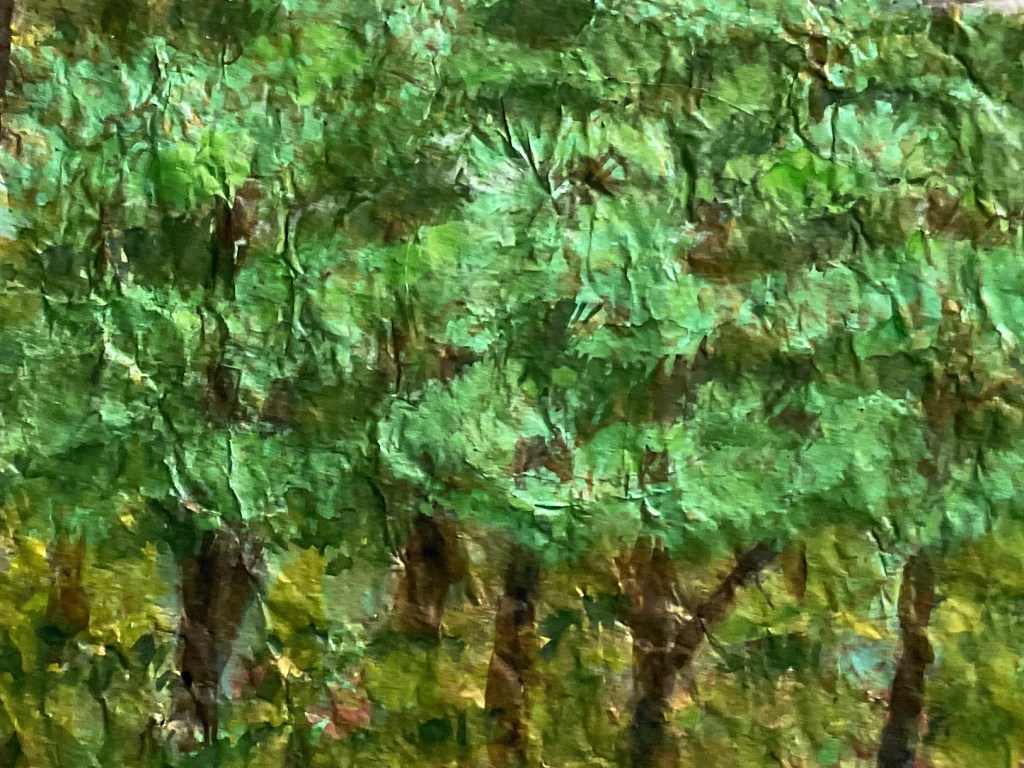
In these few paintings, there is not an attempt to deceive the eye into believing we are looking at literal trees (as, say, in hyper-realism). That would lean toward an illusion of immediacy. Instead, the visible brushstrokes, textured surface, and shimmering pigments constantly remind the viewer that this is a painting — a human construction. This is the artifice of the work.
Adorno claims the painting manifests as a mediation: it acknowledges that our experience of “trees” here is filtered through pigment, paper, and artistic decision.
Thus, the work resists collapsing into “pure nature.” It allows us to sense both the natural subject (trees, light, leaves) and the fact that it is always refracted through an artistic and cultural medium.
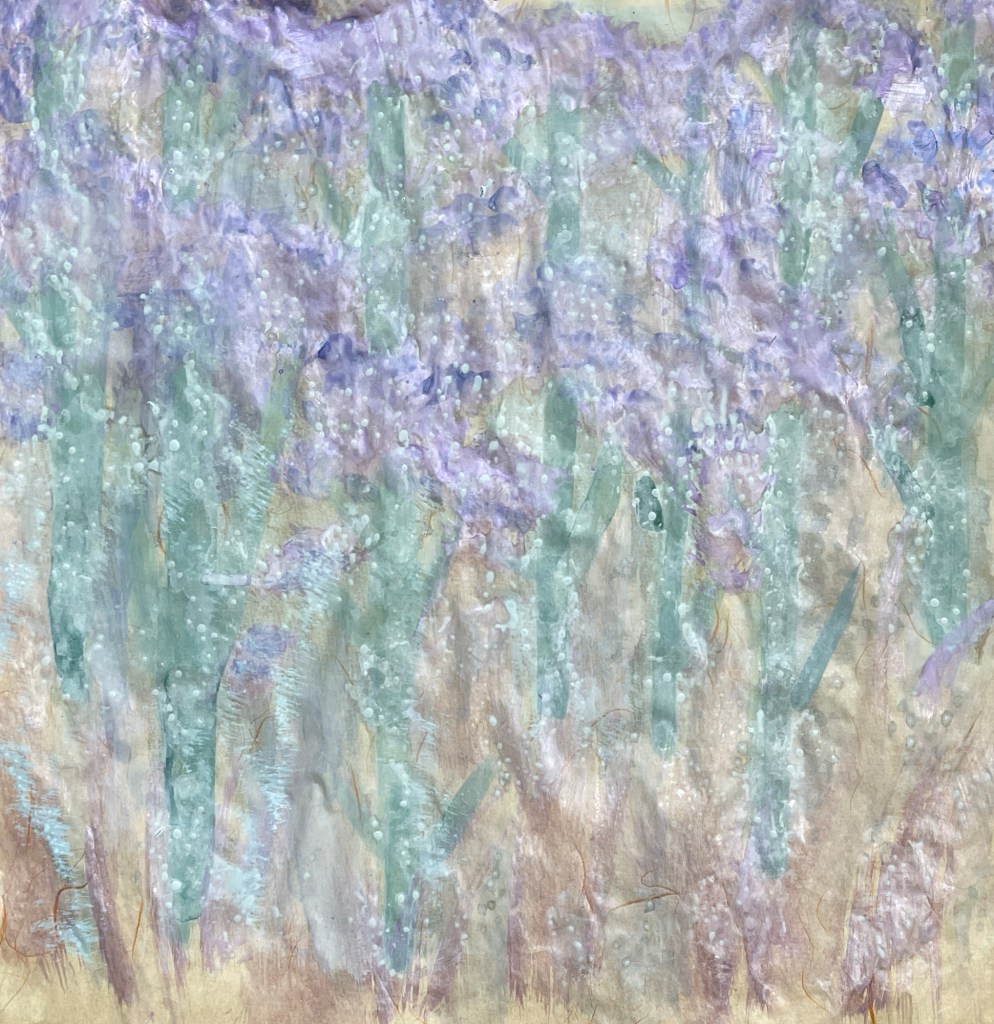
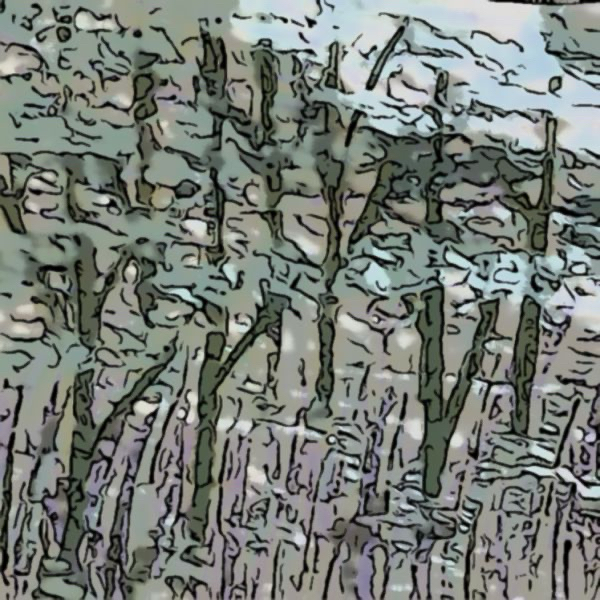
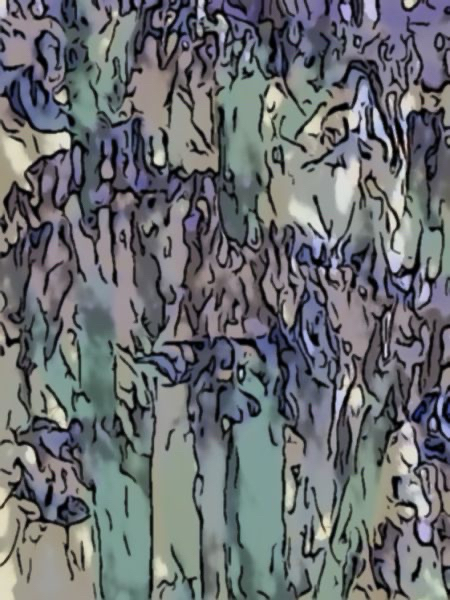
Notan Thicket: Dream in Lilac unfolds like a suspension bridge between form and color. Here, the skeletal branches and trunks weave among a delicate lattice, their gray tones tracing a network of subtle shadow leaves against a field of deep lilac. This purple expanse is not just background but a space that hovers on the edge of consciousness—where the familiar whispers of the wetlands become a fragile balance between structure and mystery, inviting a moment to linger within that shimmering boundary where the world feels both present and elusive.
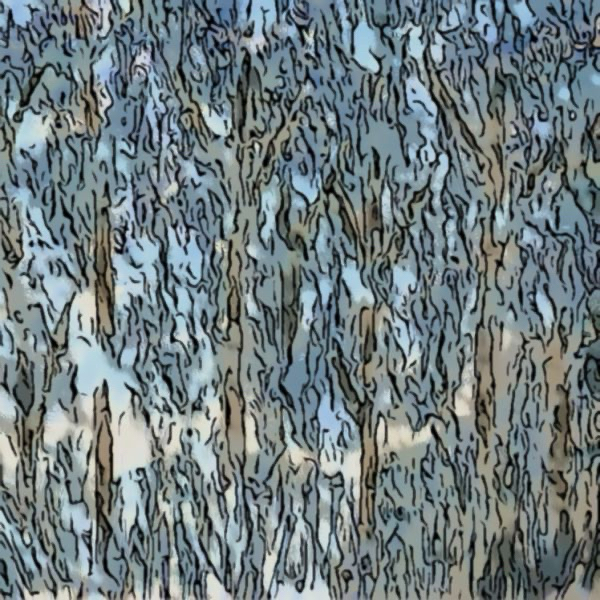
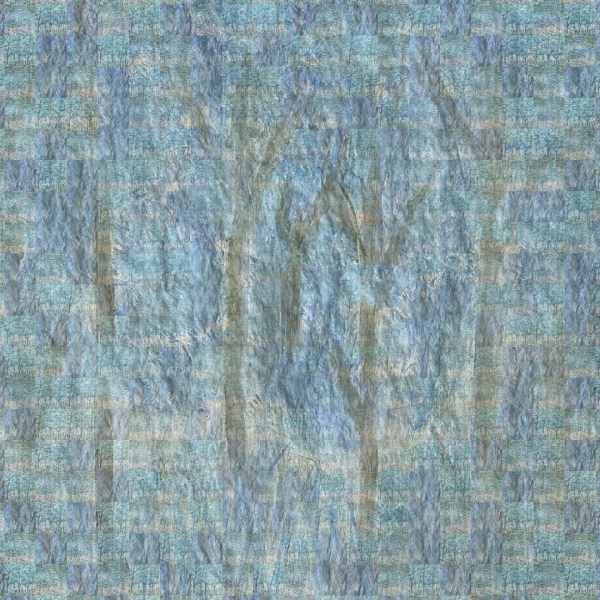
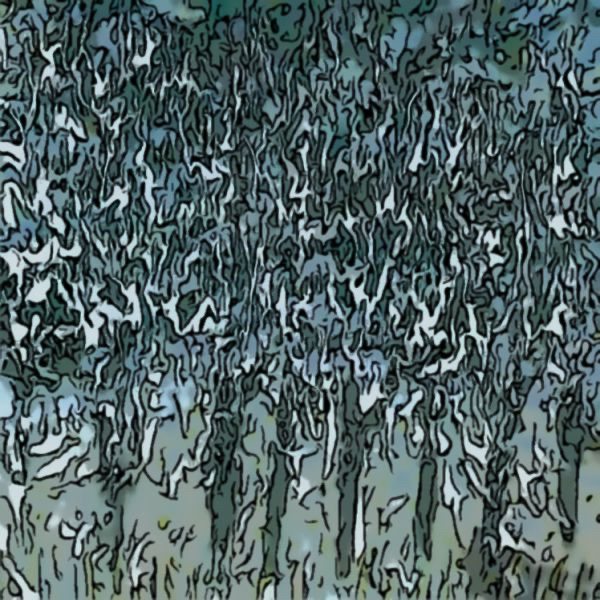
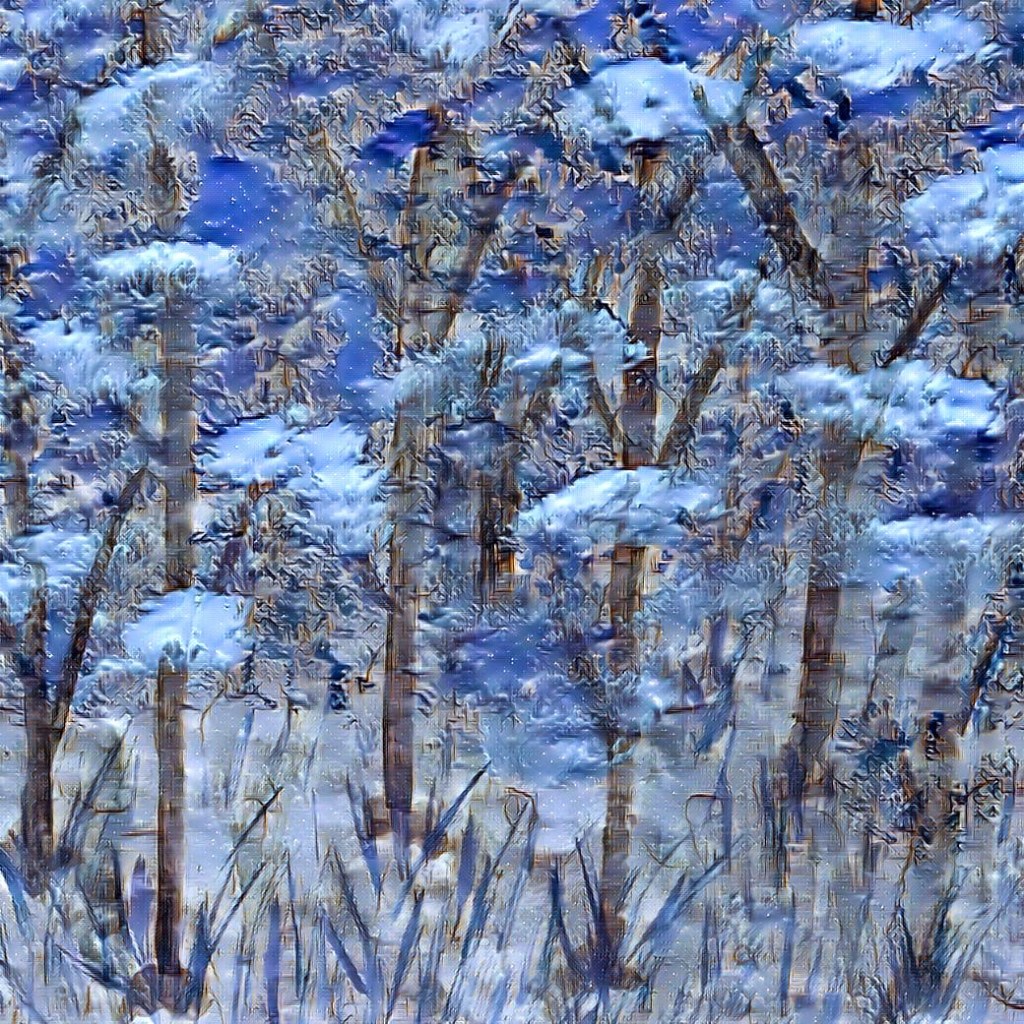
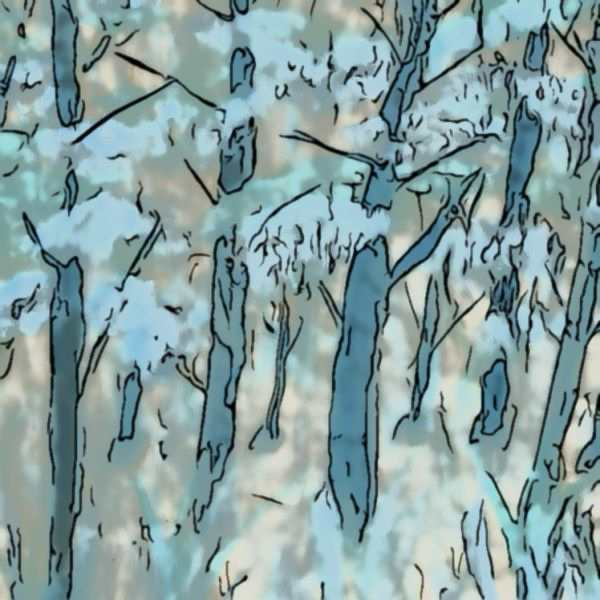
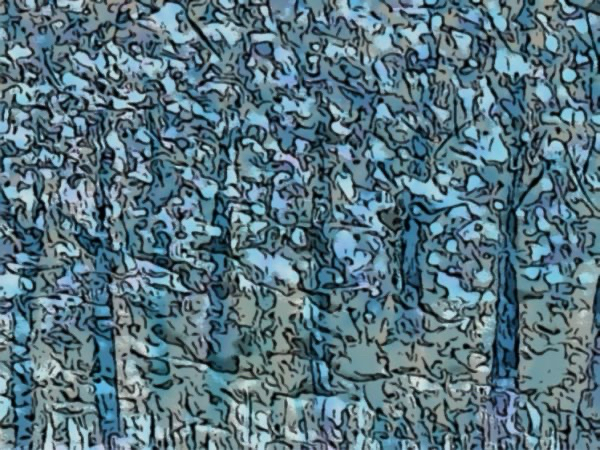
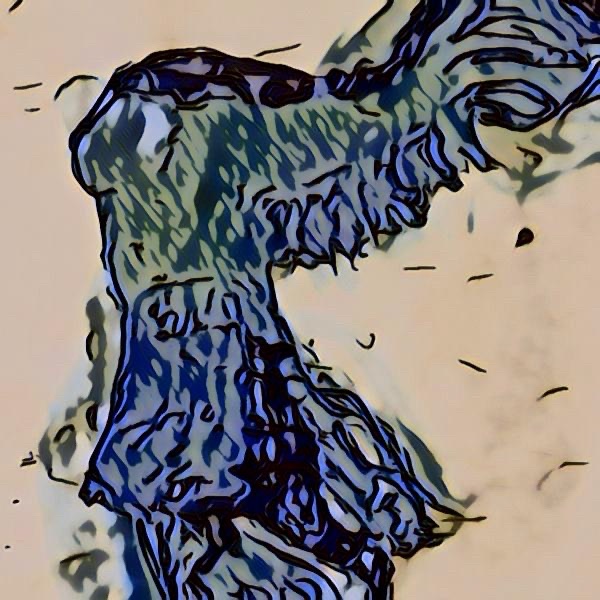
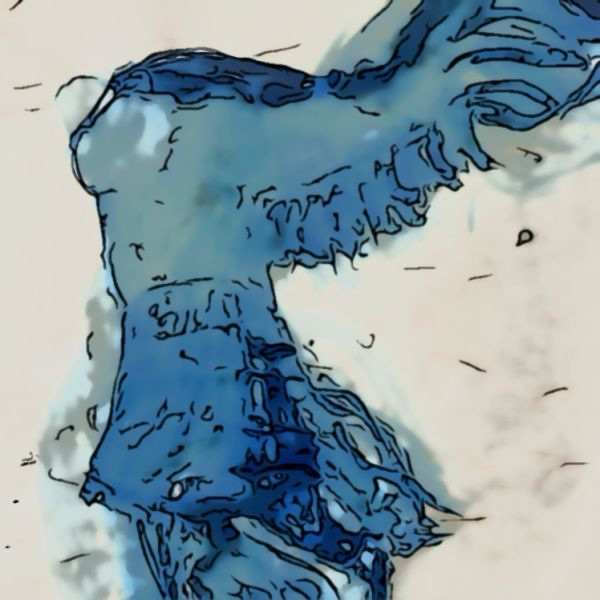
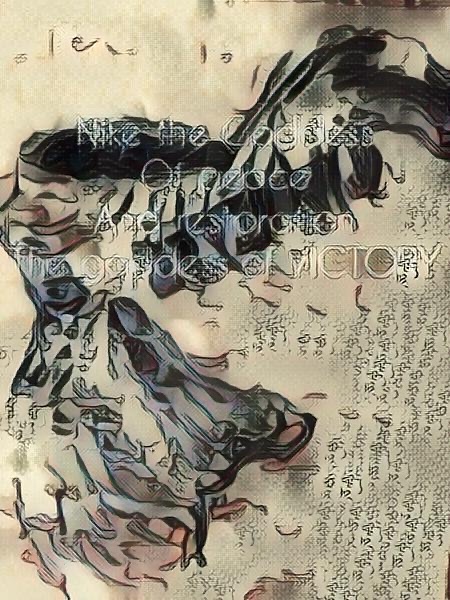
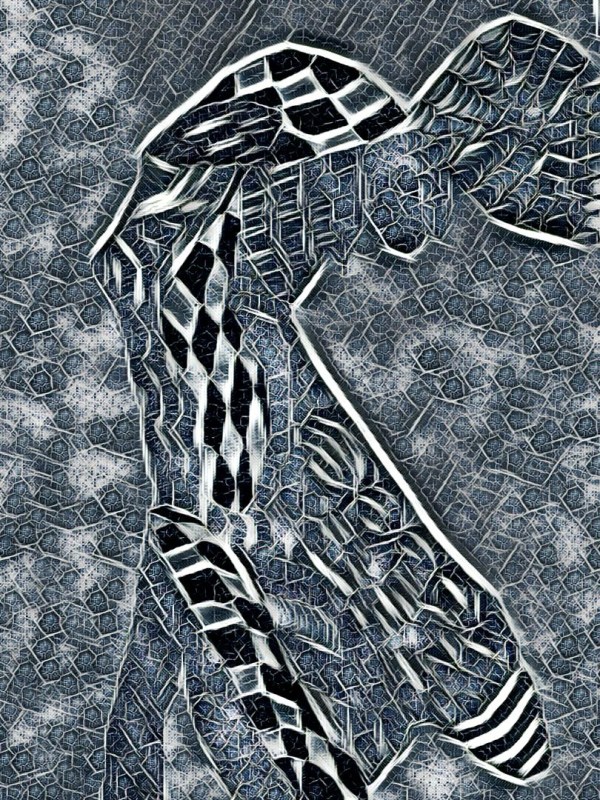
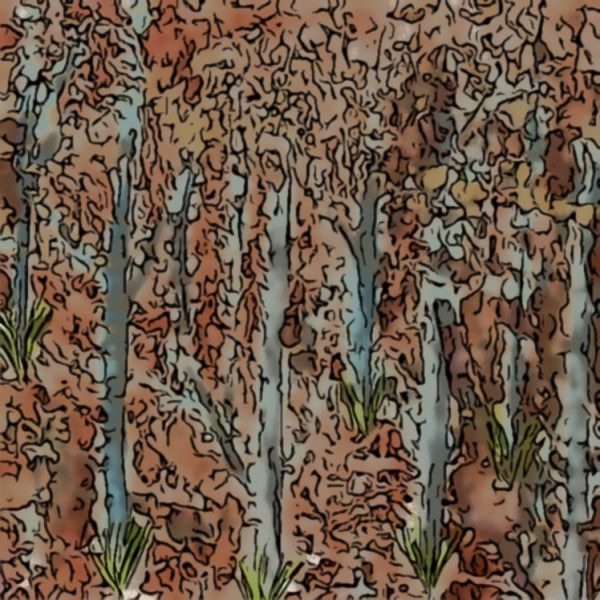
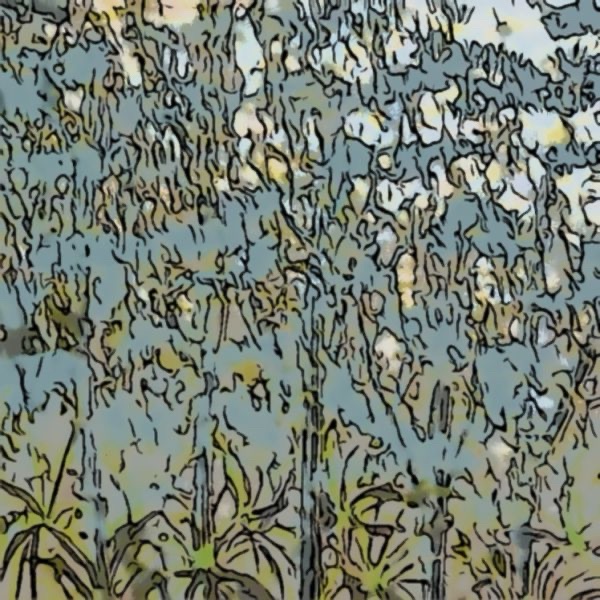
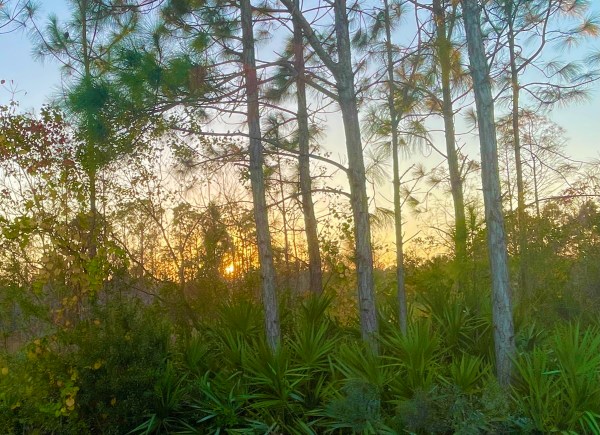
The Japanese word for contrasting values in art is Notan (濃淡), which translates to “light-dark harmony” or “light-dark balance”.Notan is a design concept and practice that involves simplifying an image into its basic shapes of light and dark to study the compositional energy, balance, and the relationship between positive and negative space. Here are a few of my pieces put into Notan to study this design feature.
a form that whispers: I am not for your perfection.
Adorno would hear in it a quiet revolt—
resisting the smooth violence of the culture industry,
its fractures and heaviness speaking truth in negativity.
Ch’an would smile at its suchness:
emptiness held by clay,
a hollow that makes the whole,
impermanent beauty flowing like rain.
Not an object to possess,
but a question:
Where does creating end and becoming begin?
Critique: Tension and Liberation
Adorno would admire this as an object that resists commodification and negates the logic of standardization, presenting a unique fractured piece that defies the smooth sameness of industrial design.
Ch’an Buddhism would cherish its non-striving beauty, its embodiment of emptiness, imperfection, and spontaneity—an invitation to direct experience without conceptual fixation.
Thus, the vessel is both a dialectical protest (Adorno) and a meditation on emptiness (Ch’an):
It does not resolve into an identity, nor does it cling to perfection.
It gestures toward freedom—from both capitalist totality and egoic attachment.
Buddhist Perspective
Ch’an aesthetics favor emptiness (空), spontaneity (自然 ziran), and non-attachment. Objects often reveal impermanence and the play of natural forces.
Emptiness and Function
The vessel exists as a field of emptiness—its value is not in what it is, but in how it negotiates in interdependence (water, user, gesture).
The hollow interior exemplifies the Daoist-Ch’an teaching: “Clay is shaped into a vessel, but it is the emptiness inside that makes it useful.”
Its irregularity invites a mind free from clinging to perfection.
Spontaneity and Suchness
The glaze’s flowing drips and color transitions manifest suchness (tathatā)—the uncontrived nature of things.
Instead of rigid symmetry, the form appears arising from process, not imposed by egoic control. This reflects wu wei (effortless action).
Impermanence
The surface recalls eroded stone or weathered bark, subtly reminding the observer of time’s ceaseless change—a Ch’an sensibility.