My work is grounded in a synthesis of Jungian psychology, feminist theory, and ecological critique, engaging painting as a site where inner psychic processes intersect with historically constructed systems of power. Drawing on Jung’s (1968) concept of the collective unconscious, I approach image-making as a process of emergence rather than control, allowing forms to surface through layering, repetition, and material interaction. These forms often evoke geological and biological systems—erosion, sedimentation, fault lines, and root networks—situating the psyche within the temporal and material conditions of the earth itself.
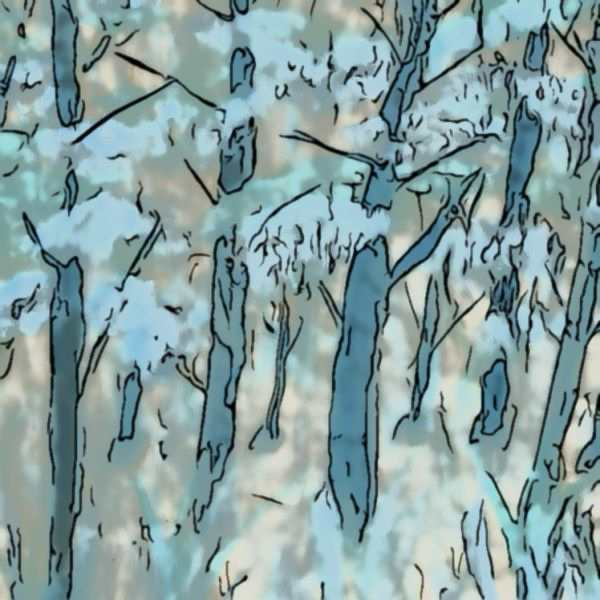
At the same time, this work is informed by feminist analyses of domination and hierarchy. The subjugation of both women and nature, structured through logics of extraction, control, and accumulation are part of my ecological feminist philosophy. These logics persist in contemporary fossil fuel economies, where geopolitical conflict, environmental degradation, and economic and gender inequality are intertwined. The ongoing instability surrounding oil supply chains—manifested in contested sites such as the Strait of Hormuz—underscores the extent to which global systems remain dependent on finite, unevenly distributed resources.
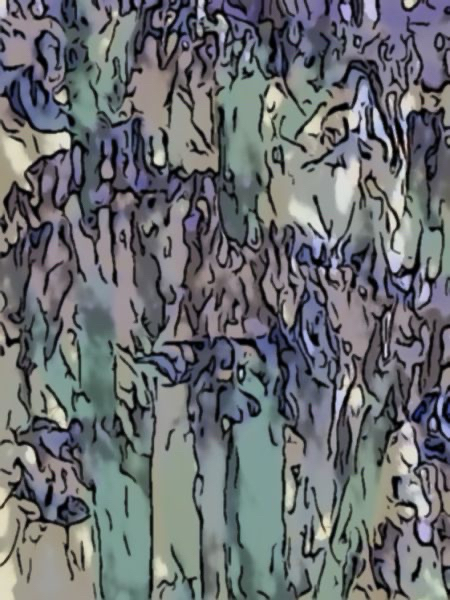
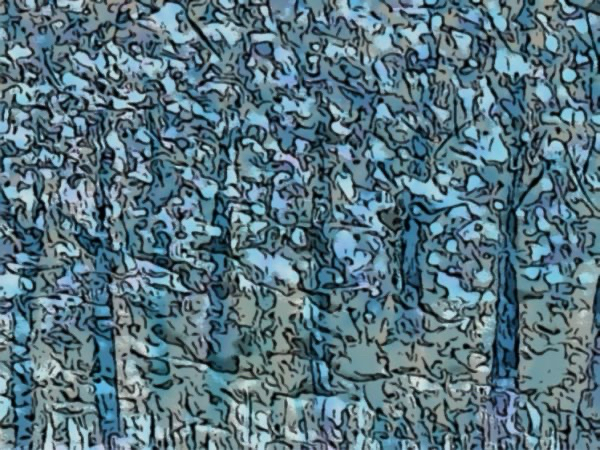
My paintings respond to these conditions not through direct representation, but through formal resistance to hierarchy. Compositions are structured as fields rather than centralized images, dispersing attention across the surface and undermining singular focal points. This place-based practice in contemporary art, as well as with ecofeminist calls for relational modes of understanding that reject binaries between human and nature, is where my landscape art lays.
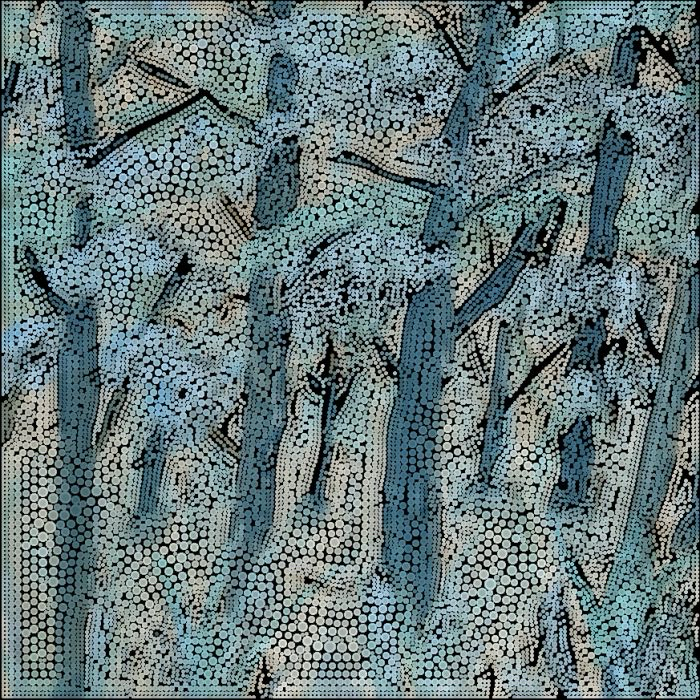
The recurrence of mark-making in my work draws on ancient visual languages, particularly those associated with Paleolithic and Neolithic cultures that centered the feminine divine and earth-based cosmologies (Gimbutas, 1991). These references are not nostalgic, but speculative—gesturing toward alternative cultural and political forms that predate and challenge modern systems of domination.
Materially, the paintings emphasize process: accumulation, erasure, fragmentation, and reconfiguration. These gestures mirror both ecological cycles and psychic processes, creating a space in which dissolution and emergence coexist. The instability of form—its refusal to fully resolve—reflects the broader condition of contemporary life, in which extractive systems are increasingly unsustainable, yet remain deeply entrenched.
Ultimately, my work asks how perception itself might shift. If fossil fuel economies are sustained not only by infrastructure but by underlying cultural assumptions—about control, hierarchy, and separation—then alternative futures require not only technological change but changes in economic policy, education, and significant transformation. Through a practice that foregrounds relation, multiplicity, and material interdependence, I seek to contribute to this reorientation, holding open the possibility of more sustainable and equitable ways of being.
References
Gimbutas, M. (1991). The Civilization of the Goddess: The World of Old Europe. HarperCollins.
Jung, C. G. (1968). The Archetypes and the Collective Unconscious (2nd ed.). Princeton University Press.


Leave a Reply