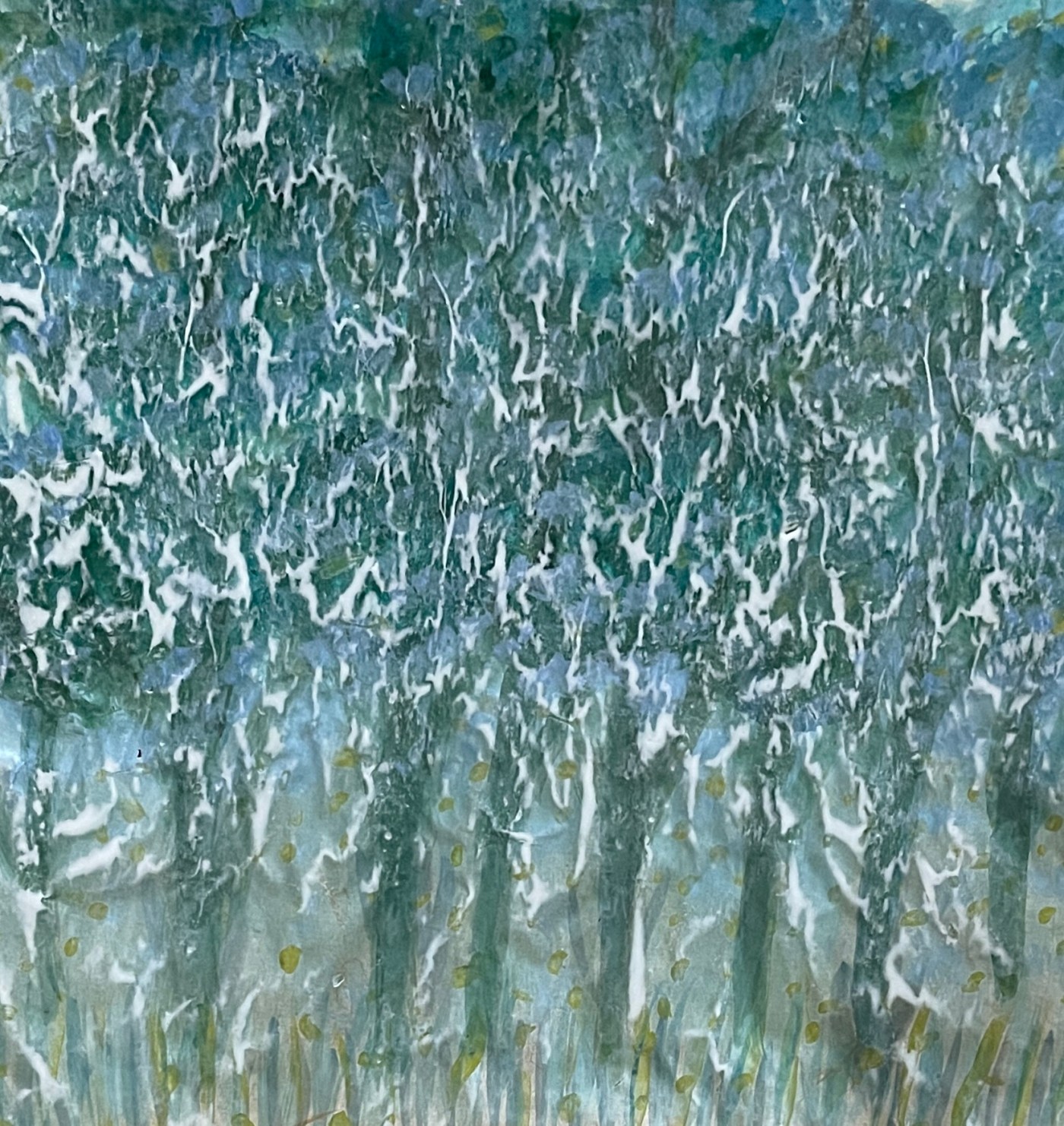
Kandel explains why the mind must identify. Adorno explains why wisdom requires remembering that identification is never complete.
The brain survives by categorizing. Adorno’s aesthetics attempts to keep us attentive to everything that escapes the category.
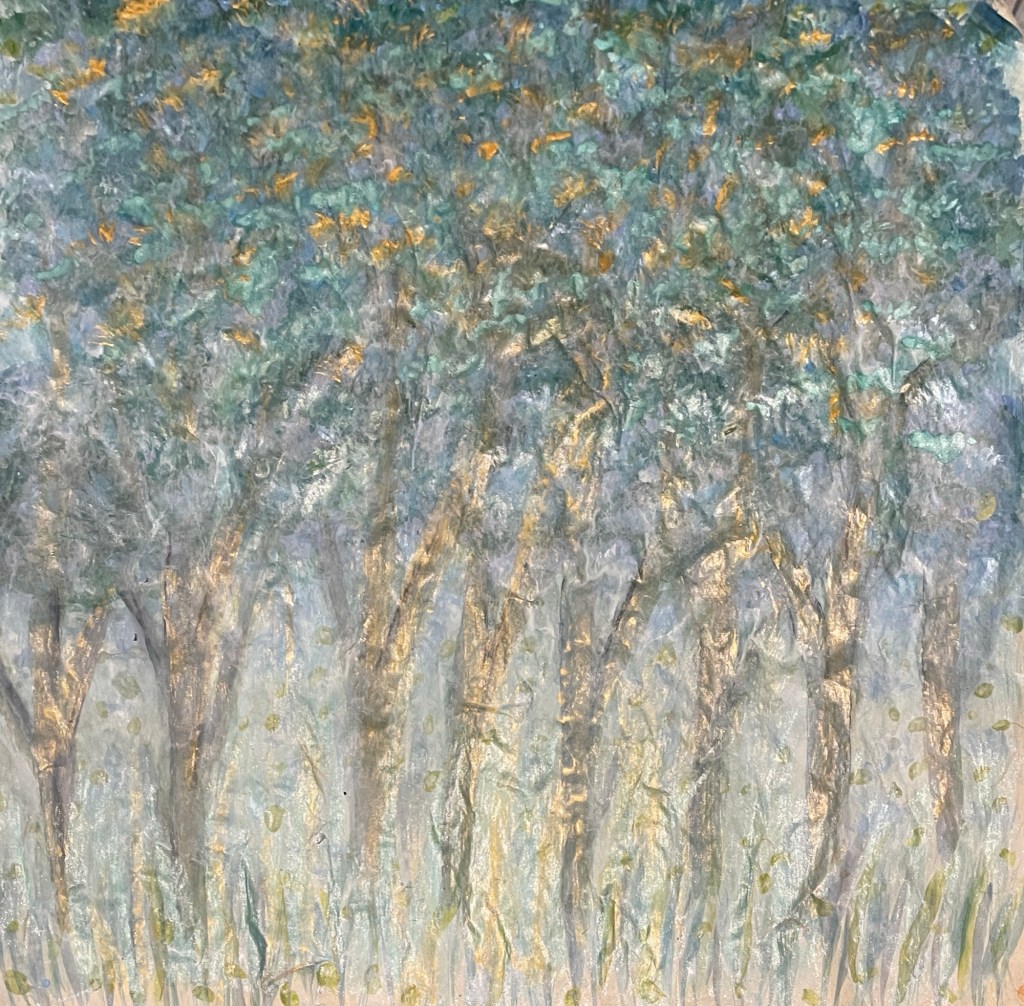
The strongest feature of this painting is that it is not a realistic painting; forms shift and dissolve, like traces of memories. The forest emerges and disappears and at the same time. There is an oscillating effect.
This aligns with what Adorno calls the non-identical—the resistance of things to being completely captured by concepts.
The painting says; The experience of trees exceeds our ability to define them.The shimmering, uncertain boundaries, permit the object to retain mystery. In the central trunks where gold and gray intermingle, the painting becomes dialectical: the trees are both solid and dissolving, present and absent.

Formal Structure
The above painting’s structure can be considered lyrical due to its: vertical rhythms of trunks, repeated intervals, diffuse atmospheric counterpoint, and recurring gold accents functioning like motifs
The eye moves laterally through variations on the same theme.
Adorno often wrote about late Beethoven as producing unity through internal tensions. The painting achieves a similar unity, but the tensions remain relatively subdued.
 Art by Kate W