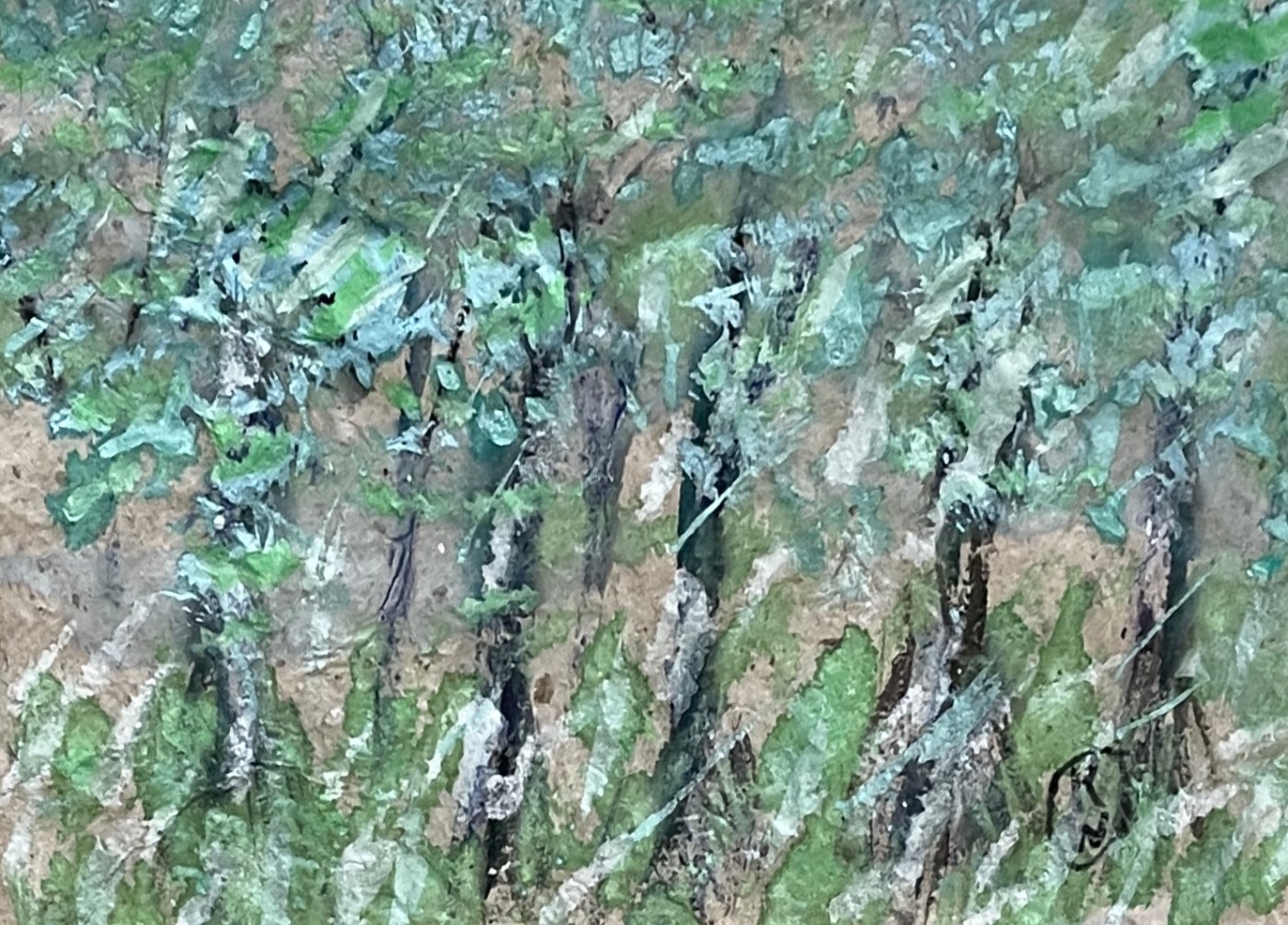
The instability of nature and our perceptions
For Adorno, he approaches nature within a philosophy of aesthetics .
When you stand before a landscape—or a painting of one—you immediately begin organizing what you see into concepts: tree, flower, forest, springtime, beauty. This is what Adorno calls identifying thought. Concepts allow us to navigate the world, but they also distort it because no concept ever fully captures the thing itself.
The “unstable event of perceiving nature” occurs when perception exceeds those concepts.
A tree is never simply “a tree.” The actual tree possesses an irreducible particularity—its texture, history, relation to light, weather, soil, and surrounding life. The concept tree is necessary, but it leaves something out. Adorno calls this remainder the non-identical.
Theodor W. Adorno argues that authentic art can momentarily reveal this gap between concept and reality. In my paintings, An oscillating experience happens when we go from
“Those are blossoms.”
Then the blossoms dissolve into color.
“Those are trees.”
Then the trees become stains, brushstrokes, and atmosphere.
“This is a landscape.”
Then it becomes an abstract field.
The eye oscillates.
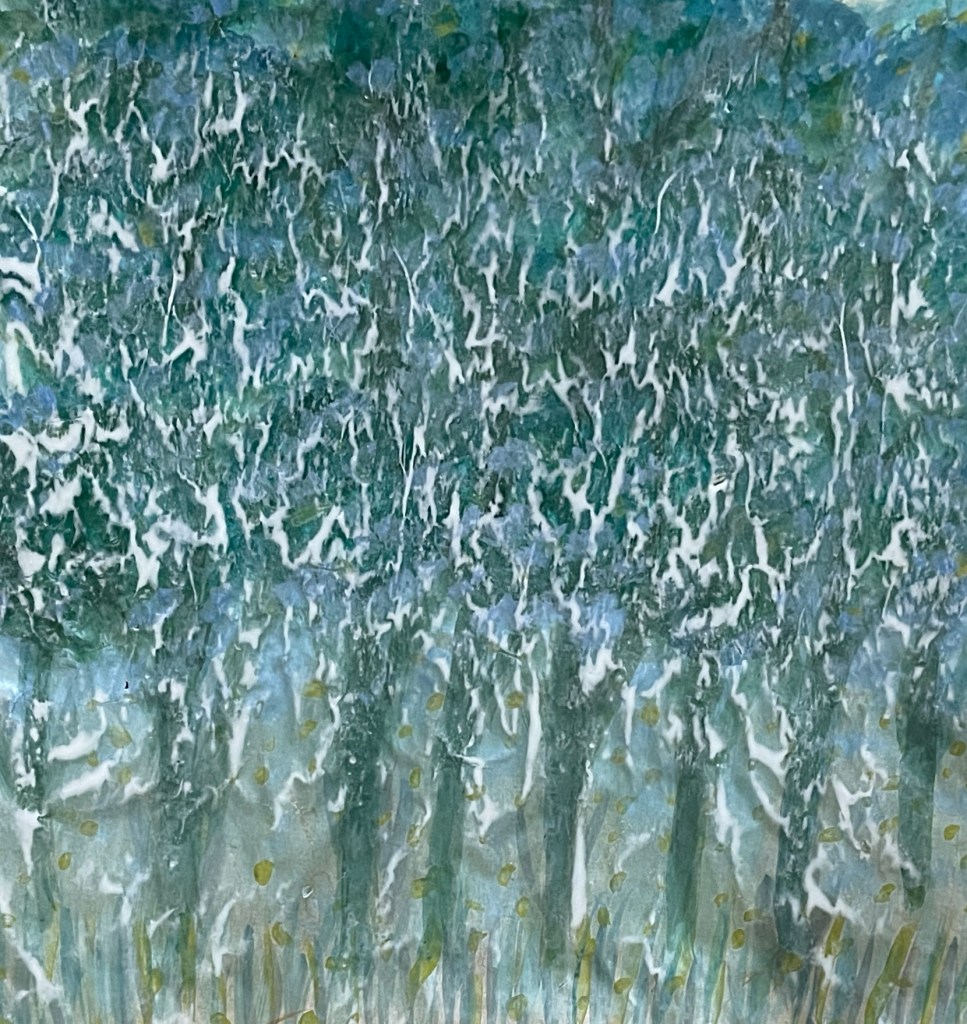
That oscillation is important because the painting prevents conceptual closure. You never fully arrive at “what it is.”
Adorno would say the work preserves the object’s non-identity instead of forcing it into complete intelligibility.
Nature as a Promise
For Adorno, modern people rarely encounter nature innocently. Nature is already mediated by culture, memory, science, economics, photography, tourism, and language. When we look at a forest, we do not see “pure nature.” We see nature through accumulated concepts.
Yet nature continues to suggest something beyond those concepts.
He sometimes describes this as nature’s promise—not a specific message, but an intimation that reality exceeds the social systems through which we organize it.
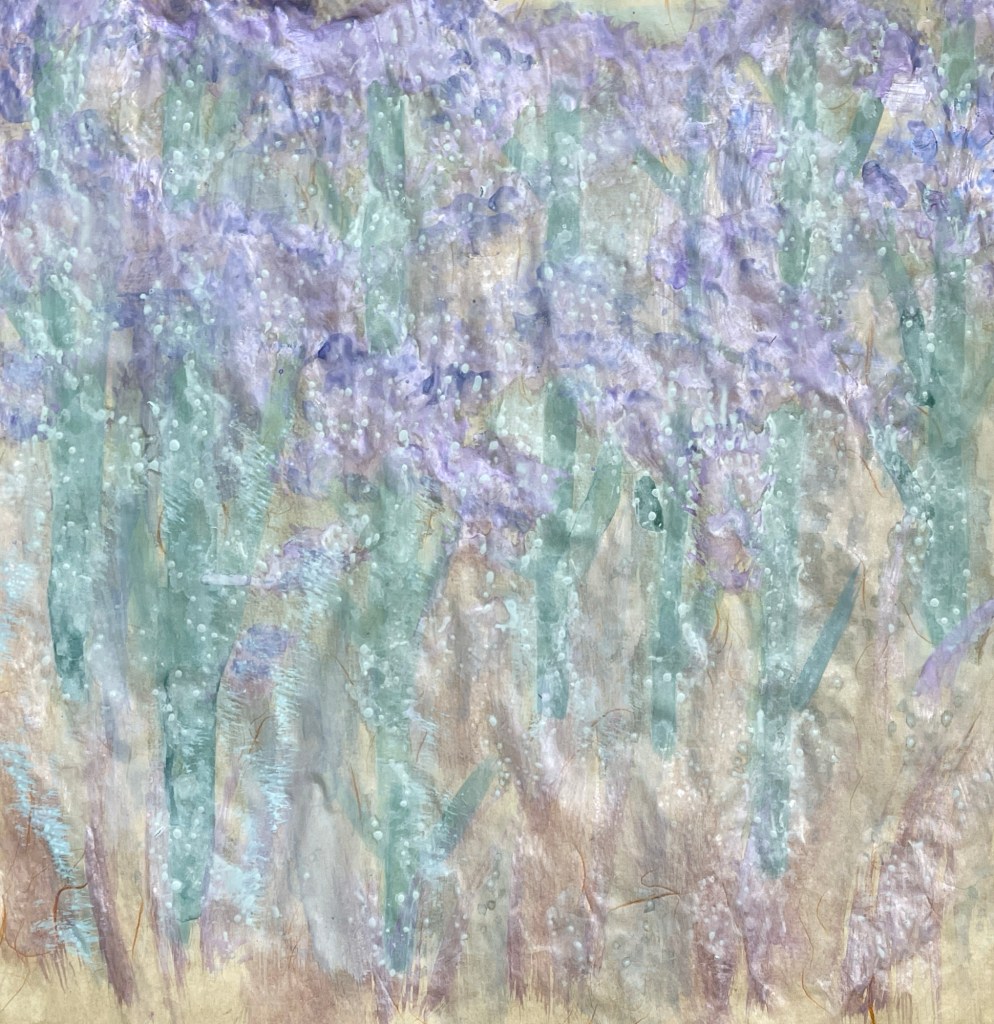
The lavender painting creates this effect. The flowers are present enough to evoke a field or garden, but absent enough to remain elusive. The image hovers between recognition and disappearance.
For Adorno, that hovering matters because it preserves mystery, and engages the viewer, without turning it into mysticism.


Leave a Reply