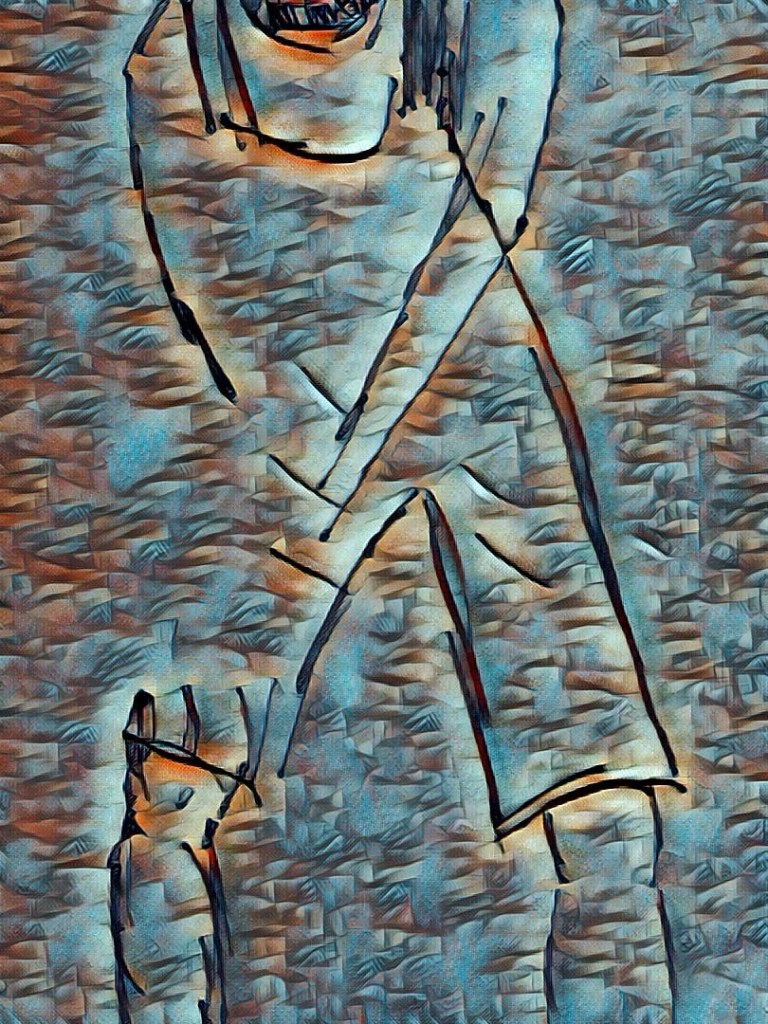
The figure in the above piece, appears suspended between emergence and dissolution. The body is recognizable, yet its contours are repeatedly interrupted by angular cuts, overlapping planes, and digital textural interventions. The figure is not presented as a coherent whole.
For Adorno, this fragmentation is an example of non-identity. The work refuses the viewer the comfort of a completed drawing of a human figure. Instead, the figure becomes an unresolved constellation of marks and surfaces. The body is never fully present to itself.
The figure in its design can be seen as the falsity of modern culture’s assumption that individuals possess a unified, autonomous identity. The body becomes a site of contradiction rather than self-possession.
One strength of this piece rests in the tensions it creates: the tensions between, bodily presence and abstraction, vulnerability and construction, line and surface.
The textured background presents a field against which the figure is struggling to emerge. The figure, with intent, is asking the viewer to finish the lines, ushering in a Multiplicity of meanings.

The body is literally crossed by networks, grids, and connective structures. The red marks create a sensation of wounds, nerves, sutures, or social inscriptions.
Adorno argues that modern subjects carry the scars of history within them. Here the body appears less like an individual and more like a field of historical forces, Chris- crossing through the space.
It suggests a visual metaphor for what Adorno called the administered society—the web of institutions, norms, classifications, and systems that shape subjectivity. The body is neither free nor completely trapped; it exists within these structures while resisting complete assimilation.
The red passages function as a disturbances rather than decorative accents. They prevent the drawing from settling into harmony.
These pieces highlight;
The refusal of classical wholeness.
The rejection of idealized beauty.
The presentation of the figure as a process rather than a fixed identity.
The sense that meaning remains unfinished.
The invitation for viewers to participate in constructing the meaning.
These two pieces are not portraits, rather they are investigations into becoming.
 Art by Kate W