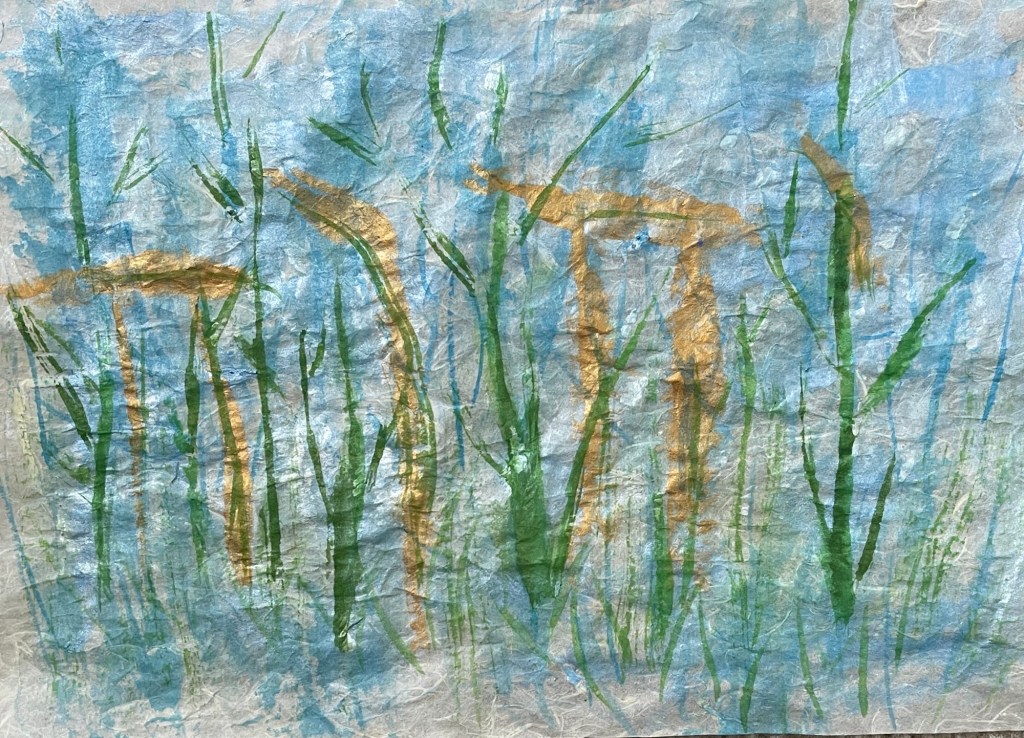
Chag Sukkot Samaech
Sukkot: A Goddess Holiday
I have begun to think of Sukkot as a kind of ancient Goddess holiday—a time when we might recover an older memory of humanity’s intimate knowledge and relationship with Mother Earth. Historically, according to Jewish ancient writings, Sukkot is rooted in an agricultural festival, Hag HaAsif, the Festival of Ingathering: a celebration of harvest, fruit, vegetation, water, and the coming rains. Whether we can historically call its origins “Goddess worship” is uncertain. But the imagery of Sukkot invites such a contemporary reclamation.
We enter the sukkah surrounded by branches, leaves, fruit, and the fragile materials of the natural world. We eat the bounty of the harvest and give thanks. Ancient Sukkot also developed powerful rituals around water, because the coming rains meant survival.
Mother Earth gives.
This Sukkot, in keeping with other high holy days, we need to remember and awaken to how Mother Earth keeps giving, and atone for the sins against the Mother Goddess.
She gives us waterways and wetlands, forests and fields, air to breathe, food to eat, seeds that regenerate, natural medicines, and the extraordinary diversity of species with whom we share this living planet. Yet empires have conquered her, industries have exploited and extracted from her, financial systems have converted her living abundance into commodities, and endless development has treated the Earth as though her resources were infinite and for their personal taking.
Sukkot asks us to step outside the walls of our permanent houses and enter a temporary shelter. For one week, we live closer to vulnerability. We look through the branches and see the sky. We remember that beneath all our structures of wealth, ownership, technology, and power, we have a strong relationship with our Mother Goddess and it is a basic pillar for surviving and flourishing.
Perhaps this is the Goddess that patriarchy keeps trying to exploit and erase: not a distant supernatural female deity, but the living, generative power of Earth herself. The era of patriarchal power, the birth and domination of the major religions, especially in their fundamentalist form, has been one of empires, excessive wealth and power accumulated in the top of the hierarchy; it is a system that supports militarism and is known for its violence and dominance. And it is currently putting us on a path of human extinction by exploiting and expiring Mother Earth’s resources.
Perhaps, Sukkot can become a festival of gratitude and responsibility—a time not simply to thank the Earth for what she gives us, but to ask whether we are worthy of receiving it.
The Earth has been extraordinarily generous.
The question is whether we will learn to stop taking—and begin to give back.
And this might depend on Whether democracy, the voice of the people’s interest, will prevail, or whether we will be serving the dictates of the billionaires and their corporations, under authoritarian, patriarchal political rule, that continues to deplete and erase our essential relationship to Mother Earth.
References
My Jewish Learning https://www.myjewishlearning.com
Gimbuta, Marija, 1989, The Language of the Goddess, forward by Joseph Campbell, Harper Collins

