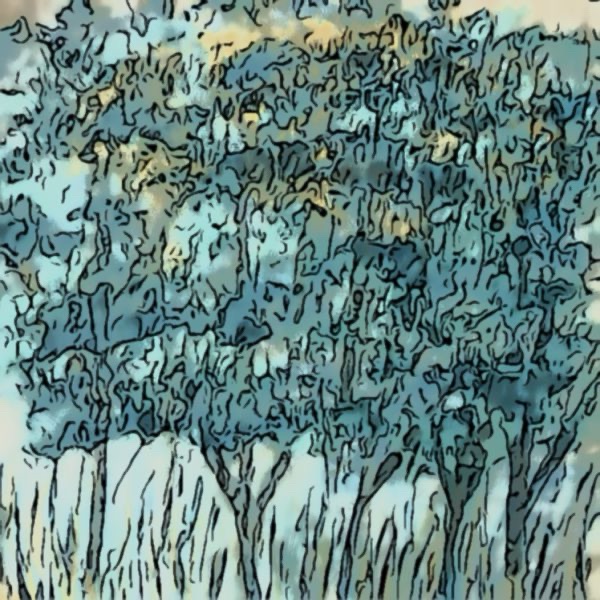
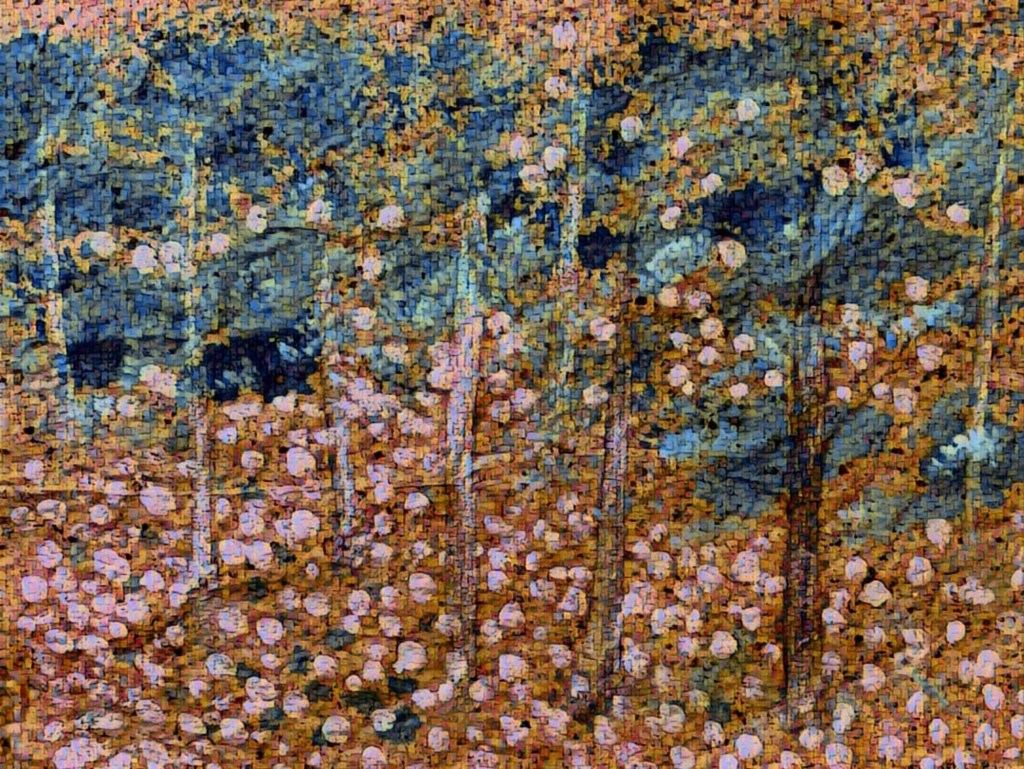
My recent series of abstract ink paintings on rice paper emerges from an ongoing engagement with the Florida wetlands—not simply as recognizable landscapes, but as dynamic fields of energy, movement, transformation, and interrelationship. Rather than depicting a particular place, I seek to evoke the experience of being within a living system whose processes exceed what can be fully seen or understood.
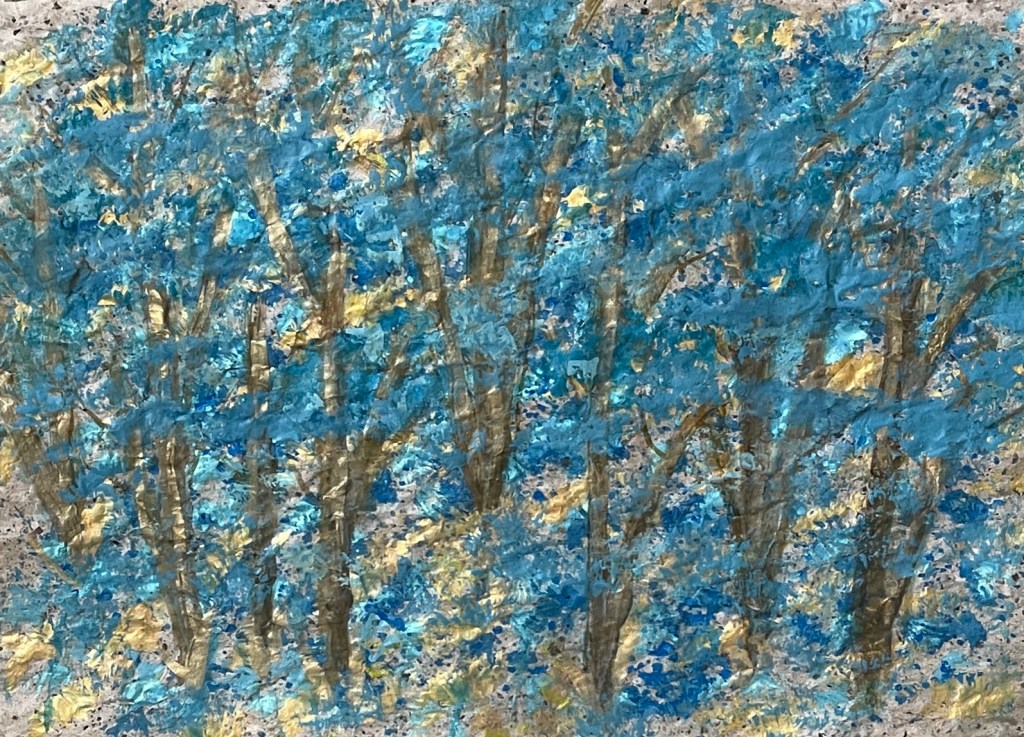
The work begins in meditation. I approach the paper without a predetermined image or conventional sketch. Meditation becomes a threshold through which the painting can emerge. I allow my attention to settle while remaining receptive to gesture, rhythm, accident, and intuition. My process moves between conscious intention and subconscious action.
I work with ink and water on rice paper, responding to the absorbency and fragility of the surface. The paper does not simply receive the mark; it participates in its formation. Ink spreads, pools, penetrates, stains, feathers, and sometimes escapes the control of the brush. I work rapidly and gesturally, drawing upon an action-painting approach in which the movement of the body becomes part of the work. I am less interested in recording the drama of the gesture than in entering a state of heightened attention in which gesture becomes a form of listening.
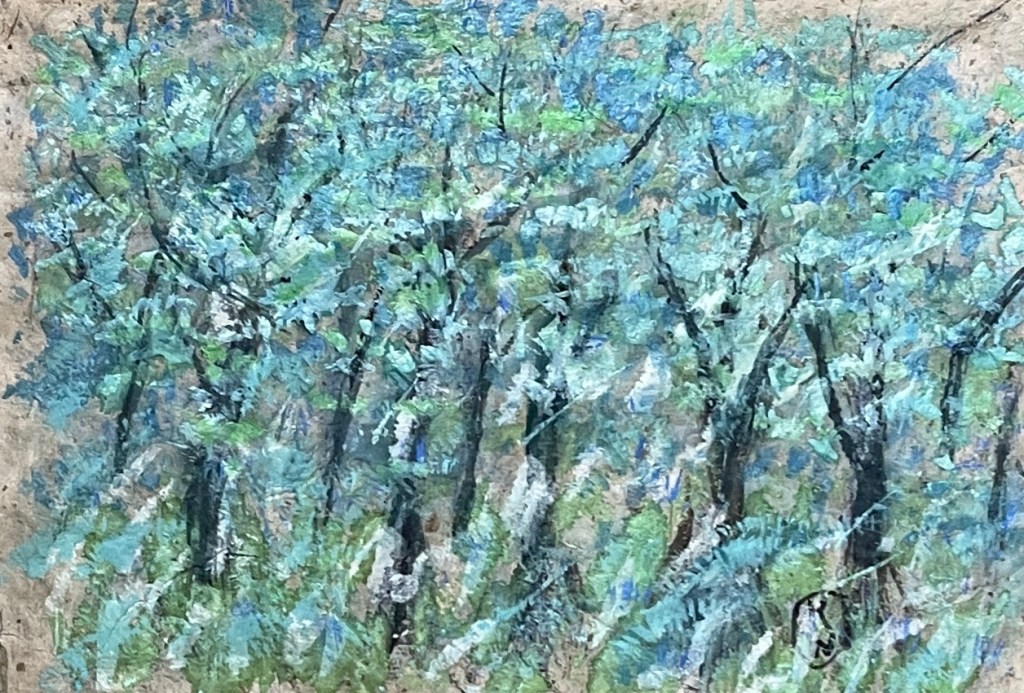
The painting develops through an exchange between intention and contingency. The work becomes a conversation between what I intend and what the material reveals. The unexpected is often where the painting begins to disclose its deeper possibilities.
David Hinton’s writings on Tao, Ch’an, and Chinese landscape painting have also profoundly influenced my approach. His emphasis on the interpenetration of form and emptiness offers a way of understanding the wetland not as a fixed object but as a process of becoming. In my paintings, emptiness is not simply the unpainted portion of the paper. It is an active presence—a field through which forms emerge, dissolve, and remain connected. The white of the rice paper can suggest mist, water, atmosphere, distance, or an opening into what cannot be named.
This connects with my interest in qi: movement, breath, energy, and transformation. The brush becomes an extension of breath. A stroke carries the movement of the body into the surface, while water carries the ink beyond the limits of the initial gesture. What appears to be a static image is therefore the residue of movement. The painting records a process rather than a fixed state.
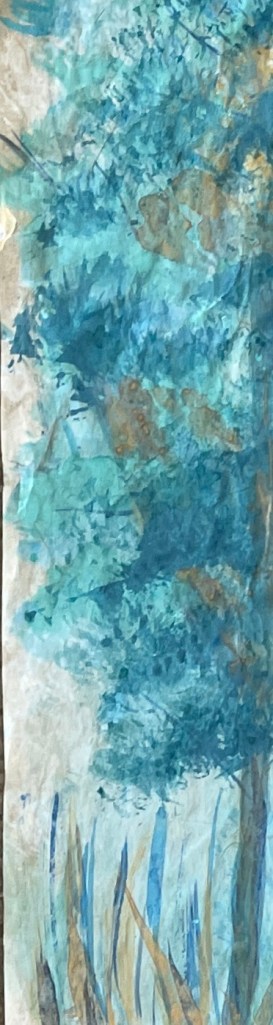
My engagement with Theodor W. Adorno introduces a critical dimension. Adorno’s aesthetics resists reducing art to predetermined meaning or straightforward representation. His concept of nonidentity—the recognition that an object always exceeds the concepts imposed upon it—resonates with my desire to allow these paintings to remain unresolved. I want the work to preserve something of nature’s resistance to conceptual mastery. The wetland is fragile and persistent, visible and hidden, ordered and unpredictable. The paintings attempt to inhabit those contradictions. The absorbent rice paper, fluid ink, movement of water, limitations of the brush, and accidents of drying are not merely techniques for producing an image. They are part of the work’s meaning. Material process becomes a form of thought.
The wetland thus becomes both subject and method. Its shifting boundaries are mirrored by the painting process itself. Ink disperses as water moves through the paper; forms emerge from washes and gestures; each mark alters the meaning of those that came before it. Nothing remains entirely fixed. Each painting becomes an accumulation of decisions, accidents, pauses, and responses—a record of constant becoming.
I am increasingly interested in the possibility that abstraction can bring us closer to ecological reality than representation sometimes can. A recognizable landscape tells us what a place looks like. Abstraction can suggest how a place behaves: how energies circulate, boundaries shift, matter transforms, and visible forms arise from processes that remain largely invisible.
Through meditation, gesture, material contingency, and abstraction, I seek a visual language in which presence can arise from absence, form from formlessness, and stillness from movement.
Ultimately, these paintings are meditations on becoming. The wetland is continually becoming; the painting is continually becoming; and so is the consciousness that encounters it. I am not attempting to capture a landscape, but to participate in its unfolding.


I love reading about your methods & inspiration! Really fascinating, Kate! Thanks for sharing and keep up your beautiful work 💗
LikeLiked by 1 person
Thank you so much.
LikeLike