I am interested in modernist sculpture and how artists distort (Picasso), elongate (Modigliani) and simplify (Brancusi) the human head.
These two pieces carry on modernist aesthetics are are examples of :
Reduction: discovering what is essential by simplifying the form.
Accumulation: discovering what is essential by adding, marking, and transforming the surface.
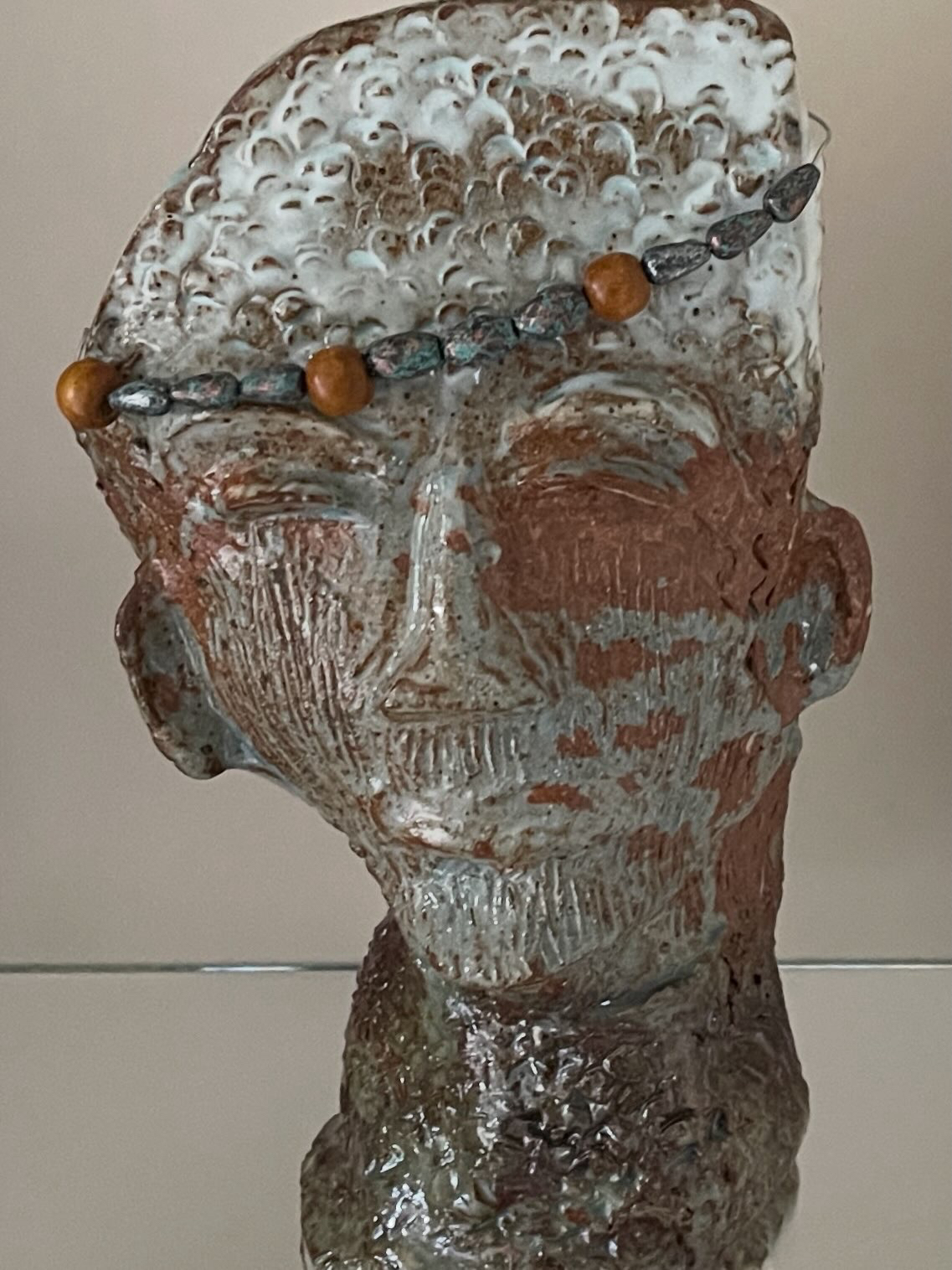
Form and expression in the highly texturized piece
The strongest feature is the relationship between the face’s relatively recognizable structure and its extraordinarily active surface.
The eyes are closed or nearly closed, the mouth is restrained, and the expression seems inwardly directed. The face does not appear to be engaging an external viewer. Instead, it suggests a consciousness absorbed in itself.
The closed eyes are particularly effective because they create a tension between the sculpture’s physical presence and its apparent withdrawal from the world. We can see the face, but we cannot know what it sees—or whether seeing is relevant to its state.
This gives the work a contemplative quality without making it sentimental.
The elongated nose and subtly modeled mouth provide a recognizable human structure, while the broad forehead and rounded head give the figure a monumental character.
Surface and accumulation of marks
The surface is the work’s greatest strength.
The small, beads were added to demonstrate the natural lines and textures found in nature. The repeated indentations create a visual rhythm.
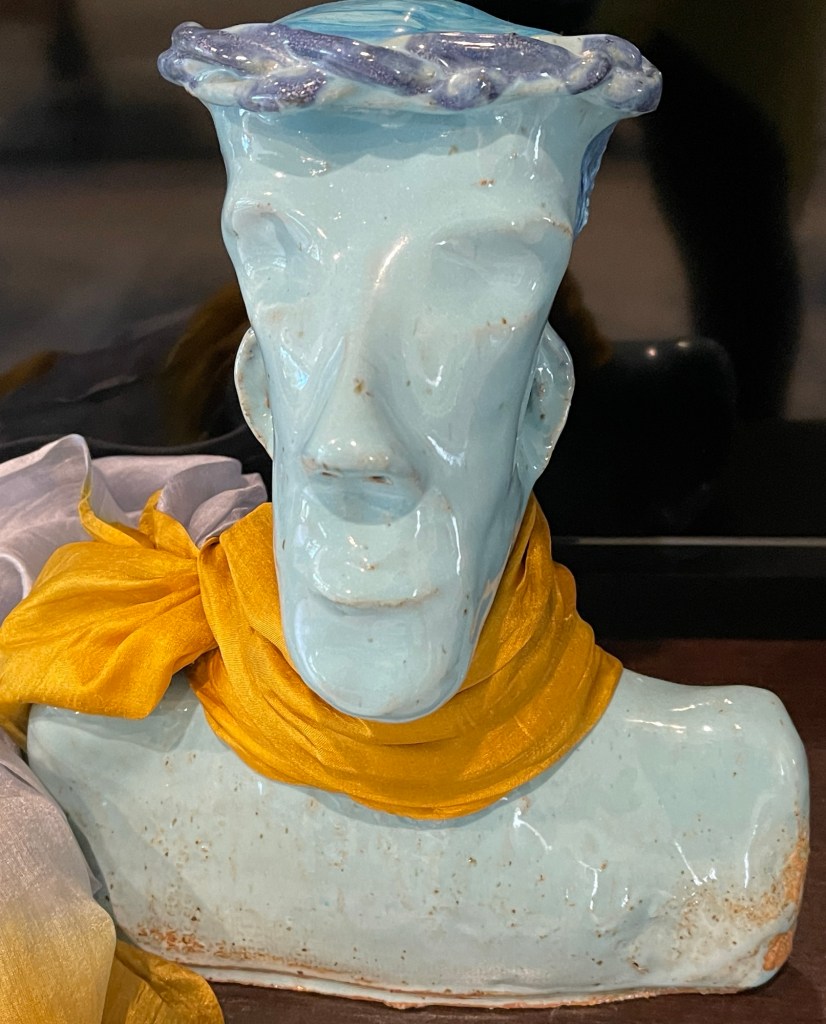
In the more stylized piece, with a smooth blue glaze, that plays with the light, the face is simplified, but the elongated proportions, recessed eyes and modeled mouth preserve its humanity.
The sculptor asks, in effect, how much of a particular form can be removed, transformed, or reorganized while preserving its essential presence.
In the clay modeling process I can add material, compress it, stretch it, incise it, or alter the relationship between volumes. Each intervention changes the object in space.
The face becomes not only an image but a physical event.
These two pieces remain figurative, resist realism and bring forth a modernist aesthetic.


Leave a Reply